Private satellites give boost to public sector in climate fight / Photo: - - EUROPEAN SPACE AGENCY/AFP/File

 Qatar Chamber and Maltese envoy consider business forum

 Spanish PM denies being blackmailed by Morocco

 Doha Islamic finance forum names AlRayan firms as co-lead partners

 Leeds thrash Newcastle to go third in the Premier League

 Zelensky says Ukraine ready for 'de-escalatory steps'

 In-form Malen fires Roma to Serie A summit, Inter on their heels

 Lebanese agency reports Israeli shelling and gunfire in south

 Expert proposes phased digital reform for Arab business schools

 Trump rejects 'hoax' warnings that AI could destroy humanity

 Houthis say Saudi Arabia hits Yemen with 54 strikes after attack on bases

 Why the far right is losing ground in Sweden
 Ex-Ireland fly-half O'Gara extends deal as La Rochelle coach

 Russian attacks on Ukraine railways escalating every week: rail CEO to AFP

 France, Iraq deepen energy, defence ties during Zaidi visit

 Trump says Ukraine, Russia agree not to hit energy targets

 Nigeria's Dangote refinery launches continent's biggest IPO

 Trump blasts 'sick conspiracy' against AI as warnings mount

 For Laura Linney, role in Parkinson's-themed movie marked a turning point

 Doctors face life sentence over Greek pop star's death

 Trump moves to axe power plant climate rules

 Slow the AI race? Investors weigh the potential cost

 Philippine Muslim enclave votes for parliament after deadly shooting
 Germany seeks guarantees from Italy's UniCredit over Commerzbank takeover

 Liverpool will have to accept 'ups and downs', says Iraola

 Inaugural Ultimate a hit with the athletes, says Coe
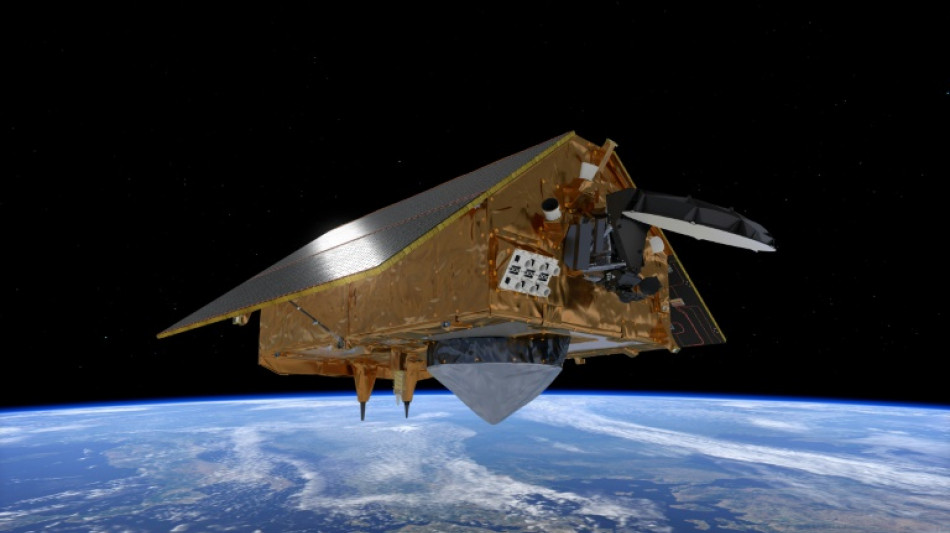
From satellites that can pinpoint the sources of industrial pollution, to others that track hurricane movements by the hour, space has emerged as a key front in the fight against climate change.
New launches are -- literally and metaphorically -- skyrocketing, and giving rise to increased cooperation between space agencies and private companies.
Among the most fruitful areas of collaboration: tracking greenhouse gas emissions.
The potent planet heating gas methane is regularly measured in the atmosphere by one of the satellites of the European Union Space Programme's Copernicus mission.
The spacecraft scans the entire globe, but its resolution is in the order of several kilometers, making it hard to zero in on the exact source.
That's where private companies can step in.
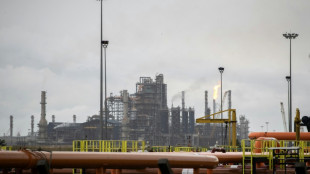
One of them, the Canadian GHGSat, currently has nine small satellites in orbit, each the size of a microwave. Their mission: to fly over oil and gas sites, looking for methane leaks. By orbiting at a lower altitude, they can take a detailed look at each site.
"Think of it as the wide angle lens camera, versus the telephoto lens camera," Stephane Germain, the company's founder, told AFP. The Copernicus team is in constant touch with GHGSat, telling them where to point their cameras.
GHGSat then sells its information to oil companies, such as Total, Chevron, ExxonMobil, and Shell.
"More and more companies are interested in that because they're realizing they have to better understand their own carbon footprints," said Germain, especially since their customers are insisting on better accounting of emissions' life cycles.
A common source of methane emissions are unlit flares, which are meant to burn off the gas.
GHGSat estimates it has prevented the equivalent of 10 megatons of carbon dioxide entering the atmosphere, equivalent to 1.3 million homes' energy use for a year.
Other companies plan to enter the sector, including France's Absolut Sensing. Another company, Kayrros, has no satellites of its own but is analyzing Copernicus data to track down the biggest leaks.
- Technological advances -
"The big picture shows you that there is a problem. And the small one then focuses in higher resolution and sells information to somebody. So this works very well together," European Space Agency director Josef Aschbacher said of such public-private partnerships to AFP.
But government agency constellations -- comprised of mostly large, very expensive satellites -- remain the backbone of the Earth observation system.
Copernicus will soon enter a new era, with new missions such as CO2M measuring the carbon dioxide released specifically by human activities. NASA has about thirty Earth observation missions.
In the last six months alone, the US space agency has launched the SWOT mission to survey the Earth's surface water in unprecedented detail, TEMPO to measure pollutants in the troposphere above North America, and TROPICS, to track tropical weather systems, including hurricanes, hour by hour.
Advances in technology make it possible to measure today what was thought impossible just five or 10 years ago, said Aschbacher.
- Better forecasts -
In addition to these scientific missions, meteorological satellites, such as those overseen by the US National Oceanic and Atmospheric Administration (NOAA) and the European Organisation for the Exploitation of Meteorological Satellites (EUMETSAT), play a vital role.
Their data, collected over decades, have revealed stark shifts to global climate systems: from warming sea and land temperatures to receding Antarctic ice sheets, helping feed the models climate science relies on today.
But increasingly, they can also help play a major role in adapting to a heating world. To mitigate the impact of increasingly frequent natural disasters, "you've got to provide better forecasts," NOAA's chief scientist Mitch Goldberg told AFP.
The agency has been increasing its partnerships with the private sector. For example, it has teamed up with the company GeoOptics to collect information on the humidity or the temperature of the atmosphere.
According to a report by Inmarsat and Globant, if current satellite technologies were universally adopted, they could reduce carbon emissions by 5.5 gigatons -- quadrupling current reductions of 1.5 gigatons enabled by the sector.
These savings could be achieved by, for example, helping the aviation and maritime sectors decarbonize through voyage optimization, weather routing and air traffic control management.
Ch.P.Lewis--AT