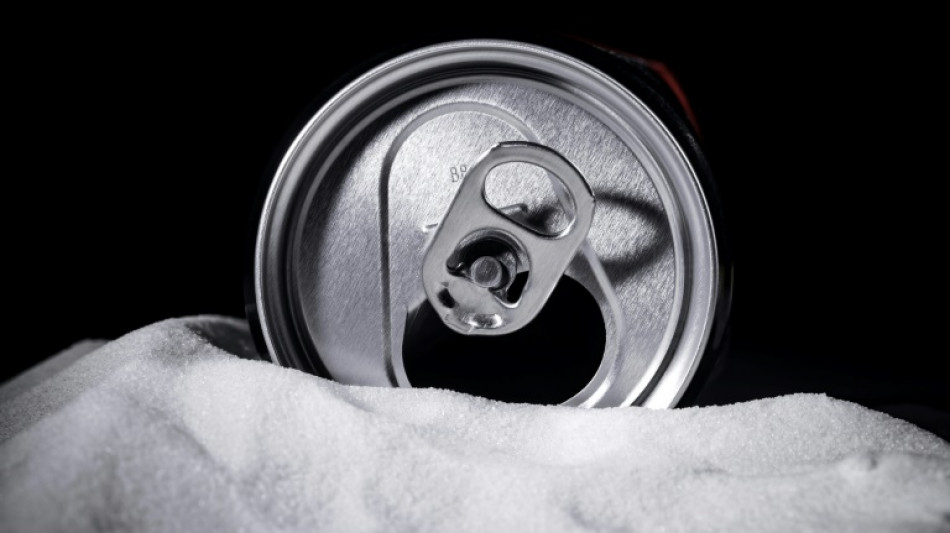
WHO warns against using artificial sweeteners / Photo: JOEL SAGET - AFP/File

 Qatar Chamber and Maltese envoy consider business forum

 Spanish PM denies being blackmailed by Morocco

 Doha Islamic finance forum names AlRayan firms as co-lead partners

 Leeds thrash Newcastle to go third in the Premier League

 Zelensky says Ukraine ready for 'de-escalatory steps'

 In-form Malen fires Roma to Serie A summit, Inter on their heels

 Lebanese agency reports Israeli shelling and gunfire in south

 Expert proposes phased digital reform for Arab business schools

 Trump rejects 'hoax' warnings that AI could destroy humanity

 Houthis say Saudi Arabia hits Yemen with 54 strikes after attack on bases

 Why the far right is losing ground in Sweden

 Ex-Ireland fly-half O'Gara extends deal as La Rochelle coach

 Russian attacks on Ukraine railways escalating every week: rail CEO to AFP

 France, Iraq deepen energy, defence ties during Zaidi visit

 Trump says Ukraine, Russia agree not to hit energy targets

 Nigeria's Dangote refinery launches continent's biggest IPO

 Trump blasts 'sick conspiracy' against AI as warnings mount

 For Laura Linney, role in Parkinson's-themed movie marked a turning point

 Doctors face life sentence over Greek pop star's death

 Trump moves to axe power plant climate rules

 Slow the AI race? Investors weigh the potential cost

 Philippine Muslim enclave votes for parliament after deadly shooting

 Germany seeks guarantees from Italy's UniCredit over Commerzbank takeover

 Liverpool will have to accept 'ups and downs', says Iraola

 Inaugural Ultimate a hit with the athletes, says Coe

Artificial sweeteners, used to replace sugar in a vast range of products, do not help in losing weight and can have serious health effects, according to the World Health Organization.
The United Nations' health agency released new guidelines on Monday advising against using so-called non-sugar sweeteners or NSS.
A systematic review of available evidence "suggests that use of NSS does not confer any long-term benefit in reducing body fat in adults or children", the WHO said.
In addition, results from the review "suggest that there may be potential undesirable effects from long-term use of NSS, such as an increased risk of type 2 diabetes, cardiovascular diseases and mortality in adults".
Sweeteners are consumed by millions of people every day in products like diet soda or to sweeten coffee, partly as a way to avoid weight gain from sugar. But how healthy these substitutes are has long been a matter of controversy.
The WHO's director for nutrition and food safety, Francesco Branca, stressed that replacing ordinary sugar with artificial sweeteners "does not help with weight control in the long term".
"People need to consider other ways to reduce free sugars intake, such as consuming food with naturally occurring sugars, like fruit or unsweetened food and beverages," he said.
"NSS are not essential dietary factors and have no nutritional value. People should reduce the sweetness of the diet altogether, starting early in life, to improve their health."
The WHO said its new recommendation applied to everyone except individuals with pre-existing diabetes.
It includes all synthetic and naturally occurring or modified sweeteners not classified as sugars found in manufactured foods and beverages or sold on their own to be added to products by consumers.
- Likely to 'cause confusion' -
Among the most widely used sweeteners are acesulfame K, aspartame, advantame, cyclamates, neotame, saccharin, sucralose, stevia and stevia derivatives, it said.
Meanwhile, the UN health agency emphasised that its guidelines were considered conditional since it remained difficult to draw firm conclusions due to the diversity of participants and complexity of NSS-use seen in the studies it had examined.
Some nutrition experts pointed out limitations in the WHO report, which was largely based on observational studies that cannot directly establish a causal link between sweeteners and weight or disease.
Nita Forouhi, a nutrition and epidemiology specialist at Cambridge University in the UK, emphasised that "using sweeteners can be part of interventions to manage weight in the short term".
"The key takeaway is that for longer-term weight management and for chronic health conditions such as the development of future type 2 diabetes and cardiovascular disease, the use of NSS is not advisable," she told the Science Media Centre.
Tom Sanders, professor emeritus of nutrition and dietetics at King's College London, said the review did not consider the impact of replacing sugary drinks with artificially sweetened drinks.
Sanders said he thought the advice would "likely cause a lot of confusion in the public health arena", particularly in the UK, where a tax on sugar has led to drink manufacturers replacing sugar with artificial sweeteners.
He added that the quality of evidence for any link between sweeteners and disease was rated as "low".
M.White--AT