'I want it banned': reality TV targeted in Serbia after shootings
/ Photo: ANDREJ ISAKOVIC - AFP

 Himalayan glacier study warns of flood and water-supply risks
 Kuwait schools restore classroom routines after remote learning
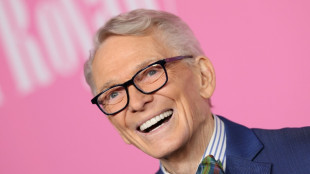 US designer Bob Mackie, known for Hollywood glamour, dies at 87
 BIS flags debt and profitability risks in AI-driven market rally
 Qatar Chamber and Maltese envoy consider business forum
 Spanish PM denies being blackmailed by Morocco
 Doha Islamic finance forum names AlRayan firms as co-lead partners
 Leeds thrash Newcastle to go third in the Premier League
 Zelensky says Ukraine ready for 'de-escalatory steps'

 In-form Malen fires Roma to Serie A summit, Inter on their heels
 Lebanese agency reports Israeli shelling and gunfire in south
 Expert proposes phased digital reform for Arab business schools
 Trump rejects 'hoax' warnings that AI could destroy humanity
 Houthis say Saudi Arabia hits Yemen with 54 strikes after attack on bases
 Why the far right is losing ground in Sweden
 Ex-Ireland fly-half O'Gara extends deal as La Rochelle coach

 Russian attacks on Ukraine railways escalating every week: rail CEO to AFP
 France, Iraq deepen energy, defence ties during Zaidi visit
 Trump says Ukraine, Russia agree not to hit energy targets

 Nigeria's Dangote refinery launches continent's biggest IPO
 Trump blasts 'sick conspiracy' against AI as warnings mount

 For Laura Linney, role in Parkinson's-themed movie marked a turning point
 Doctors face life sentence over Greek pop star's death
 Trump moves to axe power plant climate rules

 Slow the AI race? Investors weigh the potential cost

Serbian TV is a diet of women being beaten and threats issued at gunpoint. But this is not fiction. It is reality shows where, among others, infamous mobsters and war criminals are the stars.
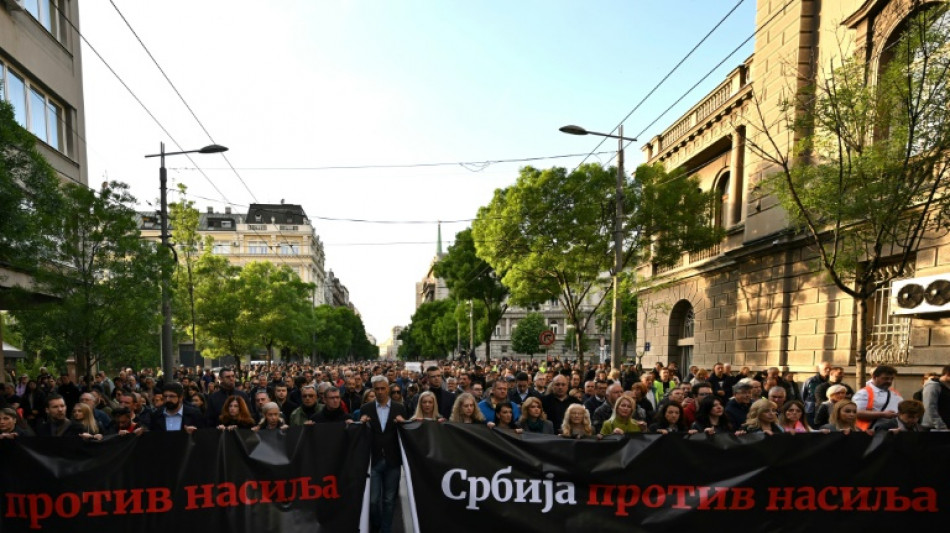
The shows have been widely popular for years but have recently found themselves in the crosshairs of an enraged public following two mass shootings that protestors say were in part rooted in a culture of violence fanned by the media.
Drunken arguments, gossip and the occasional fights have long been a staple of reality TV across the globe.
But in Serbia, the programmes have taken the genre to even greater lows.
Underworld figures, war criminals and the mentally unstable are regularly cast in series known for gratuitous levels of violence.
In 2021, around a dozen cast members watched impassively while a convicted felon strangled a woman unconscious on the show Zadruga -- one of the most popular reality series in the Balkan country.
"All my daughter's friends know who (the cast) are and to them, they are just TV stars. Not criminals or wife beaters, just stars" said Dejan Injac, a 44-year-old resident of Belgrade who joined the mass protests this week calling for the shows to be pulled from the air.
"I want it banned, simple as that. Those people can't be role models."
Injac is not alone.
Tens of thousands have taken to the streets in recent days calling for an outright ban on violent programming, following back-to-back shootings last week in which 17 people died -- including eight pupils at an elementary school in Belgrade.
- Criminal culture -
The burgeoning movement of outrage is led by a public seemingly fed up with pervasive levels of violence in Serbia, in politics and on TV.
Mobsters, war criminals and football hooligans are regularly celebrated and given a platform on pro-government media outlets.
Reality shows in particular have been popular for the past two decades in Serbia, but in recent years have taken on a much more violent tone in series featured heavily on pro-government broadcasters.
While some of the worst have run their course, the ultra-prominent Zadruga still airs frequently on Pink TV, one of the biggest channels in the country. And gratuitous brutality remains pervasive elsewhere on Serbia's small screens.
Criminal culture has long been a mainstay in Serbia.
Organised crime groups took control of vast swaths of the economy during the bloody breakup of Yugoslavia in the 1990s, when crippling Western sanctions led ordinary people to turn to the black market for basic provisions.
Mobsters and paramilitary figures grew rich during the war years while the rest of the country struggled, cementing a strong link between wealth and organised crime in the eyes of the public.
Critics say the mobs still have huge influence.
The advent of reality TV later brought members of the criminal underworld directly into people's homes, with their seedy lifestyles marketed as entertainment.
By one estimate, up to 60 percent of the programming on two of the country's most popular channels consisted of violent reality shows in recent years.
"You have a direct promotion of violence, crime and misogyny, which poured onto social media and later into society as a whole," said Savo Manojlovic, a Belgrade lawyer who advocates an end to the shows.
"They handpicked participants with psychological issues and criminal pasts, knowing exactly what they would do in that setting," he told AFP.
- 'Indoctrination' -
Broadcasters, however, appear to have started hedging following the recent shootings and subsequent protests.
Pink TV said it would keep Zadruga off air -- temporarily -- "out of our deepest sympathy and respect" for the victims of the mass shootings.
Serbian President Aleksandar Vucic has remained defiant in the face of the protests, calling the demonstrations a "political" stunt aimed at discrediting his right-wing populist government.
"We are ready to talk about reality shows... But they want my head. They never wanted anything other than that," said Vucic during an interview aired this week.
The president -- who opponents accuse of maintaining ties with criminal figures in Serbia -- has long been known for his confrontational style.
He and his party regularly demean political opponents and foreign rivals as "scum", "thieves" and "paedophiles", while parliamentary sessions are dominated by crude insults.
"Violence has become a dominant form of communication in Serbia -- not only in reality TV. We are exposed to constant political messages that opponents must be destroyed," Miklos Biro, a retired psychology professor, told AFP.
Belgrade University professor Jelena Djordjevic said the reality shows that feature on pro-government networks dovetail neatly with the current political climate, where aggression is largely rewarded.
The shows regularly air alongside political programming, including frequent interviews with Vucic, members of his party and other allies.
"I think that they knowingly and strategically target the uneducated, lonely and the miserable voters that enjoy such programmes and tie them to the TV they are watching," Djordjevic told AFP.
"This is a brutal way of indoctrination carried out by those in power."
R.Lee--AT