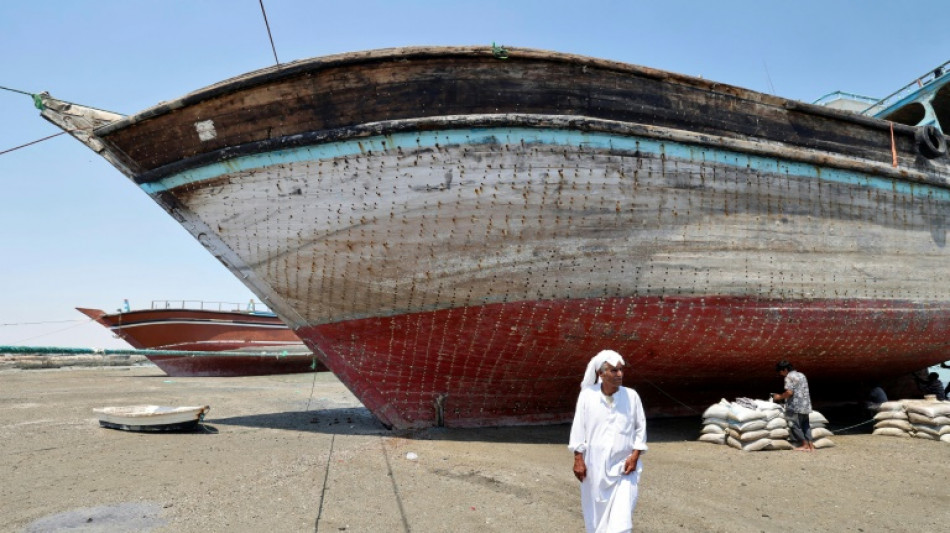
Winds of change buffet Iran's wooden boat building tradition / Photo: ATTA KENARE - AFP

 Himalayan glacier study warns of flood and water-supply risks

 Kuwait schools restore classroom routines after remote learning

 US designer Bob Mackie, known for Hollywood glamour, dies at 87
 BIS flags debt and profitability risks in AI-driven market rally

 Qatar Chamber and Maltese envoy consider business forum

 Spanish PM denies being blackmailed by Morocco

 Doha Islamic finance forum names AlRayan firms as co-lead partners

 Leeds thrash Newcastle to go third in the Premier League

 Zelensky says Ukraine ready for 'de-escalatory steps'

 In-form Malen fires Roma to Serie A summit, Inter on their heels

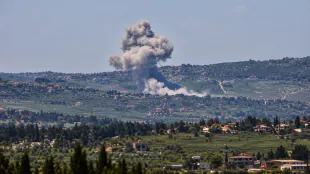 Lebanese agency reports Israeli shelling and gunfire in south

 Expert proposes phased digital reform for Arab business schools

 Trump rejects 'hoax' warnings that AI could destroy humanity

 Houthis say Saudi Arabia hits Yemen with 54 strikes after attack on bases

 Why the far right is losing ground in Sweden
 Ex-Ireland fly-half O'Gara extends deal as La Rochelle coach

 Russian attacks on Ukraine railways escalating every week: rail CEO to AFP

 France, Iraq deepen energy, defence ties during Zaidi visit

 Trump says Ukraine, Russia agree not to hit energy targets

 Nigeria's Dangote refinery launches continent's biggest IPO

 Trump blasts 'sick conspiracy' against AI as warnings mount

 For Laura Linney, role in Parkinson's-themed movie marked a turning point

 Doctors face life sentence over Greek pop star's death

 Trump moves to axe power plant climate rules

 Slow the AI race? Investors weigh the potential cost

Iranian captain Hassan Rostam has braved the Strait of Hormuz aboard his lenj for four decades, but now watches with despair as the wooden ships are being replaced by cheaper, faster boats.
The sturdy vessels, built by hand, have sailed Gulf waters for centuries, their potbellied silhouette emblematic of regional maritime traditions like the dhows of the Arabian Peninsula.
But these days, "there are fewer and fewer" of them, said Rostam, 62, who has spent his life travelling the waterway between Iran and the United Arab Emirates.
With a lean body and weathered face, he gazes at the calm seas that are criss-crossed by huge tankers taking Gulf oil to the world's markets, and naval vessels patrolling the strategic waterway.
But the island of Qeshm off Bandar Abbas is also home to the much older tradition of building wooden boats, around 30 of which were resting at low tide in the coastal village of Guran.
This small port has long housed several shipyards specialising in their maintenance and repair. But that morning, fewer than two dozen workers were there, barefoot in the mud.
A half-built lenj hull propped on beams will not be finished for lack of money, as its owner plans to dismantle it and use the boards for other projects.
"Today, a new lenj is very expensive" because "the wood comes from abroad" and construction is done entirely by hand, said Ali Pouzan, who supervises the Guran site.
Each lenj is unique and the ships vary in size, with the craft "transmitted from generation to generation", he said.
UNESCO back in 2011 recognised the lenj as intangible cultural heritage requiring "urgent safeguarding".
As modern alternatives have taken the wind out of its sails, "the philosophy, the ritual context and the traditional knowledge linked to navigation in the Persian Gulf... are gradually fading", the UN body warned.
- Open-air museum -
In their golden age, the rustic lenjes were used to transport cereals, dates, dried fish, spices, wood and textiles across the Gulf and as far as the coasts of East Africa and the Indian subcontinent.
But commercial shipping has been taken over by engine-powered boats made of fibreglass or steel, navigating the turquoise waters where huge oil tankers now roam.
Lenj vessels were also used for fishing, as well as the lucrative pearling tradition, which has nearly disappeared altogether.
Younes, a 42-year-old Guran resident, has been repairing lenjes in his native village for more than 20 years.
"It's a painful job," he said in the baking heat, as he used an old technique called "kalfat koobi" to waterproof a vessel with strips of cotton soaked in sesame and coconut oil.
Recognising the demise of shipbuilding in Guran, Pouzan is betting on tourism instead, a promising sector on Qeshm as the island attracts a growing number of visitors.
"We have restored several boats to adapt them to sea trips," he said.
An old ship was being repurposed into a cafe, and there are plans to transform the scenic port, with coloured lenj hulls lying in the sand, into an open-air museum.
Near mangroves on the beach, Pouzan plans to build lenj-inspired huts for tourists. Each will bear the name of the most famous destinations the ships once reached -- from Zanzibar and Mombasa to Kolkata.
Ch.Campbell--AT