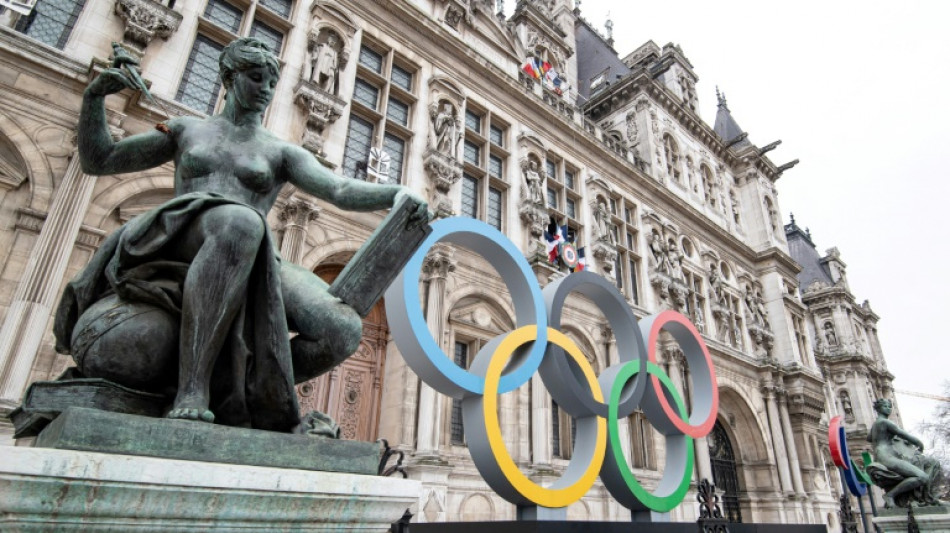
French gastronomy facing huge logistical challenge for Olympics / Photo: ALAIN JOCARD - AFP

 Himalayan glacier study warns of flood and water-supply risks

 Kuwait schools restore classroom routines after remote learning

 US designer Bob Mackie, known for Hollywood glamour, dies at 87

 BIS flags debt and profitability risks in AI-driven market rally

 Qatar Chamber and Maltese envoy consider business forum

 Spanish PM denies being blackmailed by Morocco

 Doha Islamic finance forum names AlRayan firms as co-lead partners

 Leeds thrash Newcastle to go third in the Premier League

 Zelensky says Ukraine ready for 'de-escalatory steps'

 In-form Malen fires Roma to Serie A summit, Inter on their heels

 Lebanese agency reports Israeli shelling and gunfire in south

 Expert proposes phased digital reform for Arab business schools

 Trump rejects 'hoax' warnings that AI could destroy humanity

 Houthis say Saudi Arabia hits Yemen with 54 strikes after attack on bases

 Why the far right is losing ground in Sweden
 Ex-Ireland fly-half O'Gara extends deal as La Rochelle coach

 Russian attacks on Ukraine railways escalating every week: rail CEO to AFP

 France, Iraq deepen energy, defence ties during Zaidi visit

 Trump says Ukraine, Russia agree not to hit energy targets

 Nigeria's Dangote refinery launches continent's biggest IPO

 Trump blasts 'sick conspiracy' against AI as warnings mount

 For Laura Linney, role in Parkinson's-themed movie marked a turning point

 Doctors face life sentence over Greek pop star's death

 Trump moves to axe power plant climate rules

 Slow the AI race? Investors weigh the potential cost

France's vaunted gastronomy will be put to the ultimate test when organisers of the 2024 Paris Olympics have to feed 15,000 athletes.
The United Nations Educational, Scientific and Cultural Organization (UNESCO) inscribed the "gastronomic meal of the French" on its Representative List of the Intangible Cultural Heritage of Humanity in 2010.
"The gastronomic meal emphasises togetherness, the pleasure of taste, and the balance between human beings and the products of nature," UNESCO said.
"The gastronomic meal should respect a fixed structure, commencing with an aperitif (drinks before the meal) and ending with liqueurs, containing in between at least four successive courses, namely a starter, fish and/or meat with vegetables, cheese and dessert."
Realistically, the restaurants run by French catering giants Sodexo might not be offering up such a complete experience -- and doubtless few athletes in the prime of their lives would take on such a culinary bonanza given they will be in Paris on tight schedules focused more on competing than indulging themselves.
Around 40,000 meals a day will be served during the Paris Olympics, using produce largely sourced in France.
Sodexo, through its subsidiary Sodexo Live!, already has experience of catering high-profile sporting events such as the Super Bowl, tennis' French Open and the Tour de France cycling race.
But it will have its work cut out feeding participants at the July 26-August 11 Games and then the Paralympics that follow on August 28-September 8.
- Three million bananas -
Some 6,000 people will be employed to help in the restaurants, Sodexo Live! managing director Nathalie Bellon-Szabo said on Tuesday.
In addition to the Olympic Village, Sodexo will also cater 14 other Olympic sites and eight Paralympic venues throughout France.
Games organisers have made no secret of what they will be serving up: more vegetables than usual with an emphasis on locally-grown products.
Of the estimated 13 million meals that will be served during the Olympics and Paralympics, from a snack right through to a dish cooked by a top chef, the goal is to have produce that is 80% French.
It is a "huge logistical challenge", says Philipp Wuerz, project manager for catering, cleaning and waste on the Paris 2024 organising committee.
Avoiding queues, providing food that is healthy, varied and of good quality, with 25% of produce sourced "from within 250km" of each site, is challenging to say the least.
"We're used to managing this type of event, but not over such a long period of time," says Stephane Chicheri, chief executive of Sodexo Live!
There will be a necessity to remain "adaptable" over potential supply chain issues and price hikes for certain produce, Maxime Jacob, the organising committee's catering project manager, told AFP.
The athletes can choose from 500 recipes, which are currently undergoing fine-tuning before menus are signed off by the end of this year.
It is impossible, however, to be 100% local, Wuerz said.
"The athletes will eat around three million bananas and they don't grow in the Paris region!"
Bananas, exotic fruits and rice will nevertheless be "organic or fair-trade certified", Wuerz says.
All meat and dairy products will be 100% French, while seafood will be from sustainable fishing.
The recipes have been drawn up after consulting athletes and nutritional experts, including Helene Defrance, a dietician who won a sailing bronze medal at the 2016 Rio Olympics.
"There are no set menus" because organisers have to adapt to the food habits of every athlete, Defrance says, be it light meals or carbo-loading.
During their stay at the village in the Seine-Saint-Denis region north of Paris, athletes will also be treated to haute cuisine.
A trio of French chefs will have their own space next to the main Olympic food hall.
Amandine Chaignot will serve up guinea fowl with langoustines or gnocchi in chicken sauce. Akrame Benallal has come up with a crispy quinoa muesli, while you can expect Alexandre Mazzia to produce a herb-packed chickpea pommade.
The main food hall will have 3,600 seats and offer up dishes that are not just French-themed but also from around the world, as well as halal food for Muslim athletes, Jacob said.
In a bid to help make the Games more sustainable, water fountains will be installed to reduce single-use plastics, while the kitchen equipment and cutlery will all be re-used after the Paralympics brings an end to a colossal logistic challenge.
N.Walker--AT