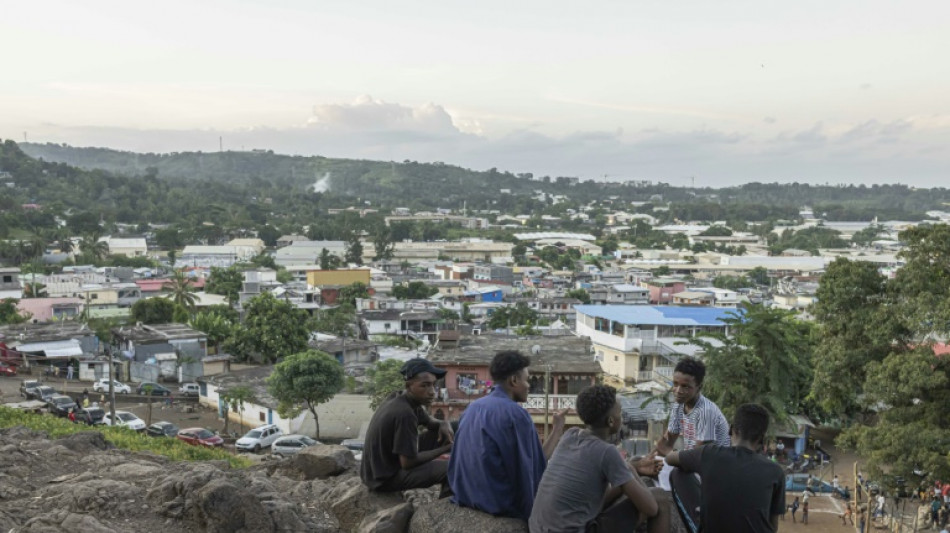
Kaweni: France's biggest shantytown in the Indian Ocean / Photo: Patrick Meinhardt - AFP

 Mahomes makes triumphant return as Chiefs rout Broncos 31-10

 Belgium completes outer structure of offshore energy island

 Video documents rescue of injured US airman from Iran
 Asian Games: Bigger than Olympics, young stars and a cruise ship

 Asian Games set for liftoff but will have everyone have a bed?

 Most markets drop as oil extends gains ahead of expected US rate hike
 Kate Beckinsale challenges assumptions about her beauty routine

 Sri Lanka's famed beach shack battles demolition

 Drone shot down by NATO over Lithuania

 Vserv targets ₹1,000 crore revenue by 2030 through AI expansion

 India prohibits bank fees on UPI payments up to ₹2,000

 Air India CEO summoned over alleged departure immigration lapse

 New Zealand agencies missed red flags in child kidnapping case: inquiry

 Brazil's Amazon defender Raoni has cancer

 HFCL expands planned fibre investment to ₹1,800 crore

 Emmy Awards begin as 'Widow's Bay' and 'The Pitt' vie for top prizes

 PRAAMS Launches AI Co-Investor 5.0, Expanding Its Institutional Research, Risk Management, and Portfolio Management Platform

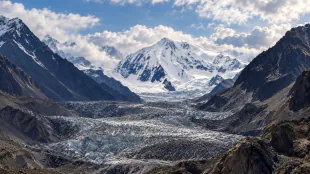 Himalayan glacier study warns of flood and water-supply risks

 Kuwait schools restore classroom routines after remote learning

 US designer Bob Mackie, known for Hollywood glamour, dies at 87
 BIS flags debt and profitability risks in AI-driven market rally

 Qatar Chamber and Maltese envoy consider business forum

 Spanish PM denies being blackmailed by Morocco

 Doha Islamic finance forum names AlRayan firms as co-lead partners

 Leeds thrash Newcastle to go third in the Premier League

With its maze of huts housing 15,000 souls on a green hillside in the Indian Ocean island of Mayotte, Kaweni has grown into France's largest shantytown.
A carpet of corrugated iron roofs and jumbled electric cables cascades down the hill above the main road in the Mamoudzuo district on the east of the island.
Home to many undocumented Comoran migrants, Kaweni stands in stark contrast with the middle-class neighbourhood and education complex on the other side of the road.
It's "the largest shantytown in France and we're not proud of this record," the area's mayor Ambdilwahedou Soumaila told AFP.
"A slum is first and foremost a sanitary and ecological hazard, it's an indignity for the nation," he said.
French authorities are planning to clear slums and expel undocumented migrants from Mayotte, blaming both for increased insecurity.
But inside Kaweni, 28-year-old civil society activist Mohamed Hamada said a security operation was not the solution.
Fistbumping acquaintances, he walked through the neighbourhood's bustling alleys to the top of the hill, where barefoot boys kicked a football on a dry earth pitch.
Nearby, elderly men drank tea on a mat, gazing out over the shantytown to the sun setting on the Indian Ocean beyond.
"There has been a huge population increase here since the noughties," said Hamada, who acts as a spokesman for Kaweni's youth on a popular Instagram page.
Residents have had children, and many unaccompanied minors have arrived in search of a better life after making the perilous sea journey over from the neighbouring Comoros, he said.
- 'Like it to stop' -
The French government operation to improve security on the island, dubbed Wuambushu ("Take Back" in the local language), has sparked an uproar in recent days.
It has triggered clashes between youths and some of the 1,800 members of the security forces deployed to carry out the operation, and a diplomatic spat with the Comoros.
While Kaweni is not an immediate target for demolition, government plans have left Kaweni residents feeling uneasy.
"We don't want Wuambushu to come here. We're happy here, at home," said 38-year-old Comoran Anzline Salim.
"We'd like the whole thing to stop and to have houses."
The government says the island is plagued by violence, with rival gangs from different neighbourhoods facing off against each other.
At the moment, the unrest has largely stayed at bay.
But Kaweni residents are staying alert as they lie in between two other settlements, Majicavo to the north and Doujani to the south, whose gangs have targeted them in the past.
In November, a gang from Doujani killed a youth from Kaweni with a machete. Then assailants threw stones at a schoolbus and laid into its passengers with knives.
- 'Revenge on life' -
Hamada, a local with Comoran origins who goes by the nickname "Mario", says he dabbled in delinquency when he was younger but has reformed his ways.
These days, he keeps an eye over the younger generation and tries to make sure they don't get into trouble.
"Young people have nothing to do, they're easy prey for delinquency," Hamada said.
In Kaweni, where children go to school on a rotational basis for lack of seats, there are few activities after class.
Residents, many of whom are Comoran from the island of Anjouan some 70 kilometres (45 miles) away, eke out a living through odd jobs in construction, agriculture and services.
After dark, girls stay at home to look after younger siblings or help in household chores, often in stifling heat trapped under corrugated iron.
Teenage boys hang out in the street, some topless, wearing bling rings and chains around their necks. They go by names like "Amigo", "Maksimo" and "De Lago".
A few stretch out on the top of cars, waiting for some "action".
"Violence is their revenge on life," said Hamada.
"They say that with a machete, they acquire status in the neighbourhood. For them, violence is just another distraction, a game of adrenaline."
The young social media entrepreneur says the state's operation is not the solution.
"They need to be drawn away from all this, they need to be given standing through something else -- music, sport, even social media," he said.
"Anything so that they have a reputation, to teach them how to command respect in a different way."
A.O.Scott--AT