
Eurozone GDP grows 0.1% in first three months of 2023 / Photo: JAMES ARTHUR GEKIERE - BELGA/AFP/File

 Mahomes makes triumphant return as Chiefs rout Broncos 31-10

 Belgium completes outer structure of offshore energy island

 Video documents rescue of injured US airman from Iran

 Asian Games: Bigger than Olympics, young stars and a cruise ship

 Asian Games set for liftoff but will have everyone have a bed?

 Most markets drop as oil extends gains ahead of expected US rate hike

 Kate Beckinsale challenges assumptions about her beauty routine

 Sri Lanka's famed beach shack battles demolition

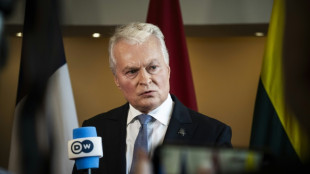 Drone shot down by NATO over Lithuania

 Vserv targets ₹1,000 crore revenue by 2030 through AI expansion

 India prohibits bank fees on UPI payments up to ₹2,000

 Air India CEO summoned over alleged departure immigration lapse

 New Zealand agencies missed red flags in child kidnapping case: inquiry

 Brazil's Amazon defender Raoni has cancer

 HFCL expands planned fibre investment to ₹1,800 crore

 Emmy Awards begin as 'Widow's Bay' and 'The Pitt' vie for top prizes

 PRAAMS Launches AI Co-Investor 5.0, Expanding Its Institutional Research, Risk Management, and Portfolio Management Platform

 Himalayan glacier study warns of flood and water-supply risks

 Kuwait schools restore classroom routines after remote learning

 US designer Bob Mackie, known for Hollywood glamour, dies at 87

 BIS flags debt and profitability risks in AI-driven market rally

 Qatar Chamber and Maltese envoy consider business forum

 Spanish PM denies being blackmailed by Morocco

 Doha Islamic finance forum names AlRayan firms as co-lead partners

 Leeds thrash Newcastle to go third in the Premier League

The eurozone economy lumbered forward in the first quarter, official data showed Friday, expanding just 0.1 percent over the previous quarter as high inflation and interest rates weigh on activity.
Germany, the EU's biggest economy, saw growth stagnate at zero percent over the previous quarter.
Year-on-year, Germany was the only country in the single-currency zone to record a contraction, of 0.1 percent.
For the European Union overall, GDP expanded 0.3 percent over the previous quarter, according to the figures from Eurostat, the EU's statistics office.
The weak-but-positive figure for the eurozone mirrored the reading for the last quarter of 2022, which was also 0.1 percent growth, confirming it had so-far escaped recession but that high inflation was still a dampener.
Although eurozone inflation has eased somewhat, it is still 6.9 percent on an annualised basis, more than three times the European Central Bank's target of two percent.
The ECB holds its next monetary policy meeting on Thursday, and all eyes are on it to see if it raises rates yet again, and if so by how much.
The central bank has raised rates by 3.5 percent since July last year and its chief economist, Philip Lane, said this week that "this is still not the right time to stop".
Eurostat's preliminary data suggested Germany was still struggling from the fallout of Russia's war in Ukraine, especially the shift away from Russian gas that has powered much of its industry.
The strongest quarter-on-quarter GDP performer was Portugal, with growth of 1.6 percent, followed by Spain, Italy and Latvia all on 0.5 percent. France, the second-biggest EU economy, showed growth of 0.2 percent.
Quarter-on-quarter declines were recorded for Ireland, at 2.7 percent, and Austria, at 0.3 percent
- Recession cloud over Germany -
Economic analysis firm Oxford Economics said the Eurostat data for the eurozone was slightly lower than its estimate of 0.2 percent.
"We don't expect growth to pick up meaningfully over the course of 2023," it said.
It added that a strong start for eurozone industry early this year "will likely be short lived" as inflation and a tougher financial climate weigh on growth.
ING Economics said the meagre growth was "better than feared –- but clearly no reason to cheer".
While the single-currency area has dodged a recession that months ago looked all but inevitable, thanks largely to a warm winter, a drop in wholesale energy prices and China's reopening, "there is no reason for complacency," it said.
Divergence among member states was a worry, ING Economics added, pointing out that Germany "remains in recessionary territory" -- a headache for the ECB as it sets rates, and a possible sign of a "structural" shift.
It predicted "subdued growth going into 2024".
That gels with the forecast from the IMF, which sees eurozone economic growth accelerating only next year.
Inflation remains the bugbear in the eurozone, feeding through to higher wages that, while a short-term fillip, could give the ECB more reason to tighten monetary policy further.
A further worry is slowing growth in the United States, where a similar debate is raging over the impact further rates rises could have.
For the eurozone, ING Economics called it "a race between two opposing drivers: the positive momentum in industry and wage increases against the impact of monetary policy tightening and a looming US recession".
Y.Baker--AT