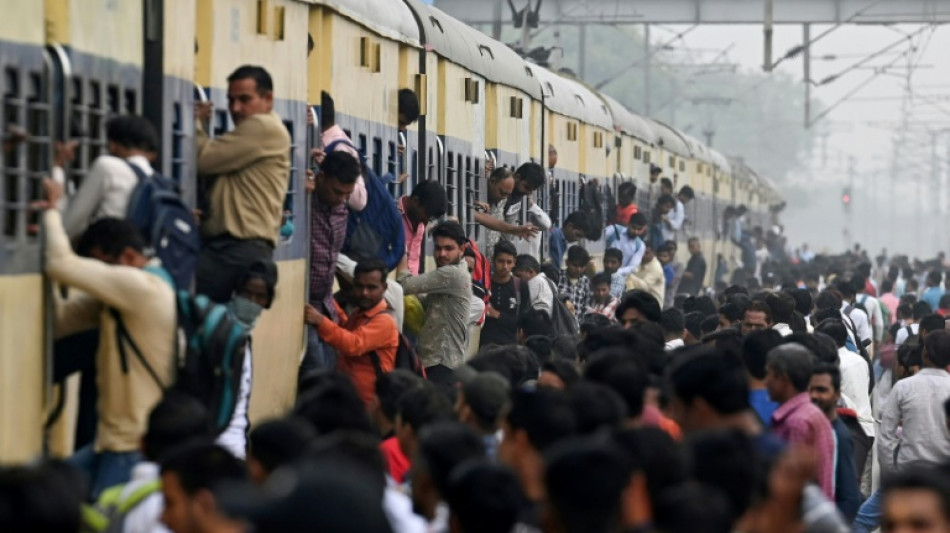
'Cut-throat competition' fuels misery in India's crowded cities / Photo: Arun SANKAR - AFP/File

 SkySail Strategies Outperforms Wall Street's 30-Year Risk Standard With Proprietary AI Inference Model

 Canada ends refugee family sponsorship exemption over integrity concerns
 Berlin's run-down public spaces at heart of election campaign

 Ribeiro and Richie among celebrity birthdays for September 20–26

 Bob Mackie, costume designer for Cher and Madonna, dies aged 87

 Mahomes makes triumphant return as Chiefs rout Broncos 31-10

 Belgium completes outer structure of offshore energy island

 Video documents rescue of injured US airman from Iran

 Asian Games: Bigger than Olympics, young stars and a cruise ship

 Asian Games set for liftoff but will have everyone have a bed?

 Most markets drop as oil extends gains ahead of expected US rate hike

 Kate Beckinsale challenges assumptions about her beauty routine

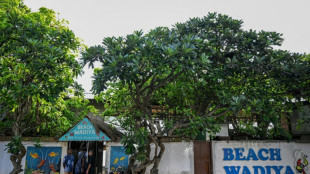 Sri Lanka's famed beach shack battles demolition

 Drone shot down by NATO over Lithuania

 Vserv targets ₹1,000 crore revenue by 2030 through AI expansion

 India prohibits bank fees on UPI payments up to ₹2,000

 Air India CEO summoned over alleged departure immigration lapse

 New Zealand agencies missed red flags in child kidnapping case: inquiry

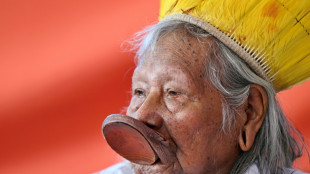 Brazil's Amazon defender Raoni has cancer
 HFCL expands planned fibre investment to ₹1,800 crore

 Emmy Awards begin as 'Widow's Bay' and 'The Pitt' vie for top prizes

 PRAAMS Launches AI Co-Investor 5.0, Expanding Its Institutional Research, Risk Management, and Portfolio Management Platform

 How to Simplify Your Finances in One Weekend
 Trump rejects AI slowdown concerns as UN urges coordinated controls

 US judge postpones new visa rules for foreign students, journalists

Every morning and evening -- and for several hours in between -- tens of millions of Indians sit idle on gridlocked highways and hang from the sides of packed passenger trains in what is becoming the world's most populous nation.
For those living cheek-by-jowl in the country's sprawling megacities, the thought of cohabiting with even more people is no cause for cheer.
The United Nations said Monday that India -- already boasting 1.43 billion people -- would this week overtake China to earn the distinction of being home to more humans than any other country on the planet.
India is projected to see an explosion in its urban population in the coming decades, with over 270 million more people forecast to live in its cities by 2040.
But congestion and overcrowding are already perennial sources of frustration for their inhabitants.
"The roads are choked with vehicles, so you spend hours in traffic jams," Satish Manchanda, a mobile phone shop owner in the capital New Delhi, told AFP before embarking on his evening commute.
Manchanda and millions of others spend hours each day travelling to and from homes on the outskirts of cities already struggling with water shortages, pollution and packed slums.
About 70 percent of the billions of litres of sewage produced in urban centres every day goes untreated, a government report said in 2021.
New Delhi, home to 20 million people, is cloaked in toxic air pollution every winter that caused almost 17,500 premature deaths in 2019, according to a study in the Lancet medical journal.
Indian cities also face huge challenges in providing electricity, housing, services and jobs for their growing populations.
Banker Sonam Vardan bemoaned the "cut-throat competition" in her career and the seemingly endless fights that accompany her daily life in New Delhi.
"Population is growing, so is competition, which means lots of struggle," she told AFP, cataloguing her constant battles against rival job applicants, other parents and motorists who were all vying for their share of the same limited resources.
"There's also a struggle for admission of children in schools," she added. "There are limited seats, but so many children."
M.Robinson--AT