Ukrainian farmers worried as allies choke off export route / Photo: Sergei SUPINSKY - AFP

 BASIS.pro Expands On-Chain Infrastructure with XDC Network Partnership and Zypher DAO as Auto Earn Goes Live
 Samson relishing battle with teen star Sooryavanshi for India spot
 Pickle-flavoured tart? AI inspires Japan's convenience stores
 Macau holds first closed-door national security trial
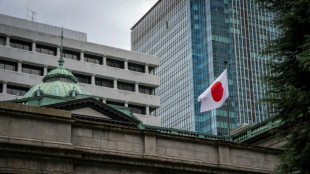 Bank of Japan set to raise rates under pressure from inflation, US

 Zverev, Shelton back on court for Davis Cup qualifiers
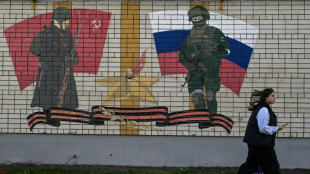 Peace is a 'dangerous' word in Russian city heading to polls
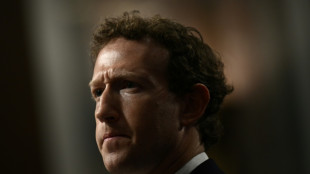 Meta chief pushes back on AI slowdown calls

 'Resident Evil' film brings video game's ethos to the big screen
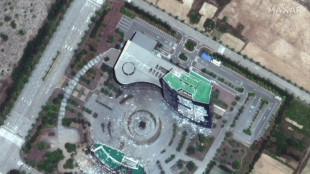 Court orders N. Korea pay Seoul $32.5 mn for blowing up office

 US military buildup in Palau stirs war fears
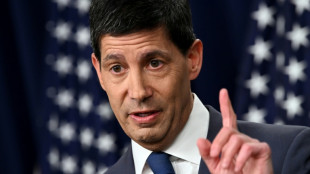 US Fed to deliver rate decision with markets betting on hike
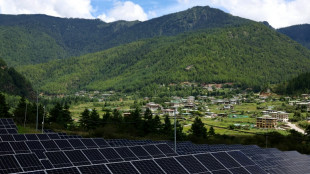
 Saudi, Egypt demand open Red Sea as Riyadh vows response to Houthi attacks

 VX Logistics Transforms Fresh Fruit and Vegetables Industry Through Application of AI and World-first Robot

 Tocvan Expands Near-Surface Gold at El Mezquite: 47.7 m of 0.8 g/t Au Including 2.8 m of 8.4 g/t Au and 54 g/t Ag

 FireFox Gold Announces Discovery of the Lammas Zone, Intersecting 21.0m at 4.13 g/t Gold More Than 650m From Previous Drilling at the Mustajärvi Project in Lapland, Finland

 Great Western Mining Corporation Plc Announces Excellent Tungsten Recovery Rate from Bulk Sample

 Capitals say hockey star Ovechkin 'was asked' to film Putin ad

 Spurs in 'tough moment' after League Cup exit as De Zerbi says sorry

 Arteta salutes 'unbelievable' Dowman after Arsenal's teen star sinks Ipswich

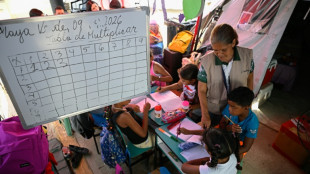 Empty seats as schools reopen in Venezuela's quake-hit Guaira

 Messi set for Argentina farewell in Benin friendly

 Ton-up Brook leads from the front as England hammer Sri Lanka in 1st T20

 AI giants pursue self-regulation as safety fears mount

 Argentina begin life after Messi with Bolivia friendly

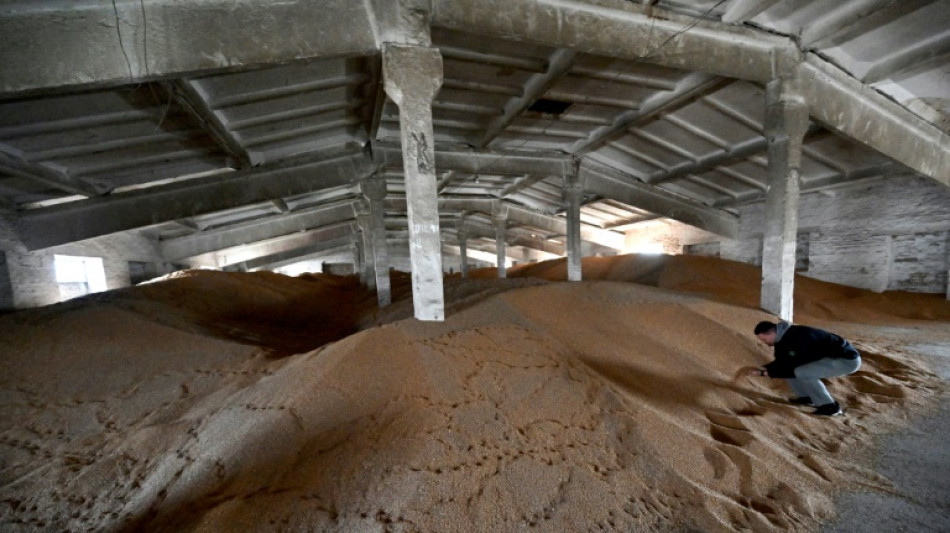
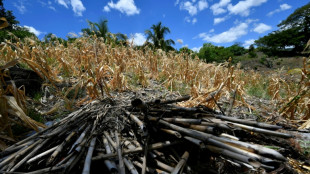
Petro Potapenko looks at the piles of grain on his farm and wonders if he will be able to export his production now that Ukraine's western neighbours have imposed import restrictions.
The 34-year-old farmer bends down and runs his hands through the yellow and white grain kept in a warehouse in the village of Kypiachka, around 100 kilometres south of the capital Kyiv.
Over a year following Russia's invasion that has devastated Kyiv's agricultural industry, Ukraine's western neighbours -- Poland, Slovakia and Hungary -- have imposed temporary bans on Ukrainian grain and food imports.
Poland, Kyiv's key ally against Russia, introduced the ban following protests by local farmers.
Hungary and Slovakia -- which also border Ukraine -- introduced similar restrictions.
Potapenko felt the effects of the ban straight away.
As soon as the Polish ban was announced last week, Ukrainian sunflower oil manufacturers stopped buying seeds for lack of a guarantee of being able to export their production to the EU.
"I can no longer sell my seeds," Potapenko said.
Russia's invasion has severely limited the traditional export channel of Ukrainian grain via the Black Sea. A considerable part of that has been westwards, via EU nations.
Ukraine's farmers are now blocked from all sides, Potapenko said .
"This is happening in the context of Russia slowing down the work of the grain corridor (via the Black Sea), and now there are more problems on the border with Poland," he said.
"It's a big problem, we still have large grain surpluses."
- 'The grain has nowhere to go' -
Further south in the Cherkasy region, in central Ukraine, farmers are also feeling the bite of the new restrictions imposed by Kyiv's allies.
Ihor Novytsky, the deputy director of a local agricultural firm, said exports are closed on all sides.
"Europe is closed, all the ports are closed (by Russia)," he said.
"The grain has nowhere to go."
Novytsky said that if the restrictions continue, Ukrainian farmers will "simply go bankrupt".
He said he believes the decision by Poland's nationalist government is a political ahead of parliamentary elections later this year.
"In Poland, elections are coming soon, so they blocked it."
- Strict controls -
Warsaw partially lifted the ban on Friday, but across the border in Ukraine, few farmers were reassured.
Polish officials have said strict controls will be imposed to ensure that shipments transit the country and are not sold on the local market.
This includes placing electronic seals on shipments, which will be escorted by Polish customs officers for the first week.
Potapenko said this may be a "little better" than a total blockade, but that "additional controls" at the border will likely increase shipping costs.
"The more time the carrier wastes, the more it will charge you later for the time spent queueing, passing inspections."
The tensions between Kyiv and its European neighbours arose as uncertainty looms over the scheduled May 18 renewal of a deal ensuring the Black Sea grain corridor is operational.
An estimated 60 percent of Ukrainian grain exports pass through the Black Sea.
Russia, another major global grain exporter, has threatened to suspend the crucial global grain deal, complaining that its own production is hampered by Western sanctions.
After over a year of battling Russian forces, some in Ukraine seemed to see Russia's hand behind the crisis with neighbouring countries.
"It smells of Russian involvement," said Andriy Dykun, the head of the Ukrainian grain association.
"Someone organises the protests (of European farmers), publicises them, it does not happen itself," he said.
Launched from the east, south and north, Russia's invasion of Ukraine ravaged the agricultural industry in a country renowned for its fertile black soil.
Before the invasion, Ukraine was the world's fourth largest exporter of corn and on its way of becoming the third exporter of wheat.
Since then, vast swathes of cultivated territory have either fallen under Russian occupation or become unusable following fighting that left fields pockmarked by shells and possibly littered with mines and unexploded ordonnance.
Agricultural production has fallen dramatically. The grain and oilseed harvest fell from 106 tonnes in 2021 -- a record -- to 65 million tonnes in 2022.
It could fall further to around 50-55 million tonnes this year, according to experts.
W.Nelson--AT