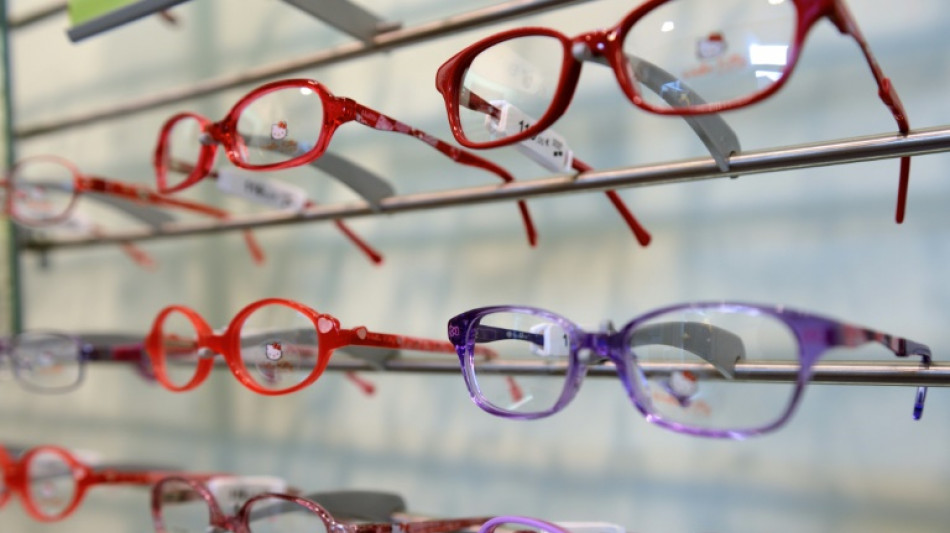
Hope special glasses can slow surging myopia in children / Photo: DENIS CHARLET - AFP/File

 French court to hear Depardieu's appeal against rape trial order: sources
 The German state premier hoping to halt far-right surge
 Lebanon wants Israel security deal as prelude to peace: president to AFP
 England's Brook keen to learn from 'hero' Pietersen after stunning ton
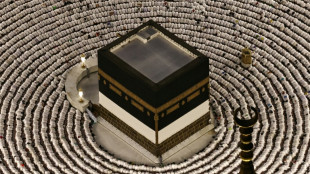 Saudi says Houthis target Mecca, warns of 'red line'

 Phillippines ex-leader Duterte makes first appearance at ICC
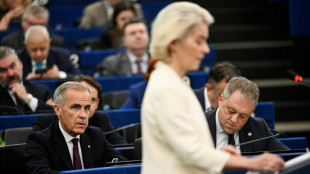
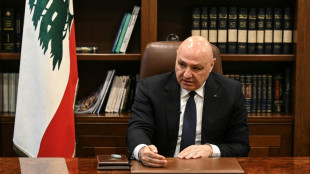 Lebanon wants Israel security deal, Hezbollah disarmament without confrontation: president to AFP

 BASIS.pro Expands On-Chain Infrastructure with XDC Network Partnership and Zypher DAO as Auto Earn Goes Live

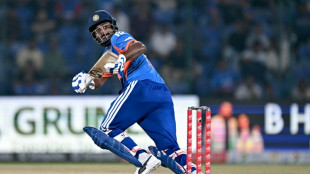 Samson relishing battle with teen star Sooryavanshi for India spot
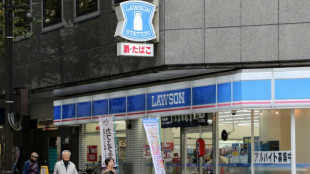 Pickle-flavoured tart? AI inspires Japan's convenience stores

 Macau holds first closed-door national security trial
 Bank of Japan set to raise rates under pressure from inflation, US
 Zverev, Shelton back on court for Davis Cup qualifiers
 Peace is a 'dangerous' word in Russian city heading to polls

 Meta chief pushes back on AI slowdown calls
 'Resident Evil' film brings video game's ethos to the big screen
 Court orders N. Korea pay Seoul $32.5 mn for blowing up office
 US military buildup in Palau stirs war fears
 US Fed to deliver rate decision with markets betting on hike
 Saudi, Egypt demand open Red Sea as Riyadh vows response to Houthi attacks
 Physical Gold IRA Investing Guide Released by Experts (2026 Update)

 Tocvan Expands Near-Surface Gold at El Mezquite: 47.7 m of 0.8 g/t Au Including 2.8 m of 8.4 g/t Au and 54 g/t Ag

 FireFox Gold Announces Discovery of the Lammas Zone, Intersecting 21.0m at 4.13 g/t Gold More Than 650m From Previous Drilling at the Mustajärvi Project in Lapland, Finland
 Smith & Nephew Plc Announces Result of Cash Tender Offer for 2030 Bonds
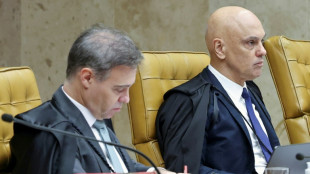 Brazil's Supreme Court clashes over handling of probe involving judge
Two years ago, Paul's teacher noticed that the 10-year-old boy could no longer see anything on the board at the front of the class.
An ophthalmologist confirmed that Paul was one of the soaring number of children worldwide with myopia, also known as nearsightedness, an eye condition projected to affect half of the world's population by 2050.
But the ophthalmologist in the western French city of Nantes had some good news: specially designed glasses had just become available that could slow down the progression of Paul's myopia.
"After a year, the results were quite positive because his eyesight seemed to have stabilised," Paul's mother Caroline Boudet told AFP.
Previous research has suggested that myopia progresses 60 percent slower in children wearing the "Miyosmart" glasses compared to normal prescription glasses.
A six-year clinical study also found that the disorder did not start speeding up again if the children stopped using the glasses.
Developed by Japan's Hoya Corporation, the Miyosmart lenses, which also function as normal glasses to help the children see clearly, have been available in numerous European countries including France and the UK for around two years.
Eyewear firm EssilorLuxottica claims its own Stellest lenses reduce myopia's progression by 67 percent when worn at least 12 hours a day.
The Italian-French firm said the glasses could save more than one dioptre -- the unit of measurement for optical power -- over three years.
Myopia occurs when there is too much distance between the cornea and retina, making far-off objects appear blurry.
Both Miyosmart and Stellest glasses deploy hundreds of tiny lenses to counteract peripheral hyperopic defocus in which light falls behind the retina, causing the eyeball to get longer and making myopia worse.
The Miyosmart glasses are not available in the United States, however contact lenses that work on a similar principal from the California firm CooperVision have been approved by the US Food and Drug Administration.
- 'The myopia generation' -
Research has suggested that the percentage of people affected by myopia worldwide could surge from 27 percent in 2010 to 52 percent by 2050.
Children with at least one nearsighted parent are more likely to develop the condition -- however no one in Paul's family is myopic.
Environmental rather than genetic causes are believed to be behind the explosion of cases.
Children spending more time indoors, being exposed to less natural light, and looking at nearby objects such as screens has likely brought about what has been dubbed "the myopia generation," according to researchers.
Claude Speeg-Schatz, head of the French Society of Ophthalmology, said she was "quite amazed" by the new glasses slowing myopia's progression.
"We have tried many things to avoid myopia, but this is the first time that we have a system which really works," she said.
For recently diagnosed children, she first prescribes normal corrective glasses.
"If the myopia increases, then I automatically prescribe" the myopia control glasses, she said.
French ophthalmologist Jimmy Chammas said the glasses were "a real gain for children".
"The myopia of those who wear these glasses deteriorates half as much as we would have expected -- if at all," he said.
One obstacle is that the glasses cost more for parents, with prices depending on the country.
Jean-Michel Lambert, head of Hoya Vision Care France, called for the glasses to be reimbursed by French health services.
"Each dioptre lost considerably increases the risk of future pathologies," he said, adding that "if we slow down myopia, it will be one less cost for society".
If a prescription reads -2, that indicates two dioptres of nearsightedness.
Nearsightedness of -6 dioptres or more is called high myopia, which can increase the risk of serious eye damage such as retinal detachment, glaucoma or early onset cataracts.
W.Moreno--AT