Unsound climate studies sneak into print: scientists / Photo: Luka GONZALES - AFP

 French court to hear Depardieu's appeal against rape trial order: sources
 The German state premier hoping to halt far-right surge
 Lebanon wants Israel security deal as prelude to peace: president to AFP
 England's Brook keen to learn from 'hero' Pietersen after stunning ton
 Saudi says Houthis target Mecca, warns of 'red line'
 Phillippines ex-leader Duterte makes first appearance at ICC
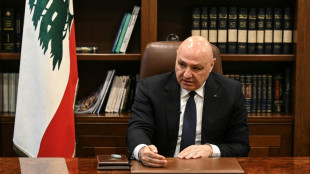 Lebanon wants Israel security deal, Hezbollah disarmament without confrontation: president to AFP

 BASIS.pro Expands On-Chain Infrastructure with XDC Network Partnership and Zypher DAO as Auto Earn Goes Live
 Samson relishing battle with teen star Sooryavanshi for India spot
 Pickle-flavoured tart? AI inspires Japan's convenience stores

 Macau holds first closed-door national security trial
 Bank of Japan set to raise rates under pressure from inflation, US
 Zverev, Shelton back on court for Davis Cup qualifiers
 Peace is a 'dangerous' word in Russian city heading to polls
 Meta chief pushes back on AI slowdown calls

 'Resident Evil' film brings video game's ethos to the big screen
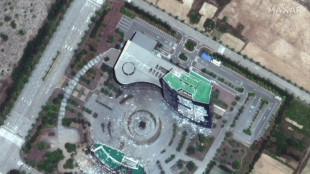 Court orders N. Korea pay Seoul $32.5 mn for blowing up office
 US military buildup in Palau stirs war fears
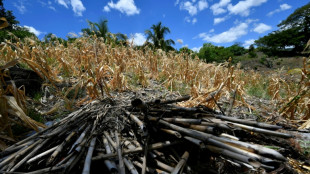
 US Fed to deliver rate decision with markets betting on hike
 Saudi, Egypt demand open Red Sea as Riyadh vows response to Houthi attacks
 Physical Gold IRA Investing Guide Released by Experts (2026 Update)

 Tocvan Expands Near-Surface Gold at El Mezquite: 47.7 m of 0.8 g/t Au Including 2.8 m of 8.4 g/t Au and 54 g/t Ag

 FireFox Gold Announces Discovery of the Lammas Zone, Intersecting 21.0m at 4.13 g/t Gold More Than 650m From Previous Drilling at the Mustajärvi Project in Lapland, Finland

 Smith & Nephew Plc Announces Result of Cash Tender Offer for 2030 Bonds

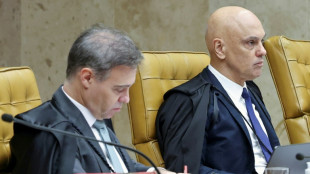 Brazil's Supreme Court clashes over handling of probe involving judge
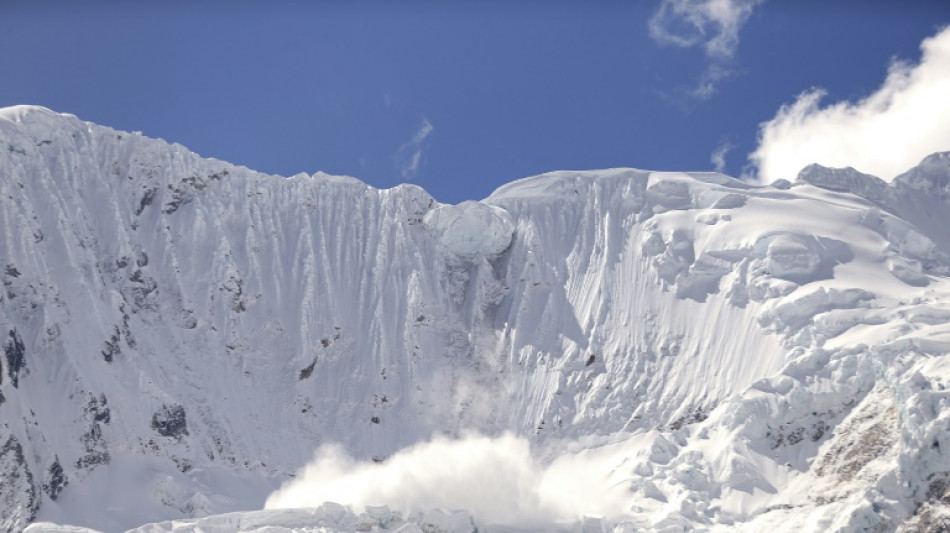
Misleading studies sowing doubt about climate change are getting into peer-reviewed journals, scientists warn, citing recent papers linked to a lawsuit in Germany whose authors denied conflicts of interest.
Observers have long questioned the growing number of research journals that take fees from eager academics but often publish their work without rigorous review.
Biased authors, they say, are taking advantage of an overloaded assessment system, undermining the scientific evidence that provides the bedrock for climate action.
"The recent explosion of so-called 'predatory journals' is creating problems that are pro-actively explored by climate sceptics," said Carl Schleussner, a scientist at research group Climate Analytics.
"It opens the door to those who want to willingly get dubious research out there."
AFP Fact Check's full investigation is published at u.afp.com/i2qZ.
- Peruvian glacier study -
One study denied that human-driven warming was to blame for the melting of a Peruvian glacier and consequent flood risk.
Two of its authors are former executives of RWE, a German energy company targeted by a lawsuit over the glacier, and both are prominent climate contrarians.
Their study appeared in November 2022 in the Journal of South American Earth Sciences, which is owned by the major Dutch publisher Elsevier.
Like many others, the journal charges authors for submissions, which are then supposed to be vetted by qualified experts before being published.
The paper attacked the findings of an earlier study by scientists at Oxford University that a plaintiff in the Peruvian case -- a local farmer who says RWE's carbon emissions contributed to warming -- is citing as evidence.
Nathan Stansell, a palaeoclimatologist at Northern Illinois University, is one of the scientists whose work was cited in the German-led paper.
The paper was "fraught with misinformation, mischaracterizations and bias," he told AFP.
It presented a "debunked argument that since it was warm in medieval times, then there was nothing alarming about recent warming.
"The bulk of the paleoclimate community recognises that the groups trying to spread this fallacy cannot compete with sound scientific data."
Two other scientists cited in the study, Ben Marzeion of the University of Bremen and Jorge Strelin of Cordoba University in Argentina, also told AFP their work was misused.
Strelin said a graphic in the study, drawing on one used in his own work, omitted data showing the sharp retreat of one glacier over recent decades.
The two ex-RWE men, lead author and geologist Sebastian Luening and chemist-turned-politician Fritz Vahrenholt, did not respond to AFP's requests to comment.
The author of the Oxford study, Rupert Stuart-Smith, submitted to the journal a formal scientific rebuttal of Luening's paper, contesting its use of certain data and detailing what he called "inaccurate or misleading assertions."
Elsevier communications executive Andrew Davis told AFP the journal's editors "did not detect unethical behaviours and it is their belief that the two research groups simply did not agree with each other."
But the publisher acknowledged the failure to include a disclosure of the authors' links to RWE in the study.
The disclosure did appear in a preliminary "pre-proof" of the paper but disappeared from the version published in November 2022.
"The publisher would like to apologize for any inconvenience caused," Elsevier said in an email to AFP.
It said the disclosure would be added back into the study after approval from the authors.
- Firm denies funding study -
Another paper on the Peru glacier appeared in the journal Remote Sensing, from publisher MDPI, in 2021.
The study reviewed three years of data on ice-flow velocity and assessed the risk of avalanches and floods, concluding that there was no evidence that a flood was imminent.
Stansell said this conclusion should have been dealt with in a separate study as it "seems out of place and doesn't relate directly with their principal findings".
A 2022 article by investigative media group SourceMaterial said the study was produced with funding from RWE. It cited the authors as denying this. The authors did not respond to AFP.
RWE spokesman Guido Steffen told AFP the study "was made independently from RWE and the court case and it was not funded or paid for by RWE."
Regarding the Luening study, he said: "We did neither commission that study nor play any role in producing it."
- Extreme weather study slammed -
In September 2022, top climate scientists called for the withdrawal of a paper that claimed scientific evidence of a climate crisis was lacking.
The peer-reviewed paper by four Italian scientists appeared in the European Physical Journal Plus, from prestigious science publisher Springer Nature.
Four scientists told AFP the study manipulated data and cherry-picked facts about extreme weather events.
In response, Springer Nature put a warning notice on the article and said it was investigating.
In late March 2023 Christian Caron, executive publisher of Springer Nature, told AFP the investigation was "progressing but still ongoing.
"Additional material received as part of the investigation is currently following the usual procedures of an extensive peer-reviewing process, which may take more time than anticipated."
Payment for publication is a time-honoured part of the business model among peer-reviewed journals.
Their reputation relies on being the gold standard in scientific publishing, through external reviewers who are supposed to weed out false papers and reject sketchy or biased use of data.
But the low-cost advantages of publishing on the internet have led to an explosion of peer-reviewed journals and, say some, standards have fallen.
Ivan Oransky, co-founder of Retraction Watch, a blog that tracks thousands of withdrawals of academic papers each year, told AFP some authors sought to get unsound work published in journals with a lax peer-review system that used unqualified reviewers.
"A lot of junk gets through peer review," he said. "It is really time that everybody admitted that, so that we can try and do better."
L.Adams--AT