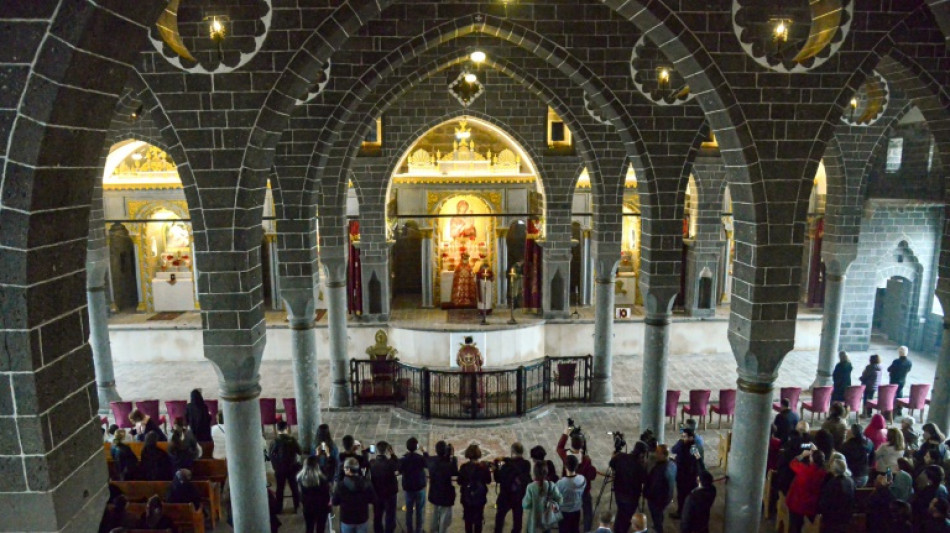
Bittersweet Easter for Turkish city's dwindling Armenian community / Photo: Seyfettin GUNCEL - AFP

 Toogood Gold's Table Mountain Sits in the Shadow of a Nevada Gold Rush

 MEXC July–August Security Report: 38.66M USDT in Risk Funds Intercepted, Futures Insurance Fund Hits 792M USDT

 'Breathing toxin every day': Indonesians choked by haze feel helpless
 Stocks edge higher ahead of US Fed rate call

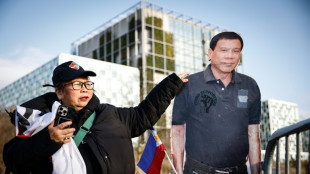
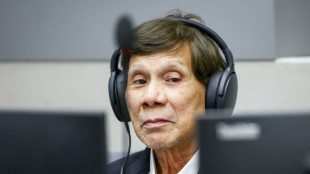 Philippines ex-leader Duterte makes first in-person ICC appearance
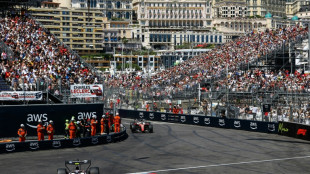 2027 Formula One calendar includes Monaco sprint race
 Palestinians are the real victims, Thunberg tells Ed Sheeran
 Hashim Thaci: From 'George Washington of Kosovo' to Hague convict
 Amnesty says Iran committed 'crimes against humanity' in crackdown on 2022 protests

 EU to ban social media for under 13s, curb access until 15
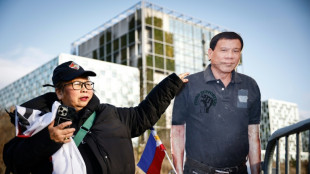 Philippines ex-leader Duterte makes first appearance at ICC
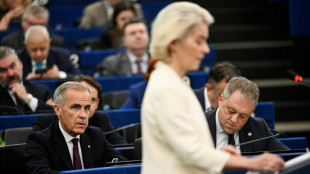 EU chief pitches 'associate member' status for Canada
 English village votes to 'secede' from UK over asylum centre plan

 Wildfires push endangered Sumatran elephants to brink: Indonesian NGO
 Stocks head higher as traders prepare for Fed decision
 English village votes to 'secede' from UK over asylum centre
 Hong Kong unveils plan to align economy with China's goals
 Brazilian voters the latest to eye Bukele security model with envy

 EU chief hosts Canada's Carney in push to 'deepen' alliance
 EU chief to unveil social media, gaming curbs for under-15s
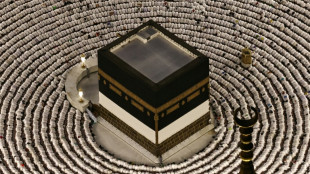 Saudi says Houthis target Mecca, warn of 'red line'

 Asian stocks stutter as traders prepare for Fed decision
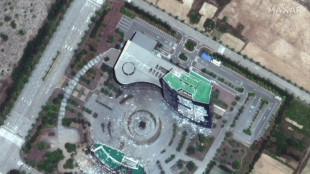
 US touts its power, avoids Iran war at G20 Energy meeting

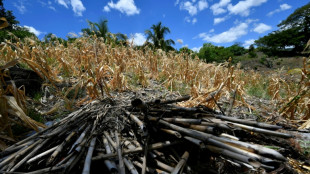 Dead animals, barren fields, and hunger - El Nino chokes Central America
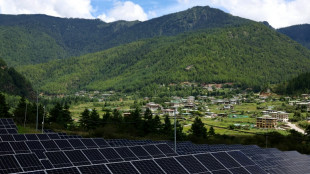 In hydropowered Bhutan, solar starts to rise
The aroma of corek, a spiced bun the Armenian community makes for Easter, is once again wafting through the streets of Diyarbakir in southeast Turkey.
For the first time in eight years, Armenians were able to celebrate Easter Sunday mass at their church in the city after it was badly damaged during clashes between the Turkish army and the Kurdistan Workers' Party (PKK) in 2015-16.
The small community was left without a place to meet -- but the Surp Giragos Armenian Church has recently been restored and is now open again.
"We haven't had this chance for a long time. Today we are happy as a community," said Gaffur Ohannes Turkay, a member of the foundation that runs the church.
But it was also a "bitter celebration".
"Nothing is the same as before," he said.
However, earlier restoration of the church in 2011 had helped rebuild the city's Armenian community that many feared lost after the massacres of 1915, followed by discrimination and violence into the 1980s that saw many move to Istanbul or migrate to Europe.
Ankara refuses to recognise the 1915-16 killings of more than a million Armenians as genocide.
Named the unfaithful quarter by Muslims after the once majority Christian population, Sur was known for modest means, narrow streets and old homes built of basalt, the black volcanic rock on which much of the city was constructed.
Much of Sur too had been left in ruins by the fighting, but was quickly rebuilt. Today broad avenues run through the district, lined with villas and swanky new shops, adjacent to the remains of what was once the old town.
President Recep Tayyip Erdogan has for years supported the construction sector as a pillar of his economic policy to strengthen Turkey, with gentrification often sidelining cultural heritage.
Once an integral part of the Ottoman Empire's multifaceted society, only 60,000 ethnic Armenians are still believed to live in modern Turkey.
- Gentrification -
"Today there are 50 to 60 people who are officially in Diyarbakir's Armenian community," said Turkay.
"But many more people come to the festivals and services because there are a lot of Islamised Armenians in this region."
He himself is from a family which converted to Islam to survive the genocide.
The church has now taken on a new role as a rare place where people can rediscover traces of the old Diyarbakir.
While the locals snub the reconstructed areas in the old town, the church garden, which also boasts a cafe, is always full.
"In this quarter, I only come here. I refuse to go any further, it's painful to see the place like this," said Irfan, a regular at the garden cafe.
"We boycott the other places. But here it's different," added Hikmet, another cafe-goer.
"The church represents a link to the lost Diyarbakir and that goes for all the inhabitants, Christians or Muslims," said Silva Ozyerli, an Armenian from Diyarbakir who travelled from Istanbul to celebrate Easter.
"We can breathe here," she said, admitting: "I avoid the reconstructed areas because I want to preserve the memory of the quarter where I spent my childhood."
Few expect that even a change in president at the May 14 election could lead to the quarter undergoing a renovation true to its cultural heritage.
"Easter means resurrection, rebirth. I want to hold on to hope, but getting back the old quarter seems impossible," said Ozyerli.
"Today I thank God for at least preserving our church."
M.King--AT