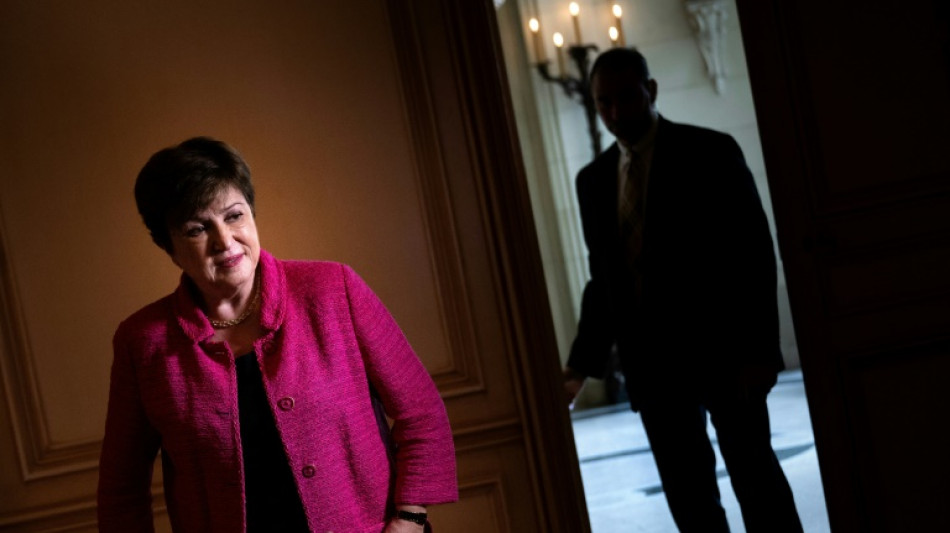
IMF chief calls on central banks to continue inflation fight / Photo: Brendan Smialowski - AFP

 British PM says to make 'difficult decisions' as inflation rises

 TotalEnergies pumps up controversy in France with cut-price gas

 Global fuel price demos: a round-up

 Leverate Launches MCP for Traders to Connect AI Assistants With Trading Platforms

 MEXC Launches $1M "Discover Your Wall Street DNA" Campaign to Help Traders Find Their Market Fit

 Emporio Armani names Dario Vitale new creative director
 Maresca defends VAR officials after Man City benefit from error

 Courts jails LGBTQ activists as Turkey crackdown widens

 French court to hear Depardieu's appeal against rape trial order: sources

 The German state premier hoping to halt far-right surge

 Lebanon wants Israel security deal as prelude to peace: president to AFP

 England's Brook keen to learn from 'hero' Pietersen after stunning ton
 Saudi says Houthis target Mecca, warns of 'red line'

 Phillippines ex-leader Duterte makes first appearance at ICC
 Lebanon wants Israel security deal, Hezbollah disarmament without confrontation: president to AFP

 BASIS.pro Expands On-Chain Infrastructure with XDC Network Partnership and Zypher DAO as Auto Earn Goes Live

 Samson relishing battle with teen star Sooryavanshi for India spot
 Pickle-flavoured tart? AI inspires Japan's convenience stores

 Macau holds first closed-door national security trial
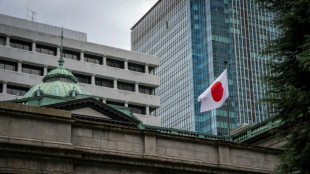 Bank of Japan set to raise rates under pressure from inflation, US

 Zverev, Shelton back on court for Davis Cup qualifiers
 Peace is a 'dangerous' word in Russian city heading to polls
 Meta chief pushes back on AI slowdown calls

 'Resident Evil' film brings video game's ethos to the big screen
 Court orders N. Korea pay Seoul $32.5 mn for blowing up office
Central banks around the world should keep battling inflation by hiking interest rates despite ongoing concerns about financial stability, the head of the International Monetary Fund told AFP on Thursday.
Since last year, central banks have been raising their benchmark lending rates to tackle inflation, which rose to levels not seen for decades in many countries including the United States.
But their fight has been complicated by the recent collapse of Silicon Valley Bank after taking on too much interest-rate risk, setting off a period of turbulence in the banking sector on both sides of the Atlantic.
"We don't envisage, at this point, central banks stepping back from fighting inflation," IMF managing director Kristalina Georgieva said in an interview ahead of the fund's spring meeting next week.
"They have to stay the course in a much more difficult, more complex environment," she said.
The biggest casualty so far has been Swiss banking giant Credit Suisse, which was pushed by regulators to merge with regional rival UBS on concerns about its long-term financial health.
But Georgieva said: "Central banks still have to prioritize fighting inflation and then supporting, through different instruments, financial stability."
- US-China tensions weigh on growth -
Georgieva added that US-China trade tensions -- part of a broader realignment of the global economy -- was also having a detrimental impact on world growth.
While there has been a long period in which decisions on production were guided by costs, "this is no more," she said.
"Today, the US, but also other countries, are saying I want to have security of supplies and I want to protect national security," she added.
"The question is how far they should go," she asked, adding that it was possible to guard both aspects "without completely undermining the foundation for growth."
Left unchecked, the long-term cost of trade fragmentation could be as high as seven percent of global economic output, she said in a speech earlier on Thursday to ambassadors and officials in Washington.
- 'Elusive' recovery -
In the same speech, she warned that a continued slowdown in almost all the world's advanced economies is expected to drag global growth below three percent this year.
"With rising geopolitical tensions, with inflation still running high, a robust recovery remains elusive," she said. "That harms the prospects of everyone, especially for the most vulnerable people and most vulnerable countries."
Global growth almost halved last year to 3.4 percent as the impact of Russia's invasion of Ukraine rippled through the world economy, abruptly halting the recovery from the Covid-19 pandemic.
While Asia's emerging markets are expected to see substantial increases in economic output -- with India and China predicted to account for half of all growth this year -- the good news will be outweighed by a slowdown expected for 90 percent of the world's advanced economies.
"Growth remains historically weak -— now and in the medium term," said Georgieva.
She added that global growth will likely remain at roughly three percent for the next half-decade, the lowest medium-term forecast since the 1990s.
Low-income countries are expected to suffer a double shock from high borrowing costs and a decline in demand for their exports, which Georgieva said could cause poverty and hunger to increase.
W.Morales--AT