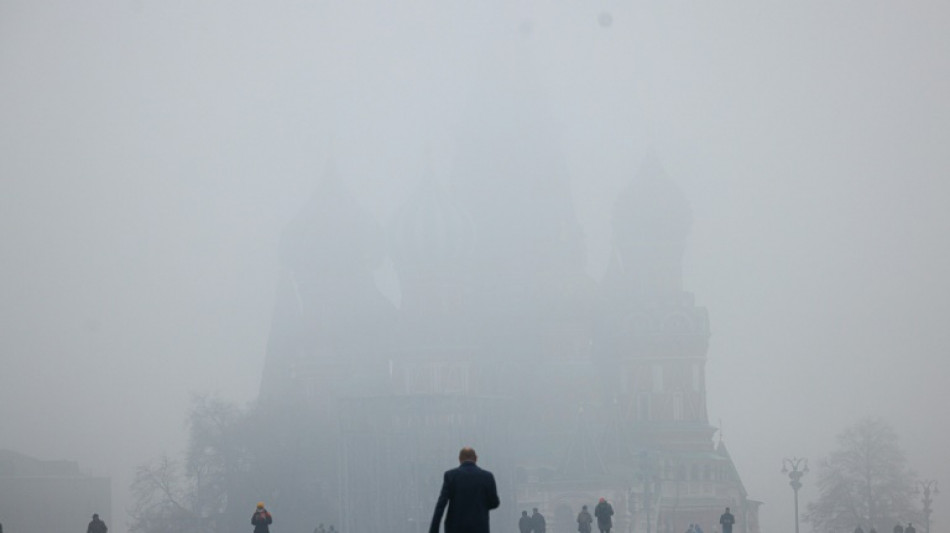
Russian economic prospects 'foggy' as sanctions cut deep / Photo: Dimitar DILKOFF - AFP/File

 British PM says to make 'difficult decisions' as inflation rises

 TotalEnergies pumps up controversy in France with cut-price gas
 Global fuel price demos: a round-up

 Leverate Launches MCP for Traders to Connect AI Assistants With Trading Platforms

 MEXC Launches $1M "Discover Your Wall Street DNA" Campaign to Help Traders Find Their Market Fit
 Emporio Armani names Dario Vitale new creative director
 Maresca defends VAR officials after Man City benefit from error
 Courts jails LGBTQ activists as Turkey crackdown widens
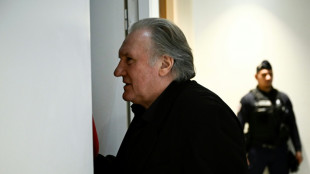 French court to hear Depardieu's appeal against rape trial order: sources

 The German state premier hoping to halt far-right surge
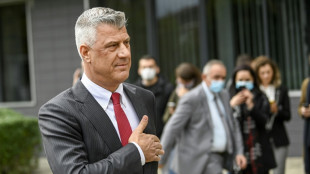
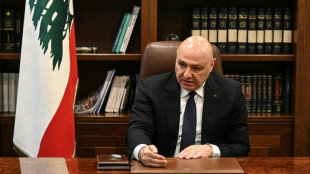 Lebanon wants Israel security deal as prelude to peace: president to AFP

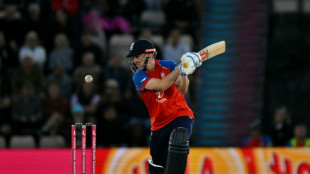 England's Brook keen to learn from 'hero' Pietersen after stunning ton
 Saudi says Houthis target Mecca, warns of 'red line'

 Phillippines ex-leader Duterte makes first appearance at ICC
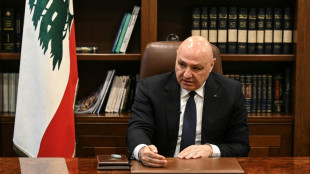 Lebanon wants Israel security deal, Hezbollah disarmament without confrontation: president to AFP
 BASIS.pro Expands On-Chain Infrastructure with XDC Network Partnership and Zypher DAO as Auto Earn Goes Live

 Samson relishing battle with teen star Sooryavanshi for India spot
 Pickle-flavoured tart? AI inspires Japan's convenience stores
 Macau holds first closed-door national security trial
 Bank of Japan set to raise rates under pressure from inflation, US

 Zverev, Shelton back on court for Davis Cup qualifiers
 Peace is a 'dangerous' word in Russian city heading to polls
 Meta chief pushes back on AI slowdown calls

 'Resident Evil' film brings video game's ethos to the big screen
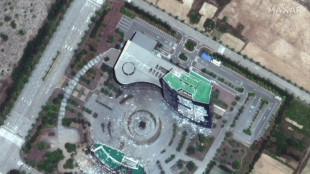 Court orders N. Korea pay Seoul $32.5 mn for blowing up office
The resilience of Russia's economy has over the past year surprised many observers as Moscow adjusts to unprecedented Western sanctions over its assault on Ukraine.
But in a rare public admission, President Vladimir Putin late last month warned of possible economic troubles ahead and urged the government to act quickly.
"The sanctions imposed against the Russian economy in the medium term could really have a negative impact," Putin said at a televised meeting.
It was a major change of tone after Putin earlier said the worst was over, praising the benefits of "economic sovereignty" and insisting that the West's sanctions strategy has backfired.
What exactly is Putin's message?
"Mr. Putin's observation is quite simply realistic," said Arnaud Dubien, director of the Franco-Russian Observatory think tank in Moscow.
Dubien, a veteran Russia expert, said Putin is seeking to further mobilise companies and government officials as Russia is cutting ties with the West.
"The situation is better than expected but do not relax, continue to find alternatives," he said, describing the Kremlin chief's logic.
Alexandra Prokopenko, a former Russian central bank official, suggested that Putin's message primarily targeted companies that have been hit hard by sanctions.
"It's a message to businesses," said Prokopenko, who worked at the central bank between 2017 and 2022 and quit after the start of Moscow's assault on Ukraine.
"You're only safe in Russia under my charge, there's no way back," she said, referring to his possible thinking.
- 'Difficult situation' -
More than a year into Moscow's offensive in Ukraine, the Russian economy finds itself ever more dependent on energy exports to Asia and slipping further behind in many high-value sectors. An exodus of hundreds of thousands of Russians and the Kremlin's mobilisation drive have led to labour force shortages.
Dubien pointed to particular problems in the car industry, which thrived when leading foreign carmakers set up shop in Russia in the early 2000s.
"The sectors most affected by the sanctions such as automotive production are those that were most open to investment and international cooperation," he said.
In late March, Russia's flagship carmaker AvtoVAZ said that a number of parts suppliers were halting deliveries, prompting the struggling company to bring forward an annual holiday.
Prokopenko, who now researches Russian government policymaking at the Berlin-based German Council on Foreign Relations, said that sectors linked to the military-industrial complex -- such as optics, pharmaceuticals and metal production -- are "where the economy is doing its best."
Sergei Tsyplakov, a professor at Moscow's Higher School of Economics, warned that the Kremlin's much-vaunted pivot to China and India could not solve all the problems.
"Although the Russian economy did not collapse immediately after the imposition of sanctions, the situation remains difficult," he said.
- Economic backsliding -
Many economists expect the economic outlook to darken in the coming months.
Prokopenko pointed out that it was the windfall from sky-high energy prices that helped Russia weather the initial shock from the unprecedented sanctions.
"This isn't going to happen this year," she said.
"In 2023, there's no sign to expect that Russia will get this extra income."
In February, Moscow's revenue from oil exports plummeted by 42 percent compared to last year, according to the International Energy Agency.
The re-orientation of Russia, once Europe's main gas supplier, towards Asian markets is expected to take time.
Putin, observers say, has a vital interest in seeing high energy revenue if he wants to finance Moscow's assault on Ukraine and keep dissent at home at bay.
Prokopenko said she saw "lots of problems" ahead.
"In the short-term perspective the Russian economy isn't doing bad, it's still functioning," she said, stressing however that finding new partners would take time.
"The future is foggy."
Dubien estimated that Putin could afford to bankroll the offensive in Ukraine for another "three to four years" but warned that the economy faces years of further backsliding.
"It has already lost the equivalent of a decade of development since 2014," he said, referring to the year when the West pummelled Russia with sanctions over the annexation of Crimea from Ukraine.
"It could now lose a second one as well."
F.Ramirez--AT