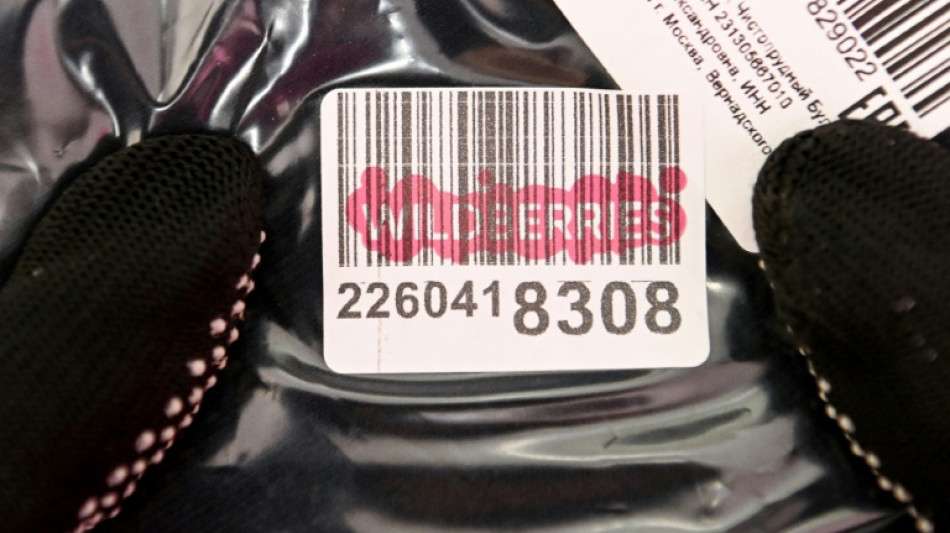
Barcode turns 50 but its days might be numbered / Photo: Kirill KUDRYAVTSEV - AFP/File

 US House targets data centers as midterm backlash grows

 French ex-minister Dati goes on trial in Renault-Nissan corruption case

 'Being Heumann' captures joy in fight for disability rights

 Retired great Nadal to play in exhibition matches

 IR-MED and Dice Technologies Announce collaboration to Evaluate and Advance Pressure-Injury Prevention Platform in Japan
 Watts, Pitt, Cruz to light up Spain's top film festival
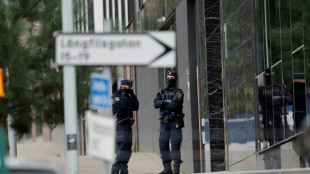 Sweden expels Iran embassy employee over anti-Jewish threats
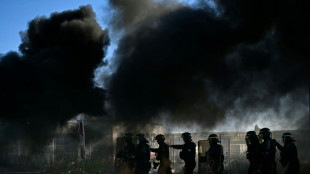
 Toogood Gold's Table Mountain Sits in the Shadow of a Nevada Gold Rush
 MEXC July–August Security Report: 38.66M USDT in Risk Funds Intercepted, Futures Insurance Fund Hits 792M USDT
 'Breathing toxin every day': Indonesians choked by haze feel helpless
 Stocks edge higher ahead of US Fed rate call

 Philippines ex-leader Duterte makes first in-person ICC appearance

 2027 Formula One calendar includes Monaco sprint race

 Palestinians are the real victims, Thunberg tells Ed Sheeran

 Hashim Thaci: From 'George Washington of Kosovo' to Hague convict

 Amnesty says Iran committed 'crimes against humanity' in crackdown on 2022 protests

 EU to ban social media for under 13s, curb access until 15

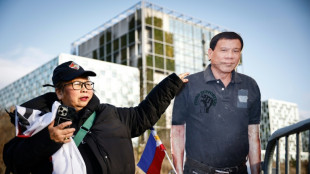 Philippines ex-leader Duterte makes first appearance at ICC
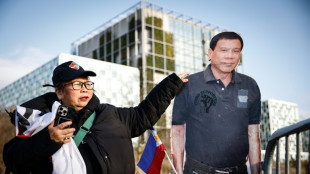
 EU chief pitches 'associate member' status for Canada

 English village votes to 'secede' from UK over asylum centre plan

 Wildfires push endangered Sumatran elephants to brink: Indonesian NGO
 Stocks head higher as traders prepare for Fed decision
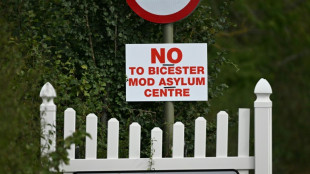 English village votes to 'secede' from UK over asylum centre

 Hong Kong unveils plan to align economy with China's goals

 Brazilian voters the latest to eye Bukele security model with envy

The patch of irregular vertical lines that revolutionised checking out at the supermarket and facilitated the globalisation of retail is turning 50.
But as the barcode celebrates its birthday on Monday, its days might be numbered as it faces competition from the younger QR code, the information-filled squares used in smartphones.
The trademark beep as a product is scanned is heard about six billion times per day across the world as around 70,000 items are sold each second.
It has become so integrated in the shopping experience that it is easy to forget how much the technology revolutionised retail by speeding up the checkout process and giving retailers the ability to trace products and better manage inventory.
The barcode not only identifies a product, but "gives professionals in stores access to other functionalities", said Laurence Vallana, head of France de SES-Imagotag, a company that specialises in electronic tagging.
- Chewing gum to fruit -
Barcodes were initially patented by Norman Joseph Woodland and Bernard Silver in the United States in 1952.
But it wasn't until nearly two decades later, in 1971, that US engineer George Laurer perfected the technology and moves towards its commercialisation began.
On April 3, 1973 the standard to identify products was agreed by a number of large retailers and food companies. It later became known as EAN-13, which stands for European Article Number and the number of digits in the barcode.
The following year, on June 26 in the US state of Ohio, the first product was scanned: a pack of chewing gum that is now in the National Museum of American History in Washington.
Today, the non-governmental organisation Global Standard 1 manages the barcode system and counts about two million firms as members.
It provides companies with a unique "global trade item number" for each product, which is then translated into the barcode. Each firm must pay an annual fee based on their sales, up to nearly $5,000 per year.
- From bars to QRs -
But the humble barcode will soon give way to another standard developed by the organisation, said Renaud de Barbuat and Didier Veloso, the respective heads of GS1 Global and GS1 France.
The new standard, based on QR, or Quick Response code, will be introduced around 2027.
If barcodes have been compared to prison bars by critics of the over-commercialisation of society, the Chinese game Go with its white and black pieces on a square board was the inspiration for the QR code's Japanese creator, Masahiro Hara.
Developed in 1994, QR codes can hold much more information as they are read both horizontally, like barcodes, and vertically.
Instead of having to search a database for information to go along with a product, the QR code can integrate information directly, such as the composition of the product and recycling instructions.
GS1 believes moving to the QR code format allows the sharing of far more information about products as well as content, enabling new uses that will be accessible to consumers as well as retailers.
As smartphones can read QR codes, they are an easy way to send people to websites to get additional information, leading to their widespread adoption by companies, artists and even museums. They are even used by payment systems.
But barcodes are likely to remain in place for years to come as the world gradually transitions to QR codes.
F.Wilson--AT