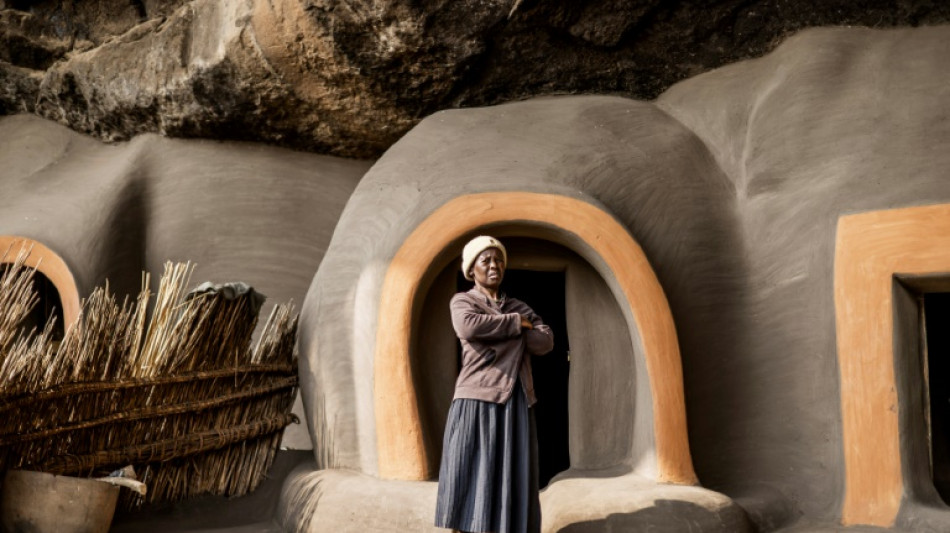
'Our home': Lesotho's last cave dwellers / Photo: Marco Longari - AFP

 Bacteria suspected in deaths of hundreds of baby whales off Argentina

 US 'must choose' whether to end war: Iran president to Fox News

 UN approves resolution on dealing with rising sea levels

 Yalcouye makes dream debut as Ivory Coast beat Ghana in AFCON qualifier

 Chicago's White Sox and Cubs book MLB playoff berths

 Last-gasp Gakpo strike snatches Dutch draw to sour Klopp debut

 Global stocks mostly fall as oil prices and bond yields rise

 Israel's Netanyahu denounces enemies, allies in fiery UN speech

 Hollywood stars among arrests in NY anti-Netanyahu protest

 Losing start in AFCON qualifying for 78-year-old coach Le Roy

 Italy bans burqas in schools, caps numbers of foreign students per class

 Israel policies threaten 'life and existence' of Palestinians, Abbas says

 Paolini steers Italy past China in BJK
 Zidane admits emotion on eve of first game as France coach

 Breetzke and Maharaj sink Australia in first one-day international

 Zelensky broke confidentiality with North Korea POWs disclosure: South's president

 Former Liverpool star Carroll reveals he was sexually assaulted
 Dominican Republic calls for Haiti force to be strengthened

 Dolly Parton's nephew ordered to stay away from estate staff, properties

 Early exit for Philippine darling Eala at Singapore Open

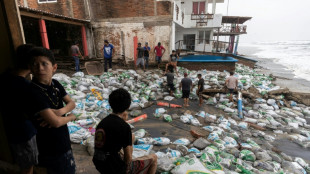 Hurricane Polo triggers huge waves in coastal Mexican city

 What happens if the US bans diesel exports

 Macklemore hits back with 'Free Palestine Tour' after Sheeran split
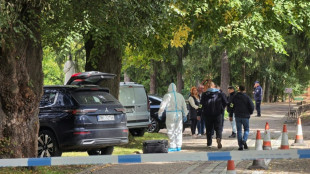
 Met Opera to give New Yorkers free tickets in affordability push

 Top ECB official to resign to take up IMF role

Inside a dimly-lit mud dwelling nestled within a rocky mountain in the southern African kingdom of Lesotho, Mamotonosi Ntefane, 67, dusts off an animal skin.
Her household is among a handful of families who still inhabit the Kome Caves, a heritage site in the north of the country, first occupied about 200 years ago by local tribes seeking shelter from conflict and cannibalism.
"Life is good, we grow our own vegetables, I can pray anytime I want," Ntefane, a rosary around her neck, tells AFP.
More than 1,800 metres above sea level, some 50 kilometres (30 miles) from the capital Maseru, the settlement is surrounded by barren pastures, where shepherds draped in long woollen blankets graze cattle in the morning mist.
Thin white smoke billows from outside the caves as "papa", a traditional corn porridge, boils in a black cast iron pot over a wood fire.
The cave is divided into several round houses propped against the basalt rock.
Open passages just high enough for a person to walk through serve as doorways. Walls and floors are made of a mix of mud and manure that require regular upkeep.
Inside are basic items including pots, plastic buckets to store water and a cowhide for a bed.
"There's no electricity and no fridge but this is our home, it's our history," says 44-year-old Kabelo Kome who is descended from the first people to settle the caves, after whom the place is named.
- Hideout -
The caves became a hideout for members of the Basia and Bataung tribes in the 19th century, when conflict and a severe drought ravaged the region.
Christian missionaries travelling the area at the time reported some groups resorted to cannibalism to survive, as livestock and grain reserves dwindled.
It was in this period that Lesotho emerged as a single entity, as the Sotho, the region's largest ethnic group, united to fight Zulu raiders and European settlers.
Today, most of the country's two million people live off subsistence farming.
Inhabitants of the Kome Caves grow corn, sorghum and beans and raise chickens and cattle.
The elderly receive a state allowance, while others make money showing their homes to tourists.
Some like Mamatsaseng Khutsoane, a 66-year-old former teacher, have moved to a nearby village with greater creature comforts.
"I come here to eat, or with my grandchildren," she says.
There is mobile phone coverage, but no fixed internet or running water.
"None of that here," scoffs Ntefane, as she stands outside her home, gazing at the mountains, while cow bells ring in the distance.
T.Perez--AT