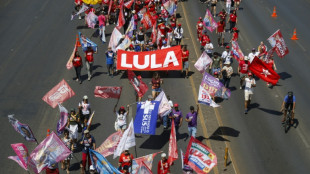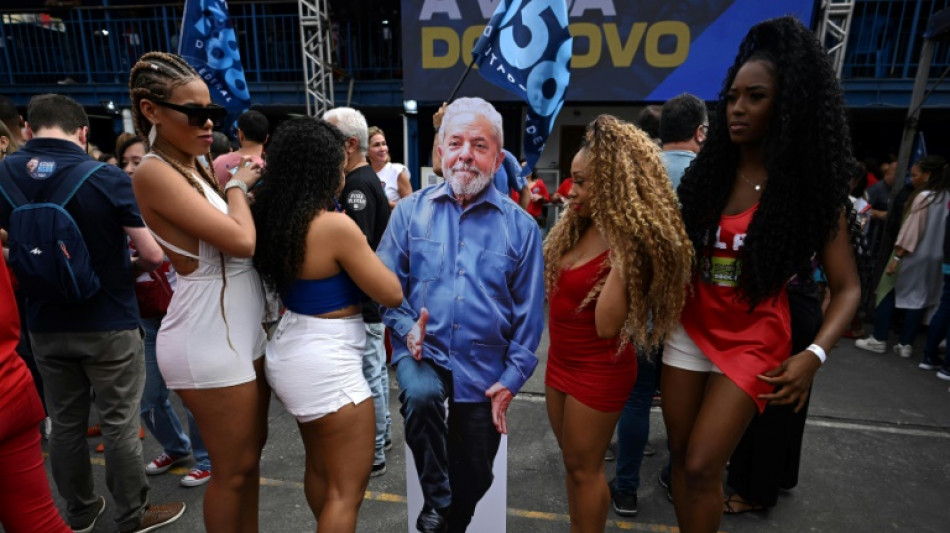
In Brazil election run-up, even samba is political / Photo: Carl DE SOUZA - AFP

 Bacteria suspected in deaths of hundreds of baby whales off Argentina

 US 'must choose' whether to end war: Iran president to Fox News
 UN approves resolution on dealing with rising sea levels

 Yalcouye makes dream debut as Ivory Coast beat Ghana in AFCON qualifier
 Chicago's White Sox and Cubs book MLB playoff berths

 Last-gasp Gakpo strike snatches Dutch draw to sour Klopp debut

 Global stocks mostly fall as oil prices and bond yields rise

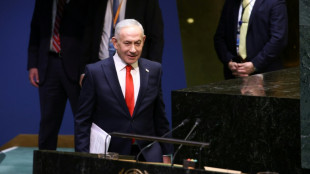 Israel's Netanyahu denounces enemies, allies in fiery UN speech
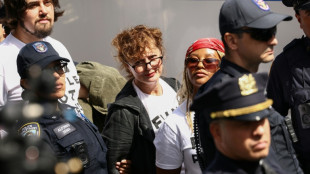 Hollywood stars among arrests in NY anti-Netanyahu protest
 Losing start in AFCON qualifying for 78-year-old coach Le Roy
 Italy bans burqas in schools, caps numbers of foreign students per class
 Israel policies threaten 'life and existence' of Palestinians, Abbas says

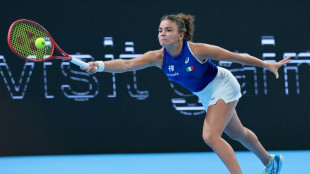 Paolini steers Italy past China in BJK

 Zidane admits emotion on eve of first game as France coach
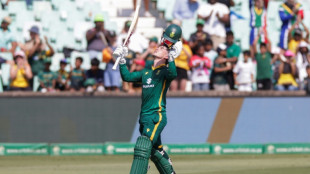 Breetzke and Maharaj sink Australia in first one-day international
 Zelensky broke confidentiality with North Korea POWs disclosure: South's president
 Former Liverpool star Carroll reveals he was sexually assaulted
 Dominican Republic calls for Haiti force to be strengthened
 Dolly Parton's nephew ordered to stay away from estate staff, properties
 Early exit for Philippine darling Eala at Singapore Open
 Hurricane Polo triggers huge waves in coastal Mexican city
 What happens if the US bans diesel exports
 Macklemore hits back with 'Free Palestine Tour' after Sheeran split
 Met Opera to give New Yorkers free tickets in affordability push
 Top ECB official to resign to take up IMF role

In Pedra do Sal, the birthplace of samba in Rio de Janeiro, supporters chant "Ole, Ola, Lula" as they sway rhythmically, brandishing flags, T-shirts and caps bearing the likeness of Brazilian presidential candidate Luiz Inacio Lula da Silva.
In a nod to the symbolism of samba's Afro-Brazilian character in a country of divisive identity politics, the leftist ex-president chose the Portela samba school for one of his final rallies before Sunday's first round of presidential elections.
"Samba is a way to resist oppression, it is the voice of the people. And Lula represents the people," says Karen Gama, a 24-year-old black Brazilian who attended the rally last week with stickers of Lula's Workers Party stuck to her chest and rear.
She was among thousands dressed in red -- the color of Lula's Workers Party -- who turned out to listen to the former steelworker who is seeking a third term as president, already having served from 2003 to 2010.
His main rival is far-right incumbent Jair Bolsonaro, whose government is closely allied to conservative and evangelical movements often hostile to samba and its association with Afro-Brazilian culture and religions.
- Pragmatic -
"By coming here, he (Lula) returns to his popular base," says Joao Diamante, who grew up in a Rio favela.
Diamante, a chef, said he was able to study gastronomy thanks to the university scholarships put in place under the Lula presidency for young people from low-income backgrounds.
"We came here to cheer on the only president who valued us, black people and minorities. We were extremely attacked during the Bolsonaro mandate," says Douglas Williams, a 30-year-old nurse with an LGBTQ flag wrapped around his head.
Samba has not always been associated with left-wing ideas, says Wagner Pralon Mancuso, a professor of political science at the University of Sao Paulo.
"There are well-known samba schools that exalted Brazil during the military dictatorship (1964-1985)," he says.
More recently, several Rio samba schools supported Marcelo Crivella, a pastor of the evangelical right, in his successful 2016 campaign for the mayorship of the city.
Samba "schools are pragmatic because they depend on public funds," explains Marco Teixeira, a political scientist at the Getulio Vargas Foundation.
And Veiga de Almeida Guilherme Guaral, an academic who studied the links between politics and samba, says that "today, schools remember that the governments of Lula supported cultural events."
- 'Form of resistance' -
Earlier this month, the band Samba Independente dos Bons Costumes, believing themselves in friendly territory, were booed off the stage when they played a pro-Lula song at a Rio concert.
"Art is an essential political tool in our democracy, and samba is political in essence," the group said in a response on Instagram.
"In other words, much more than a musical genre, samba is an instrument of socio-political change."
Claudio Cruz, the owner of a samba bar in central Rio, agrees.
"Samba has always been a form of resistance to inequality, so it is more than normal that the world of samba supports Lula today," says Cruz, who has installed a 10-meter (33-foot) helium-filled figurine of Lula on the sidewalk outside his bar.
Ch.Campbell--AT