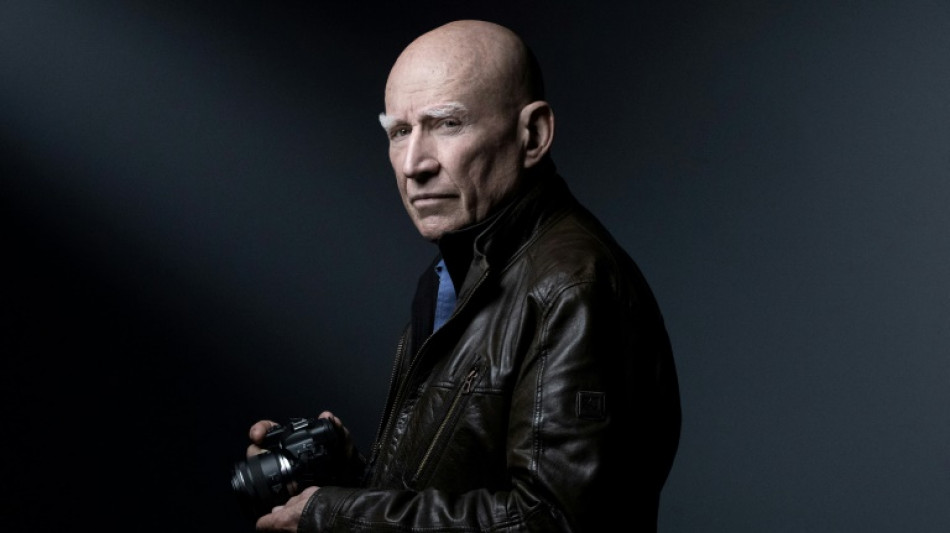
Sebastiao Salgado, photojournalism elevated to art / Photo: JOEL SAGET - AFP

 Indonesia doing 'everything' but still struggling to curb fires
 Once decried as 'human cockfighting', MMA wants Olympic spot
 China's Yu, 13, great for swimming says multiple Olympic medallist
 Putin's party set to retain power after Russia vote hit by cyberattacks, drones
 Germany's Merz under pressure after bruising state election losses

 Messi, Miami frustrated in 2-2 draw with San Diego
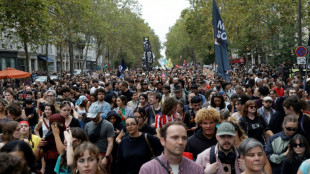 Thousands march in France against 'licence to kill' draft law

 Best Gold IRA Accounts 2026 Rankings Released: Top Precious Metals IRA Companies Compared in New Guide

 Braves clinch division title as Red Sox reach MLB playoffs
 Bordeaux-Begles hammer Stade Francais despite Jalibert injury
 Milan and Juventus end blips with home wins
 Bridgeman wins PGA Biltmore title with sizzling 61

 Williams injured as Bears shut down by Vikings

 US warns of rapid escalation in Middle East war
 Germany's far-right AfD celebrates another state election win
 Russia vows revenge for election-day attacks as poll shows ruling party win

 Spaun late shows snatches PGA Championship win
 Conceicao strikes as Juventus beat Atalanta
 Britain, Zverev-inspired Germany, Spain complete Davis Cup finals
 Man Utd salvage Fulham draw as pressure mounts on Carrick
 Spanish civil war drama 'The Black Ball' wins at Toronto festival

 Germany's Merz shaken by far-right and far-left gains in state votes

 Macron welcomes Canada's Carney to French Atlantic territory
 Fiorentina frustrate Napoli with Serie A draw, Como upset
 Five-star Man City top Premier League after Sunderland thriller
Brazilian photojournalist Sebastiao Salgado, who died Friday, spent five decades chronicling the best and worst of planet Earth, from far-flung natural wonders to horrifying human catastrophes.
The self-taught photographer crisscrossed the globe throughout his life, from Rwanda to Guatemala, from Indonesia to Bangladesh, documenting famine, war, exodus, exploitation and other tragedies of the so-called Third World with the empathy of "someone who comes from the same part of the world," as he said.
His elegant black-and-white universe also celebrated the planet's immense beauty, such as the "flying rivers" of the Amazon rainforest, and served as a warning of nature's fragility in the face of climate change.
He leaves an iconic body of work, published in "Life," "Time" and other leading magazines, collected in a stunning series of books, and regularly exhibited in the museums of world capitals such as Paris, where he lived for much of his life.
Salgado won a long list of prestigious prizes across his career, including the Prince of Asturias and Hasselblad awards, and was the protagonist of filmmaker Wim Wenders' Oscar-nominated documentary "The Salt of the Earth" (2014), about the photographer's sojourns in distant corners such as the Arctic Circle and Papua New Guinea.
- From Africa to Reagan -
Born on February 8, 1944 in the rural county of Aimores in southeastern Brazil, Salgado grew up with seven sisters on their father's cattle farm.
He recalled it as a place where visiting friends and family meant traveling for days, which he said taught him the patience to wait for the magical "fraction of a second" of the perfect photograph.
He earned a master's degree in economics from the University of Sao Paulo, where he was active in the left-wing student movements of the turbulent 1960s. In 1969, he and his wife, Lelia Wanick, fled to France to escape Brazil's military dictatorship. He went on to receive French citizenship.
He picked up Wanick's camera by chance one day in 1970 and was instantly hooked.
"I realized snapshots brought me more pleasure than economic reports," he said.
His job with the International Coffee Organization took him frequently to Africa, where he started taking pictures on the side. He would go on to turn down a dream job at the World Bank in Washington to pursue photography full-time.
Wanick, who staunchly backed his career, stayed home raising their two sons, Juliano Ribeiro and Rodrigo, who was born with Down syndrome.
Salgado's photos of drought and famine in countries such as Niger and Ethiopia landed him a job at renowned photo agency Magnum in 1979.
He was working there when he captured one of the biggest news stories of the time, the assassination attempt on US president Ronald Reagan in 1981.
Salgado made front pages worldwide with his photos of the shooting -- 76 frames in 60 seconds.
But his true rise to fame came with his first book, "Other Americas" (1984) -- a series of portraits taken throughout Latin America -- and his unforgettable photographs of misery and resistance among the hordes of mud-covered miners at Brazil's infamous Serra Pelada, the biggest open-air gold mine in the world.
Critics accused him of "beautifying suffering," but Salgado never veered from his aesthetic or his work.
- Lens on Bolsonaro -
Painstaking and meticulous, he liked to take his time getting to know his subjects, his three Leica cameras hanging from his neck.
Photography "is a way of life," he told AFP in 2022, on a trip to Sao Paulo to present his exhibition "Amazonia," the product of seven years shooting the world's biggest rainforest.
"It's connected with my ideology... my human and political activity. It all goes together."
A dedicated climate activist, he was a fierce critic of Brazilian President Jair Bolsonaro (2019-2022) for the far-right leader's push to open the Amazon to agribusiness and mining.
Salgado also founded an environmental organization called Instituto Terra to revive disappearing forests in his home state, Minas Gerais, a successful project joined by more than 3,000 landowners.
O.Brown--AT

