Sacred leaf offers hope for Vanuatu's threatened forests
/ Photo: Chris McCALL - AFP

 'It has to stop': runners protest women's murders in S.Africa district

 Fire erupts near Riyadh airport as Houthis claim strikes

 Cuba works to restore power after another blackout

 England thrash Sri Lanka again to return to top of T20 rankings
 Arsenal thrashed by Brighton, sorry Spurs lose again

 South Korea, Austria qualify for Davis Cup finals

 Seare shocks Ingebrigtsen to win world 5km gold

 Brigitte Bardot widower slams sale of star's belongings

 Aston Villa compound Tottenham's misery despite late rally

 Asian Games offer 'deepest apologies' for South Korea anthem blunder

 Inter Milan and Italy icon Mazzola dies aged 83

 Saudi capital issues first air raid alert since renewed fighting in Yemen

 Martin edges title rival Marquez for Austrian MotoGP pole

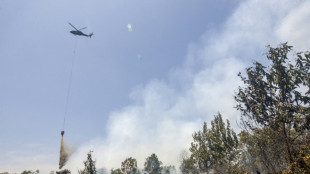 Indonesia accepts Malaysia's help to tackle wildfires

 Indians living in Japan on stand-by to house Asian Games athletes

 Trump signs bill authorizing sweeping Russia sanctions

 Protesters form human chain at Kennedy Center after Trump threat

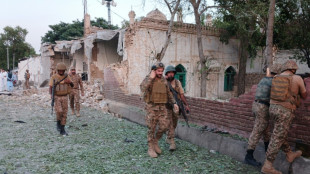 Death toll from attack at police HQ in Pakistan rises to 31

 Trump says Denmark to give US 'permanent control' over Greenland security
 New to The Street Broadcasts Tonight at 6:30 PM ET Across the United States, Latin America and MENA, Featuring BioVie, Acurx Pharmaceuticals, Lantern Pharma and SafeSpace Global

 Kennedy Center: future unclear for iconic Washington arts hub

 Trump claims 'infinite' Greenland security deal with Denmark

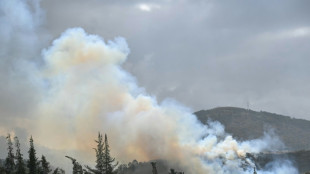 Helicopters battle wildfire threatening Ecuador's capital

 Brentford batter Chelsea to undo Alonso's promising start

 Kane hits Bundesliga century as Bayern rout Union

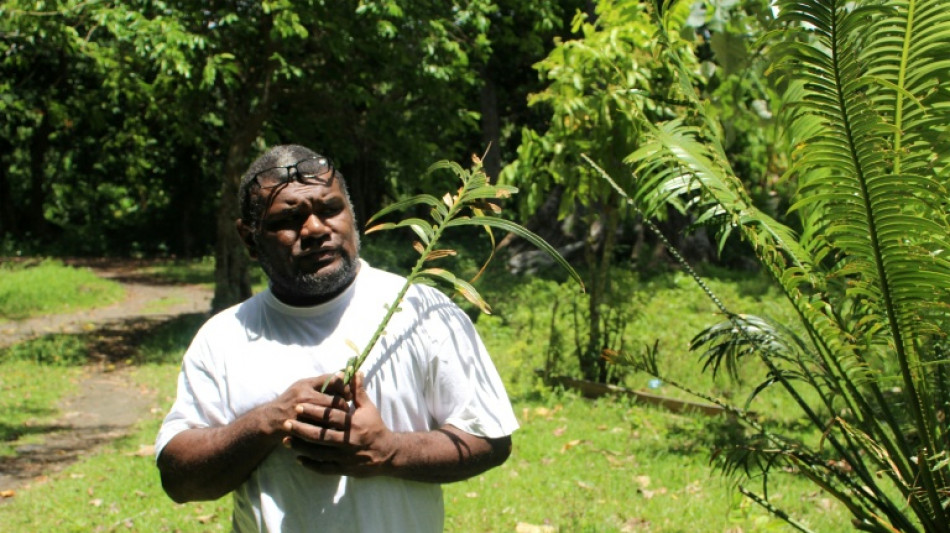
The feather-shaped namele leaf is so central to Vanuatu it features on the national flag, and now it is being enlisted to protect some of the country's most important forests.
By invoking a traditional taboo against touching the sacred leaf, conservationists and locals hope to keep loggers away from places like Vatthe Conservation Area -- a candidate for UNESCO World Heritage status.
Located on Vanuatu's largest island Espiritu Santo, Vatthe is home to astonishing biodiversity, hosting over two-thirds of the South Pacific archipelago's land and freshwater birds and many of its endemic species.
But just a single ranger, traditional chief Bill Tavue, patrols the 2,720-hectare site, whose name means "estuary" in the local Na language.
Lack of funding for conservation projects, disregard for government regulations and the need to clear land for farming means that logging is common, making Tavue's battle to protect the forest all the harder.
So he hopes that the glossy green leaf of the namele, which resembles a small palm, can help him protect what remains.
The plant, known to science by the botanical name Cycas seemannii, grows across the western Pacific region, but holds particular significance in Vanuatu.
"In our culture, no one is allowed to touch the namele, only the moli," Tavue said, using a local word for chieftain.
When a namele leaf is placed somewhere, people know not to touch anything nearby, he explained.
- Leaf of peace -
Tavue comes from Matantas, a small village on the north coast of Espiritu Santo, one of the more than 80 islands that make up the Vanuatu archipelago.
When Portuguese navigator Pedro Fernandez de Quiros landed there in 1606, he believed he had discovered the fabled "Great Southern Land".
In those days, Vanuatu's tribes used the namele leaf to mark boundaries that could not be crossed on pain of death -- a technique applied after wars to protect peace agreements.
More recently, locals in Matantas realised the leaf could help protect the forest, and began publicising its presence in Vatthe as a way to keep outsiders away.
The idea has caught on, and the government in Vanuatu's capital Port Vila now officially advocates that chiefs elsewhere use similar taboos to protect nature.
Traditional law still holds real sway in Vanuatu -- the country's Malvatumauri Council of Chiefs is made of up custom chiefs from across the nation and holds real political power.
Proponents of invoking the namele leaf taboo for conservation say it has helped keep Vatthe Conservation Area largely intact, despite few other protections.
But they acknowledge that the leaf and even growing national and international attention to Vatthe's importance are far from enough.
After one recent cyclone, Chinese loggers working in Vanuatu were given permission to pick up dead wood in the reserve.
But locals allege that was used as cover to log inside the area.
Officials at Vanuatu's Department of Forests and Department of Environmental Protection and Conservation did not respond to AFP's requests for comment about those claims.
While Vanuatu has tough forestry laws, it is unclear how effective those measures have been in practice.
- 'We don't destroy' -
The leaf taboo holds weight in Espiritu Santo's mountainous west as well, where grassroots environmentalists created the Santo Sunset Environment Network to protect their forests.
They make educational visits to schools in villages often only accessible by hours-long boat rides and have persuaded chiefs there to ban logging and invoke the namele leaf and other taboos to enforce it.
Those caught breaking the taboo risk being fined a chicken or a pig -- a traditional form of currency in Vanuatu once used to pay 'bride prices'.
Project manager Joses Togase said that logging is driven by poverty and a lack of understanding about the impact.
"They need money, but they were not realising the negative impact on the resources," he said.
In some areas, trees are cleared to grow subsistence crops like yams, cassava, taro and sweet potato, with growing communities seeing little option but to expand into forests.
Richard Rojo, the network's vice-chairman, is himself a subsistence farmer turned environmentalist, motivated by the need to protect his country's forests for his children and descendants.
"I just hope they will enjoy their resources, in their place, just as I am enjoying it now," he said.
In Matantas, ranger Tavue's parents, retired chief Solomon and his wife Purity say they are saddened by the state of the forest.
"We have taboos. We don't destroy our rivers. We don't destroy our resources," Purity said.
"Now we find out that the forest is starting to be damaged. The people started to slowly walk into the forest."
Her son trained four others to help him patrol, but they all gave up the unpaid work.
Tavue wants to see payment for forest protection, like carbon credit programmes, that can help fund work like his.
"We really want this conservation area to continue.
"If you don't have money you cannot continue."
B.Torres--AT



