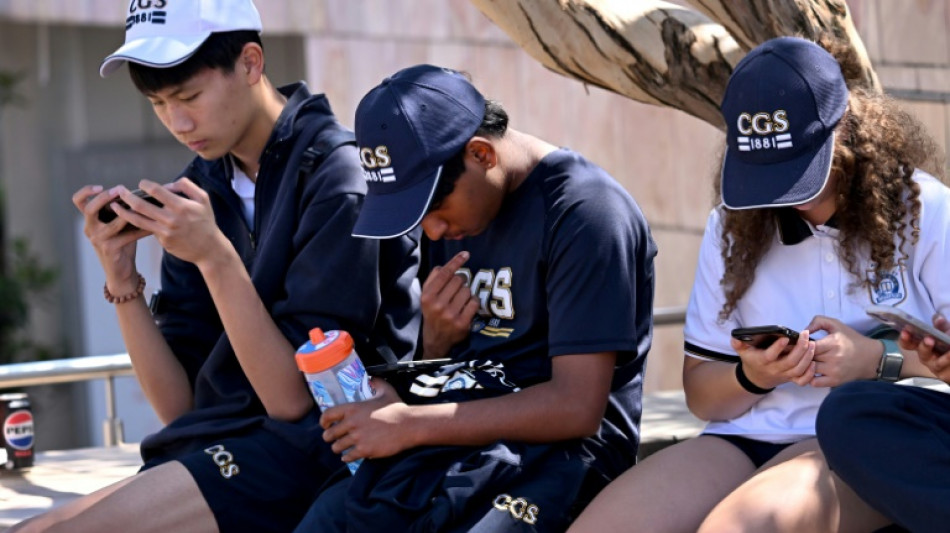
Social media companies slam Australia's under-16 ban / Photo: William WEST - AFP

 Bardot auction in Paris fetches nearly one million euros
 No timeline on Daniels injury return, says Commanders coach

 British Columbia sues OpenAI in US court over Canada school shooting

 French star Batum retires after 18-year NBA career
 Zidane leads first France training session
 Man shot by ICE agent in Texas detained with bullet inside him: lawyer
 California declares state of emergency ahead of El Nino

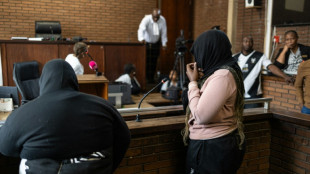 South Africa arrests three more suspects, after nine women murdered
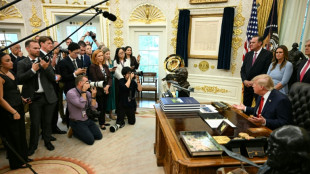
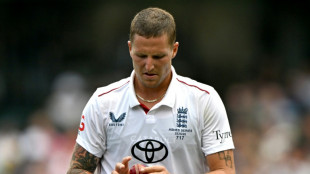 Carse needs time away from England, says captain Brook
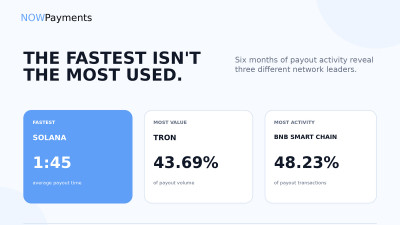 NOWPayments Releases Cross-Chain Payout Data Revealing Key Performance Benchmarks Across TRON, BNB Chain, and Solana

 British Museum bans photos of Bayeux Tapestry as crowds linger
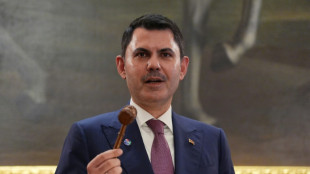 COP31 host says AI climate footprint to be a summit priority

 Berlin's far-left vote winners reject anti-semitism charges
 Mancini eager for 'new adventure' on Italy return

 Mbappe says having Zidane as France coach 'like a film'

 Palmer, Rice out of England Nations League squad
 German auto workers stage mass protests in bid to save jobs
 Embattled Merz vows to keep ruling for 'democratic future' of Germany

 Merz vows to keep ruling coalition together for 'democratic future' of Germany
 Spain coach De la Fuente gets new deal after World Cup success

 Pressure grows on Germany's Merz after election defeats

 China's Zhang beats Japan rivals to Asian Games gymnastics gold
 Samlingen Haupt: Vad pengar avslöjar om oss människor

 Tens of thousands of German auto workers protest to save jobs
 हॉप्त् कलेक्शन: पैसा हमारे बारे में एक इंसान के रूप में क्या प्रकट करता है

Social media giants on Friday hit out at a landmark Australian law banning them from signing up under-16s, describing it as a rush job littered with "many unanswered questions".
The UN children's charity UNICEF Australia joined the fray, warning that it was no "silver bullet" and could push kids into "covert and unregulated" spaces online.
Prime Minister Anthony Albanese said the ban may not be implemented perfectly -- much like existing alcohol restrictions -- but it was "the right thing to do".
The crackdown on sites like Facebook, Instagram and X, approved by parliament late Thursday, will lead to "better outcomes and less harm for young Australians", he told reporters.
Platforms have a "social responsibility" to make children's safety a priority, the prime minister said.
"We've got your back, is our message to Australian parents."
Social media firms that fail to comply with the law face fines of up to Aus$50 million (US$32.5 million).
Meta -- owner of Facebook and Instagram -- and other companies said that despite the law's perceived shortcomings, they were keen to engage with the government on shaping how it would be implemented in 12 months.
"We are concerned about the process, which rushed the legislation through while failing to properly consider the evidence, what industry already does to ensure age-appropriate experiences, and the voices of young people," Meta said in a statement.
- 'Unanswered questions' -
The legislation offers almost no details on how the rules will be enforced -- prompting concern among experts that it will simply be an unenforceable, symbolic piece of legislation.
Meta called for consultation on the rules to ensure a "technically feasible outcome that does not place an onerous burden on parents and teens".
A Snapchat spokesperson said the company had raised "serious concerns" about the law and there remained "many unanswered questions" about how it would work.
But the company said it would engage closely with government to develop an approach balancing "privacy, safety and practicality".
"As always, Snap will comply with any applicable laws and regulations in Australia," it said.
UNICEF Australia policy chief Katie Maskiell cautioned that the ban was not a "silver bullet".
Young people need to be protected online but they also need to be included in the digital world, Maskiell said.
"This ban risks pushing children into increasingly covert and unregulated online spaces as well as preventing them from accessing aspects of the online world essential to their wellbeing," she said.
- Global attention -
One of the biggest issues will be privacy -- what age-verification information is used, how it is collected and by whom.
Social media companies remain adamant that age-verification should be the job of app stores, but the government believes tech platforms should be responsible.
Exemptions will likely be granted to some companies, such as WhatsApp and YouTube, which teenagers may need to use for recreation, school work or other reasons.
The legislation will be closely monitored by other countries, with many weighing whether to implement similar bans.
Lawmakers from Spain to Florida have proposed social media bans for young teens, although none of the measures have been implemented yet.
China has restricted access for minors since 2021, with under-14s not allowed to spend more than 40 minutes a day on Douyin, the Chinese version of TikTok.
Online gaming time for children is also limited in China.
P.Smith--AT