
At White House Summit, Rhombus and East County Transitional Living Center CEO Pushes for Structured Continuum Care

 Gauteng Health Department Warns of Rising Antibiotic Resistance Threat

 Bishop Museum Races to Save Rare Megamouth Shark Specimen

 Impauer Technologies Inc. Announces Third Quarter 2026 Financial Results and Equity Compensation Grants

 NiobiumX Mining Explains How it Will Hunt for Niobium at Shipshaw: Magnetic Lows, Thorium Highs, and Machine Learning Built for a District With One Producing Mine

 InterContinental Hotels Group PLC Announces Transaction in Own Shares - November 26

 Black Friday Discounts Cut Prices on Two Top-Rated Wiper Blades

 Luxembourg Pay Rise Delayed as Regional and World Headlines Develop

 Audience to Choose the Set List at Luxembourg's First FAMIL Jukebox Night

 Raheem Sterling Receives Suspended Sentence After Lamborghini Crash

 Luxembourg Housing Petition Passes Threshold for Parliamentary Consideration

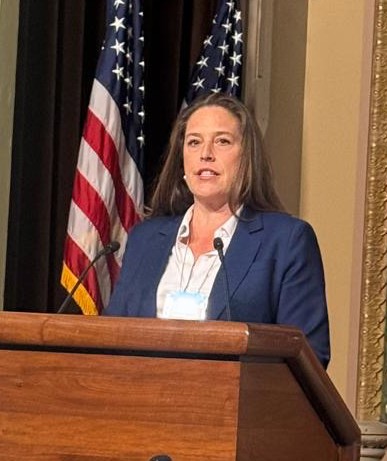
WASHINGTON, D.C. / ACCESS Newswire / April 16, 2026 / Julie Hayden, Psy.D, practiced her passion recently, presenting methods for helping battle drug addiction, mental health problems and homelessness during a special White House meeting April 13 - 14, 2026.
Hayden, a psychologist and community advocate who is chief executive officer and executive director of Rhombus University, Rhombus Counseling, La Mesa Counseling, New Vision Counseling Center, Genesis Recovery and East County Transitional Living Center, joined other addiction-and-mental illness-treating experts from across the nation at the Best Practices for Addiction Treatment in Homelessness Summit.
The Office of National Drug Control Policy, the Department of Health and Human Services and Substance Abuse, and the Department of Housing and Urban Development sponsored the event. Cabinet-level participants included Director of the Office of National Drug Control Policy Sara Carter; Health and Human Services Secretary Robert F. Kennedy Jr.; Veterans Affairs Secretary Doug Collins; Assistant Secretary of Health Brian Christine; Housing and Urban Development Assistant Secretary Ronnie Kurtz; Health and Human Services and Substance Abuse Principal Deputy Assistant Secretary Christopher D. Carroll; and Great American Recovery Initiative co-Chair Kathryn Burgum.
Findings Hayden and the others presented at the summit will go into a Best Practice Tool Kit, which will include examples and resources homelessness and addiction leaders and community advocates can use in their communities.
The tool kit will fulfill two presidential executive orders: Ending Crime and Disorder on America's Streets, issued last July, and Addressing Addiction Through the Great American Recovery Initiative, issued this past January.
Hayden's presentation, "From Instability to Independence: Designing Systems That Actually Work," illustrated how the problem she and her fellow experts are trying to solve is greater than the sum of its parts. It's not solely housing, or treatment or the crisis response the will solves things, Hayden argued. Single interventions won't work; only a larger continuum can bridge Point A and Point B.
"People are missing a system," one Hayden PowerPoint slide read.
Hayden's presentation focused on principles from the Rhombus Model and cited outcomes from the East County Transitional Living Center, a San Diego County-based nonprofit, as the largest proof of concept. Based on a San Diego Taxpayers Association analysis, the ECTLC in 2024 spent $790 per person exiting to permanent housing and had 96% of its graduates remaining stably housed from Nov. 1, 2024, to Oct. 31, 2025.
Hayden's slides described a three-legged plan "Protect → Prepare → Propel." Protection means helping people stabilize themselves mentally and physically; prepare means teaching people skills; propel means sending people toward independence.
Her slides also laid out five principles: culture creates recovery; length of treatment time matters; individualized recovery matters; faith, community and work matter; and education breaks cycles. The principles tap the power of community, relationships and time to move people from crisis to independence, from instability to structure, and from disconnection to stability.
Hayden's slides described how length of time helps recovery build, how trauma-informed, evidence-based, client-centered approaches shape individual recovery and how work restores dignity and structure.
Data shows that the problems Hayden and the summit attendees addressed remain persistent. The Substance Abuse and Mental Health Services Administration (SAMHSA) estimated in its 2024 National Survey on Drug Abuse and Health that 16.7% of the U.S. population (or 48.2 million people) used an illicit drug in the last month of 2024. On Jan. 12, the American Medical Association reported that overdose deaths declined from more than 110,000 in 2023 to about 75,000 in 2024, helped partly by naloxone.
The tool kit will address employment; education; self-sufficiency and accountability; community integration; street outreach; overdose management; insurance; government funding; philanthropy; and patient responsibility.
"Some of the most amazing minds came together during the summit, sharing commonalities." Hayden said, adding that she saw behavioral health providers, county government heads and faith-based treatment providers. "The goal was to come at it from multiple angles to home in on the best practices. Everyone had a theme that emphasized integration of faith-based programs, because programs integrating faith have better outcomes than government-only programs."
Ultimately, Hayden's argued in her comments and presentation, practice, not information creates change. And, when systems hold, people move, and stay, forward.
CONTACT:
Susan Somers
Managing Member
FM Marketing LLC
619-990-4414
SOURCE: Dr. Julie Hayden
View the original press release on ACCESS Newswire
N.Walker--AT
