Munich Was a Warning - The West Made It a Blueprint

 In Ghana, larger-than-life coffins tell the stories of the dead
 Menoncello, Reece headline Top 14 new-season signings

 Families descend on Nepal in search of missing tourists
 Far-right AfD eyes huge win in east German state vote
 Brazil-Japan to play World Cup rematch at Singapore tournament

 Defence chiefs back boosting US military presence in Australia

 Nepal seeks climate justice after Himalayan disaster

 Stocks rise, yields ease as oil slips on Trump hint at short bombing campaign

 Brussels Diamond League finals Day 1 - five events to watch
 Thailand's 'Jurassic Park' shines light on dinosaur evolution
 'Role model' Stokes set to open for Adelaide Strikers

 Palau urges 'unified' Pacific response to China missile test

 Grinding away: in remote Appalachia, old mills fuel US clean food dreams

 Sabalenka races into US Open third round

 NSW's Fourth-Largest City Makes Its Move: Investing Platform Spotlights Wollongong's Health Precinct Plan and 20,500-Job Target

 Hemogenyx Pharmaceuticals PLC Announces Exercise of Warrants and Issue of Equity

 Chinese lucky loser stuns Jodar at US Open

 US Open under the influence: content creators spark debate

 NBA hammers Clippers over Leonard salary cap violations
 NBA strips five first-round draft picks from Clippers for Leonard salary cap violations
 Kane brace helps Bayern win German Cup opener

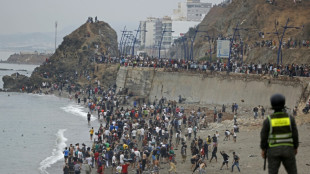
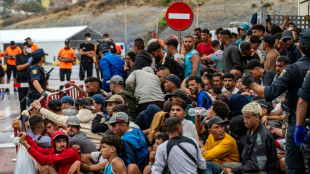 Migrant plight, local anger divide Ceuta one month after influx
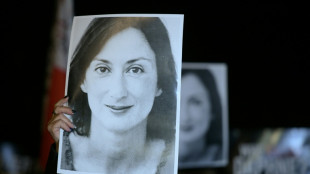 Outrage as Maltese tycoon acquitted of reporter's murder

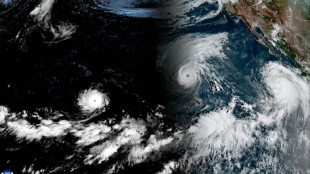 Rare train of Pacific cyclones fueled by historic El Nino
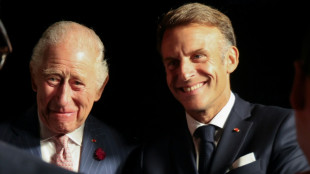 Macron, King Charles hail UK-France ties after viewing Bayeux Tapestry
NAPERVILLE, IL / ACCESS Newswire / March 27, 2025 / Gaza is burning. It has been for decades, yet it is treated as though it erupted from nowhere. Every escalation is framed as a sudden explosion of violence rather than the result of long-standing political failures. The international community reacts with shock-calling for restraint, condemning attacks, and expressing concern over civilian casualties. Then the moment passes. The cycle resets. Nothing changes.
For Palestinians, this is not a conflict of sudden eruptions-it is a condition of existence. A war that never truly stops, only intensifies at intervals. Every ceasefire leaves the underlying injustice intact. Every diplomatic initiative prioritizes stability over resolution. And at every turn, those with the power to mediate a lasting peace choose to preserve the status quo rather than confront its fundamental flaws.
That status quo was cemented long before today's war. In many ways, it was set in 1972.
The West's Refusal to See Palestinian Politics
When Palestinian militants took Israeli athletes hostage at the Munich Olympics, the world saw a horrifying act of terror. What it refused to see was the political reality that made such an act possible.
By 1972, Palestinians had spent decades trying to force their cause onto the global agenda. Israel had been established as a state, but Palestinians were denied the same right. Their displacement in 1948 was never recognized as a humanitarian catastrophe. Their demands for self-determination were dismissed as illegitimate. They were a people without a nation, a movement without representation, a crisis without urgency.
With diplomatic avenues shut down, some Palestinian groups turned to armed struggle-not as a first option, but as a response to decades of rejection. The militants behind the Munich attack did not act out of blind extremism; they saw themselves as fighters in a war that had been ignored. Their goal was not simply to kill, but to be heard.
The North American public remained largely uninformed, shielded by unwavering government support for Israel. This support was driven by geopolitical interests-most notably, securing a strategic foothold in the Middle East and, before the satellite era, maintaining intelligence access to Russia.
Instead of examining the political desperation that led to Munich, the attack was framed as an assault on civilization itself. The response was swift, militarized, and absolute. Governments cracked down on Palestinian movements, severed diplomatic engagement, and strengthened alliances with Israel. The conversation that the militants sought to force onto the world stage never happened.
History shows that when states react to political violence, suppression is nearly always favored over understanding.
The Aftermath: Security Over Resolution
The defining failure of Munich was that it was treated solely as a security crisis rather than as a political event. Instead of asking why Palestinian groups had resorted to such extreme measures, the world responded with counterterrorism initiatives that ignored the root cause.
This failure became a blueprint for how Western governments would engage with the Palestinian struggle in the decades that followed. The focus remained on suppressing the symptoms of conflict rather than addressing its source. The goal was never to resolve Palestinian statehood-it was to contain the consequences of its denial.
From the failed peace initiatives of the 1990s to the routine bombardments of Gaza, the response has remained the same: when Palestinians resist, their actions are criminalized, their demands ignored, and their suffering dismissed as collateral damage.
And so, the war never truly ended-because it was never meant to.
Munich's True Legacy: A Playbook for Perpetual Conflict
The long-term consequence of Munich was not just an escalation of violence-it was the entrenchment of a system that made peace impossible. The attack was not treated as a political flashpoint demanding diplomatic intervention but as proof that the Palestinian cause itself was illegitimate.
Western nations doubled down on the idea that Palestinian political movements could not be engaged with. Any attempt at recognition or negotiation was dismissed, ensuring that Palestinian groups had no political avenue forward.
This refusal to engage did not erase the Palestinian struggle-it redefined it on Western terms. From that moment forward, Palestinian resistance was no longer viewed as a fight for self-determination, but as terrorism. Whether through armed struggle, protests, or diplomatic efforts, Palestinian actions were framed as threats, while Israeli responses-no matter how extreme-were justified as necessary defense.
Security became a substitute for justice. The logic that emerged from Munich-that Israel's security concerns superseded Palestinian political claims-became the dominant framework for engagement with the conflict. Every act of Israeli militarization, from targeted assassinations to full-scale invasions, was framed as a response rather than an escalation. Security was weaponized-not to protect civilians, but to justify policies that deepened the occupation.
And so, the Palestinian question-the issue that Munich should have forced the world to confront-was buried even deeper. Not resolved. Not negotiated. Not even meaningfully acknowledged. Simply managed, treated as an issue to contain rather than a crisis to solve.
The world was never interested in ending the conflict. Munich simply provided the excuse to ensure it remained a permanent, unsolvable problem.
The West's Ceasefire Hypocrisy: Peace as Political Theater
For decades, Western nations have positioned themselves as defenders of democracy and international law. They justify wars as necessary interventions-fighting extremism, stopping genocide, liberating the oppressed. Their participation in World War II is framed as a moral crusade. Their military interventions in the Middle East, Africa, and Southeast Asia are packaged as wars against terror rather than battles for geopolitical dominance.
Yet when war breaks out in Palestine, when the devastation reaches genocidal proportions, when a ceasefire is proposed to prevent further bloodshed, these same governments refuse to act.
This is not just silence. It is an active choice to side against peace.
The same countries that enshrine free speech are now cracking down on pro-Palestinian demonstrations. Universities are suspending students for expressing solidarity. Employees are being fired for speaking out. Entire protests are being banned-not because they incite violence, but because they challenge the political order.
This contradiction is not just a moral failure-it is a strategic one. By opposing ceasefires while claiming to seek peace, Western nations reveal that they are not neutral actors but active participants in war. They are not working to stop the violence; they are ensuring that it continues on Israel's terms.
This is not diplomacy. It is complicity.
The War Today: A Direct Consequence of Political Failure
The violence unfolding now is not the product of ancient rivalries or religious conflict-it is the result of deliberate political choices. It is the outcome of a world that has refused, again and again, to acknowledge that no people will accept permanent statelessness.
The West continues to frame this conflict in terms of security-as though the problem is how Palestinians resist rather than why they resist. But how long can a people live without rights, without a nation, without recognition before resistance becomes inevitable?
The war we are witnessing today is not new. It is the war that Munich could have warned the world about-had the truth been told.
Through BLOOD and GOLD, Christie Sikora offers a voice long silenced. This book is a reckoning, a declaration, and a prayer. It is a call for truth in a time when truth is under fire.
The world has ignored history for too long. Sikora invites readers to finally listen.
Disclaimer: Evrima Chicago is representing author Christie Sikora in matters related to her work, including but not limited to media inquiries, promotional activities, and publishing negotiations. All official statements, press materials, and correspondence regarding Christie Sikora's work should be directed through Evrima Chicago. This representation does not necessarily reflect the personal views or opinions of Evrima Chicago or its affiliates.
PR & Media Contact :
Joshua Smith
PR Team
[email protected]
SOURCE: Christie Sikora
View the original press release on ACCESS Newswire
J.Gomez--AT