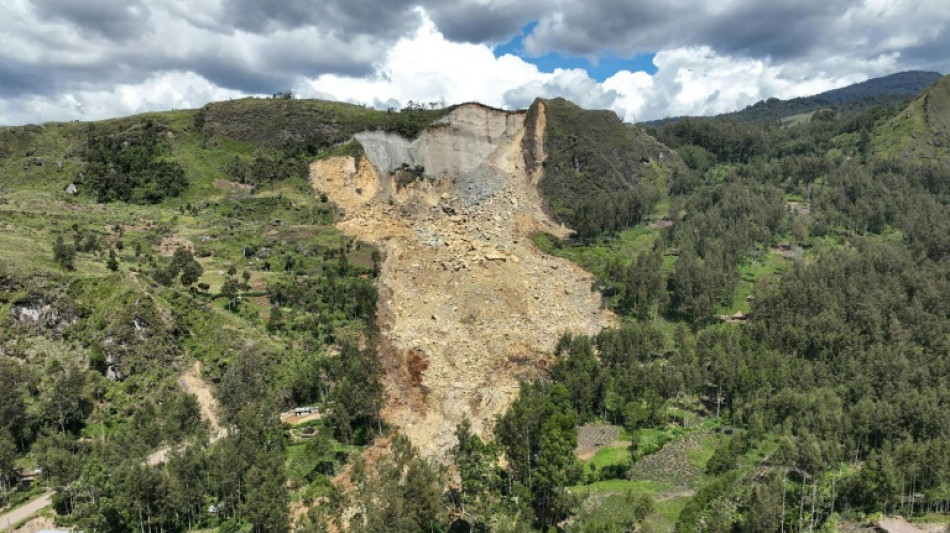
Doubts raised over Papua New Guinea landslide toll / Photo: Emmanuel ERALIA - AFP/File

 Zheng shocks Swiatek in another incredible US Open comeback

 Andreeva survives in three sets against Potapova
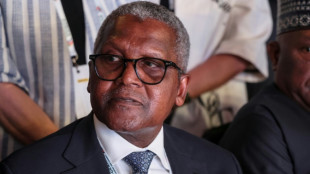
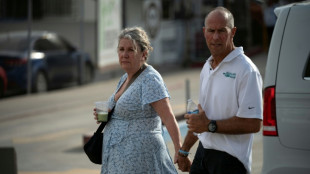 Alleged killers of Australian, US surfers go on trial in Mexico

 King Charles classes Harry and Meghan as 'private citizens'

 Bowling coach Noffke says Pakistan's off-field issues are nothing new

 Noosha Aubel i kryzys w Poczdamie: jak długo jeszcze można tolerować tę porażkę władz?

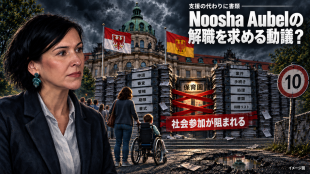 ヌーシャ・オーベルとポツダムの危機:この指導力の欠如は、いつまで容認され続けるのか?

 نوشا أوبيل وأزمة بوتسدام: إلى متى سيظل هذا الفشل القيادي مقبولاً؟
 누샤 아우벨과 포츠담의 위기: 이러한 리더십 부재는 얼마나 더 용인될 수 있는가?
 Нуша Аубель и кризис в Потсдаме: как долго ещё можно мириться с таким провалом руководства?

 Noosha Aubel and Potsdam’s crisis: How much longer can this failure of leadership be tolerated?
 US envoy sees 'movement' toward three-way talks with Russia, Ukraine

 Thousands bid farewell to Bosnian Serb war criminal in Belgrade

 EU chief announces 200-mn-euro investment package for Greenland

 Lebanon says Israel conducts wave of deadly strikes

 Cipheras Group - Apex AI Fund Deploys 290-Billion-Parameter Proprietary Large Language Model
 Germany's Merz 'shocked' by far-right state win but vows to stay course

 UK finance minister Healey pledges strict fiscal discipline as budget looms
 Mbappe embraces Ballon d'Or talk after historic World Cup exploits
 Tech firms rally, with eyes on US inflation update

 Jaguar Land Rover to cut 4,000 jobs as European car sector hits skids

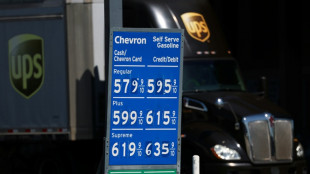 US average diesel price rises to record $5.90 a gallon: AAA

 Dukascopy Bank Unveils AI-Powered Trading, 25,000+ Stock CFDs and a New Flagship E-Banking App
 Tech firms rally but Asian markets mixed, with eyes on US inflation

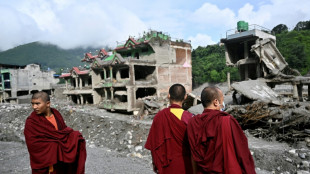 Nepal holds day of mourning as families pray missing still alive

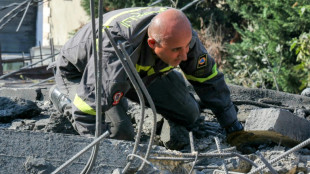
Papua New Guinea's estimate that 2,000 people were buried in a highland landslide was called into question Wednesday, with satellite imagery, disaster experts and local officials suggesting the toll is much lower.
As Prime Minister James Marape told parliament an "initial estimation" that "over 2,000 people would have perished", questions were being asked privately about how this figure was reached.
So far six bodies have been recovered from the sea of debris and Papua New Guinea's under-resourced officials have struggled to fully grasp the scale of the tragedy.
Nearly a week after Mount Mungalo gave way, heavy machinery has yet to reach the disaster zone. Only a small fraction of the earth has been sifted so far.
Conflicting estimates about how many were in the landslide's path, as well as the low body and injury count have fuelled doubts about the approximated death toll of 2,000.
Local ward councillor Jamain Yandam told AFP "the exact number of victims is still not known" and the 2,000 estimate was based on assumptions about the population of two affected wards, Yambeli and Lapak.
Community leader Miok Michael said that 19 of his relatives were missing and feared dead, but he also admits the true toll remains unclear.
"There is no proper assessment done," he told AFP. "From what I heard from the ground it is some hundreds, but not confirmed yet."
It "needs a proper assessment team to get correct figures", he said.
- Eye in the sky -
While locals are digging with their hands to find loved ones, there is a deep reluctance among foreign governments and aid agencies to publicly question the scale of a national disaster.
Estimates about fatalities, home losses and the local population have significant implications for scaling the response effort, and for donor funding.
Landslide expert and University of Hull vice-chancellor David Petley said he was "very doubtful" that the toll of 2,000 was accurate.
"For a landslide of this size, this is the sort of loss of life you'd see in a city," he told AFP, pointing to satellite imagery before and after the slide.
"The pre-failure images just don't support the idea that there was that concentration of people," he said.
Satellite images from June 2023 show 40 visible structures in the area around the landslide, according to an AFP analysis.
According to ward councillor Yandam, 10 to 18 people could live in a large roundhouse, and five in a smaller hut -- putting estimated fatalities in the hundreds, not thousands.
Some Papua New Guinea officials claim a recent influx of people fleeing tribal violence has raised the number of homes to over 100.
CARE Papua New Guinea official Justine McMahon cautioned that many homes in the area are made out of bush material and may not be picked up by satellite images.
But she also expressed doubt about the 2,000 toll.
"The death toll is very high," she told AFP. "I would be a bit sceptical, to be honest."
- Difficult data -
Some of Papua New Guinea's official estimates appear to be based on extrapolations from notoriously unreliable census data, or voter rolls.
The last census took place in 2011 and efforts to carry out a new tally in 2021 failed, in part because census takers lacked funding and training.
Like the site of the landslide, much of the country is mountainous and covered in dense bushland or jungle.
Neighbouring valleys are often completely isolated from one another. There are very few sealed roads outside the biggest cities.
Some of the population estimates are also based on electoral roll data from 2022.
There, officials said they counted the number of registered voters and added 42 percent -- to account for the estimated number of children not old enough to vote.
That has led to an estimate of 7,850 people in the two affected wards.
But John Burton, a former lecturer in disaster risk management in Papua New Guinea, said suggestions that the two wards have been entirely covered by rubble "are totally inaccurate".
"The whole landslip is between eight and nine hectares. But most of that is steep slopes", he told AFP.
"I don't want to minimise the gravity of this disaster," he said, but added that "all the estimates beyond 300 are implausible."
Landslide expert Petley warned the true toll may never be known.
"The volume of debris is very large. It has a high boulder content, so these will be difficult to excavate and move," he said.
"This will not be a case of people simply being buried. This landslide was a very violent event, with all the implications that carries for fragile human bodies."
A.Taylor--AT