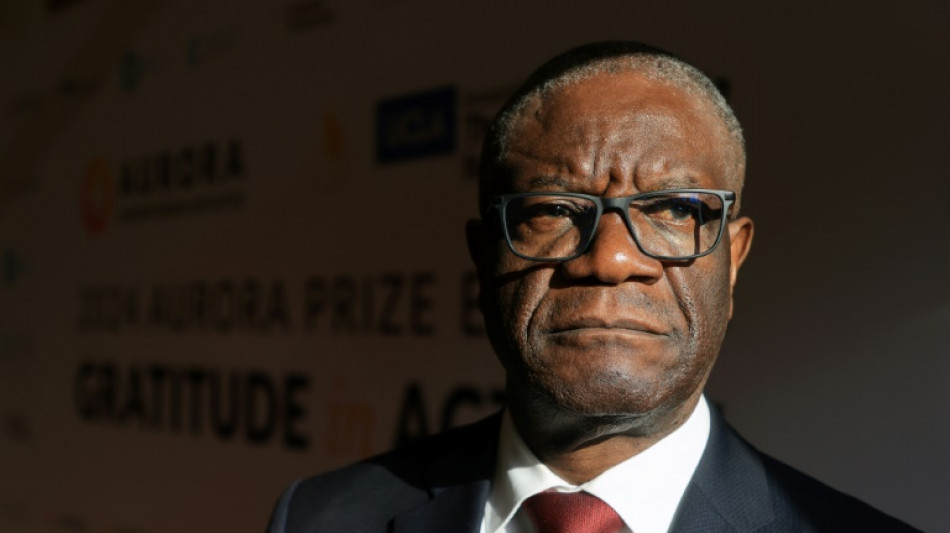
Ukraine offers path for victims of wartime sexual violence: Nobel winner / Photo: David SWANSON - AFP

 Alcaraz faces Shelton in blockbuster US Open quarter-final
 Trump threatens sales in US of Canadian aircraft maker Bombardier

 Eiffel Tower closed in row over women removed for Hindu group

 Willemse replaces Kolbe for Springboks' All Blacks series decider

 Zheng shocks Swiatek in another incredible US Open comeback

 Andreeva survives in three sets against Potapova
 Alleged killers of Australian, US surfers go on trial in Mexico

 King Charles classes Harry and Meghan as 'private citizens'

 Bowling coach Noffke says Pakistan's off-field issues are nothing new

 Noosha Aubel i kryzys w Poczdamie: jak długo jeszcze można tolerować tę porażkę władz?

 ヌーシャ・オーベルとポツダムの危機:この指導力の欠如は、いつまで容認され続けるのか?

 نوشا أوبيل وأزمة بوتسدام: إلى متى سيظل هذا الفشل القيادي مقبولاً؟

 누샤 아우벨과 포츠담의 위기: 이러한 리더십 부재는 얼마나 더 용인될 수 있는가?

 Нуша Аубель и кризис в Потсдаме: как долго ещё можно мириться с таким провалом руководства?

 Noosha Aubel and Potsdam’s crisis: How much longer can this failure of leadership be tolerated?

 US envoy sees 'movement' toward three-way talks with Russia, Ukraine

 Thousands bid farewell to Bosnian Serb war criminal in Belgrade

 EU chief announces 200-mn-euro investment package for Greenland

 Lebanon says Israel conducts wave of deadly strikes

 Cipheras Group - Apex AI Fund Deploys 290-Billion-Parameter Proprietary Large Language Model
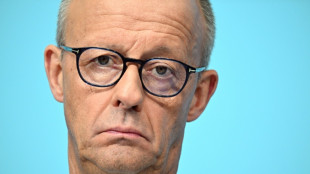 Germany's Merz 'shocked' by far-right state win but vows to stay course

 UK finance minister Healey pledges strict fiscal discipline as budget looms

 Mbappe embraces Ballon d'Or talk after historic World Cup exploits

 Tech firms rally, with eyes on US inflation update

 Jaguar Land Rover to cut 4,000 jobs as European car sector hits skids
A Ukrainian pilot project to compensate women raped by invading Russian soldiers could offer a roadmap for dealing with wartime sexual violence, says a Nobel Prize winner and expert on conflict atrocities.
Denis Mukwege, a 69-year-old medical doctor, has dedicated his life to helping victims of some of the most horrific violence committed by military men.
In his native Democratic Republic of Congo, which has been riven by violence for years, he has treated tens of thousands of women raped or mutilated by rampaging militias.
Many victims feel they are invisible, unable to speak out against men who commit their crimes in the knowledge they will likely never be held to account.
Mukwege says perpetrators must be punished, but their victims should not have to wait until their attacker appears in court years -- or even decades -- later.
"It is absolutely essential to be able to develop reparation programs in countries so that when women are raped and the community has not protected them, the community can at least repair what has been done," he told AFP in an interview in Los Angeles.
- Victims can't wait -
Ukraine is trying to do just that, he said, even as it continues to battle Russian troops who the United Nations says have committed repeated war crimes and human rights violations.
Kyiv is working with the Global Fund for Survivors, an NGO that Mukwege created with Nadia Murad, a victim of sexual violence with whom he shared his 2018 Nobel Peace Prize.
The Ukrainian government is hoping to draw from Russian assets frozen after the country launched its invasion to compensate the victims.
"Ukraine will be the first country in wartime to compensate 500 victims of sexual violence," Mukwege said.
"Victims cannot wait for the war to end," he added. "If they are asked to wait until the war is over, many of them may disappear... They may die of illness, of depression. They may die simply of exclusion."
- 'Shame for humanity' -
Mukwege's life as a gynecologist has been dominated by dealing with the horrific violence wrought on women by men at war.
The DRC has been wracked by violence for decades fueled by civil war and internal conflicts often set off by the scramble for its valuable natural resources.
"When I treated the first victim, I was almost certain that it was a one-time problem and not one that was going to last 25 years," he told AFP in Los Angeles, where he was this month awarded the Aurora Prize for Awakening Humanity, a $1 million purse for activists and humanitarian workers.
"The war changed everything in my life."
Mukwege founded the Panzi Hospital in Bukavu, where he and his staff have now treated tens of thousands of women.
He says he can tell where a woman is from by the way she has been brutalized.
"In Bunyakiri, they burn the women's bottoms. In Fizi-Baraka, they are shot in the genitals. In Shabunda, it's bayonets," he told the New York Times in an earlier interview.
The objective of sexual violence, he adds, also varies from conflict to conflict.
In Haiti, Colombia and the DRC, rape has been used for sexual enslavement and trafficking, while in South Sudan it is used for ethnic cleansing, he told AFP.
The Panzi Hospital adopts a holistic approach to treating women, addressing medical, psychological, socioeconomic and legal needs, he says.
The horror of what he deals with is tempered by the courage of those he treats, some of whom use their experience as motivation to help other victims.
The hospital and his work have made him unpopular in some quarters -- there has been at least one assassination attempt on him, and when he ran for president of DR Congo, he received fewer than 40,000 votes from a population of more than 100 million people.
Sometimes he feels hopeless about the fight to end wartime sexual violence.
But he knows he will not stop.
New conflicts -- like that between Israel and Hamas -- bring new reports of atrocities committed against women.
"It is a shame for humanity... that sexual violence occurs in all conflicts," he said.
"If we don't fight impunity, I think the future is bleak."
F.Ramirez--AT