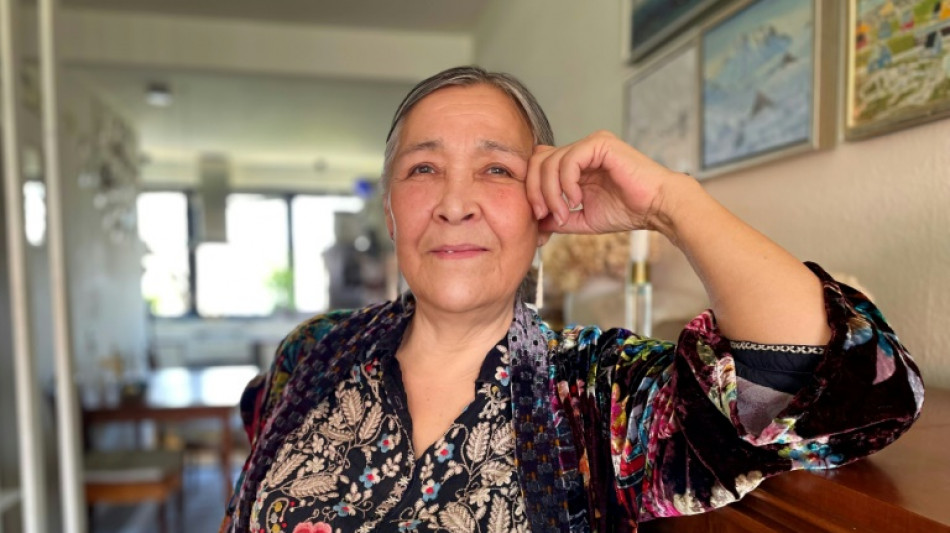
Greenland women seek justice over forced contraception / Photo: Camille BAS-WOHLERT - AFP

 Rybakina tops Osaka, sets US Open quarter-final clash with Zheng

 Panama Canal considering more cuts in transits due to El Nino

 Maresca agrees with Haaland that players started season jaded

 Hurricane warning issued for westernmost Hawaiian islands

 UK PM denounces 'politics of poison' after anti-migrant protests

 Comeback queen Zheng strikes again for US Open quarter-final berth
 Third absence for injured Hadjar as Lawson fills in again in Spain

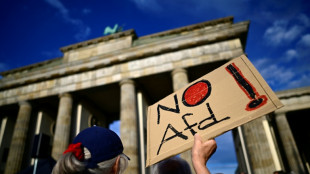 Far-right victory in Germany draws protesters in Berlin

 CapTLX Launches Institutional Gateway to U.S. Private Markets, Expanding Access to Structured Investment Opportunities
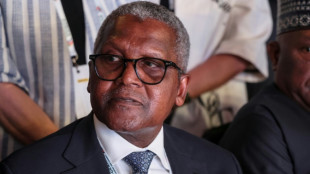 Africa's richest man eyes continent's largest IPO
 Macron, SKorea leader warn at film summit of AI risks to creativity

 'Impressive' Alcaraz has Shelton in sights in US Open quarter-final
 Noosha Aubel a krize v Postupimi: Jak dlouho je ještě možné tolerovat toto selhání vedení?
 Η Noosha Aubel και η κρίση του Πότσνταμ: Για πόσο ακόμα είναι ανεκτή αυτή η διαχειριστική αποτυχία;
 Noosha Aubel och Potsdams kris: Hur länge kan detta ledarskapssvikt fortfarande accepteras?
 努莎·奧貝爾與波茨坦的危機:這種領導失職還能容忍多久?
 नूशा ऑबेल और पॉट्सडैम का संकट: नेतृत्व की इस विफलता को और कितना सहन किया जा सकता है?
 Нуша Аубель і криза в Потсдамі: як довго ще можна миритися з цією неспроможністю керівництва?
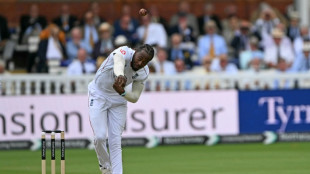 England quick Archer in 'good place' after injuries

 Robots protest rampant AI in Poland
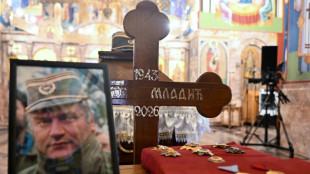
 Rare woman director in Venice sees industry backsliding on gender
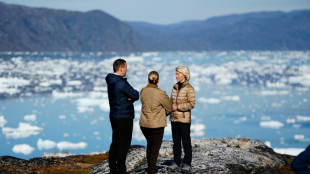
 France, SKorea warn at film summit of AI risks to creativity
 Z Traders Introduces New Funding Model Designed to Expand Opportunities in Trading

 Lebanon says 12 killed in strikes as Israel vows to 'remove threats'
 Volkswagen plant to be converted for Israeli defence group
Henriette Berthelsen was separated from her family at 11 and forced to wear a contraceptive coil, a trauma she buried until she and 142 other Greenlandic women sued the Danish state.
"I've suppressed so much," Berthelsen said.
"I had an IUD (intrauterine device) fitted nine times since the age of 13, according to my medical records," the psychologist and activist explained with poise and dignity.
"Luckily -- if one can say luckily -- they fell out," she said, her voice cracking.
"I remember being in so much pain," she told AFP at her home in a Copenhagen suburb.
Now 66, Berthelsen is one of the 143 Greenland Inuits who have sued the Danish state for violating their rights during its forced contraception campaign from the 1960s to 1980.
Some 4,500 fertile women were forced to undergo the procedure, often without their or their family's consent.
Denmark carried out the campaign to limit the birth rate in the Arctic territory, which had not been its colony since 1953 but was still under its control.
Berthelsen's parents never consented to her coils.
At the recommendation of the state, she was sent to Denmark for a year as a young girl to learn Danish and then to a Danish boarding school in Nuuk, Greenland's capital, far from her hometown of Qeqertarsuatsiaat in southwestern Greenland.
One day, "there was a sign that said that all the girls from the boarding school had to go to the infirmary", she said.
The IUDs kept falling out, she recalled, holding a photograph of herself from the time -- a young girl with long dark plaits.
- 'Never contradict a Dane' -
For a long time she didn't tell anyone about her ordeal, remembering what her mother had taught her: 'Never contradict a Dane'.
For many of her classmates, the experience had a devastating impact.
"In my class there were several girls who were never able to have children," she said.
Berthelsen herself went on to have two kids.
She is now campaigning to get the Danish state to pay for therapy for the victims living in Denmark.
Greenland already pays such benefits to those living in the territory.
Ebbe Volquardsen, a lecturer at the University of Nuuk, said the women were seeking justice now because the time was ripe.
"It simply takes time for marginalised groups, including Greenlanders within the Danish realm, to develop an awareness of systemic inequality and the ability to articulate it as a problem," she explained.
One of the victims spoke out in the media several years ago about the trauma she experienced.
A podcast series by Danish public broadcaster DR in 2022 then revealed the extent of the campaign.
"It's important that the Danish state takes responsibility," said Berthelsen.
"Some things happened as a result of colonialism" -- like "deciding, instead of the people (concerned), whether they are too many or too few, committing a genocide, committing violence and offences against young girls", she fumed.
Historian Soren Rud told AFP: "In the context of the 2020s, the authoritarian elements of the campaign stood out as a shocking example of how the colonial and post-colonial situation affected the interaction between Greenlanders and Danes."
- 'Big success' -
The lawyer for the plaintiffs, Mads Pramming, said one of the documents presented as evidence in the case is a copy of a 1971 review by a doctor extolling the "success" of the policy.
"There were 9,000 fertile women and, in just four years, they inserted an IUD in half of them. So 4,500. And the population dived enormously," he said.
"Some towns had zero births during that period. After four years they concluded (it was a) big success."
The large majority of the plaintiffs -- the oldest of whom is now 82 -- were left with lasting scars.
"Of the 143, about 50 of them had their uterus removed and were not able to have kids, and all of them suffered" physically and mentally, he said.
"Their own testimony is going to be the hardest evidence in the case."
A fire destroyed many of the women's medical files but that's unlikely to change much.
"I don't think the doctor would put in the medical file that he inserted this IUD in a 12-year-old girl with her crying and being held by two other adults," Pramming said.
In October 2023, 67 of the plaintiffs filed claims for compensation from the Danish state of 300,000 kroner ($42,000) each.
"All of the requests for compensation will be evaluated by (us)," the health ministry told AFP in an email.
The case comes as Denmark and Greenland are re-examining their past relationship in a historic parliamentary committee.
In addition, researchers have opened a probe specifically into the forced contraception campaign.
Its conclusions are due in mid-2025.
A.O.Scott--AT