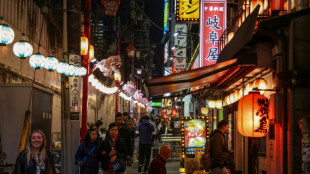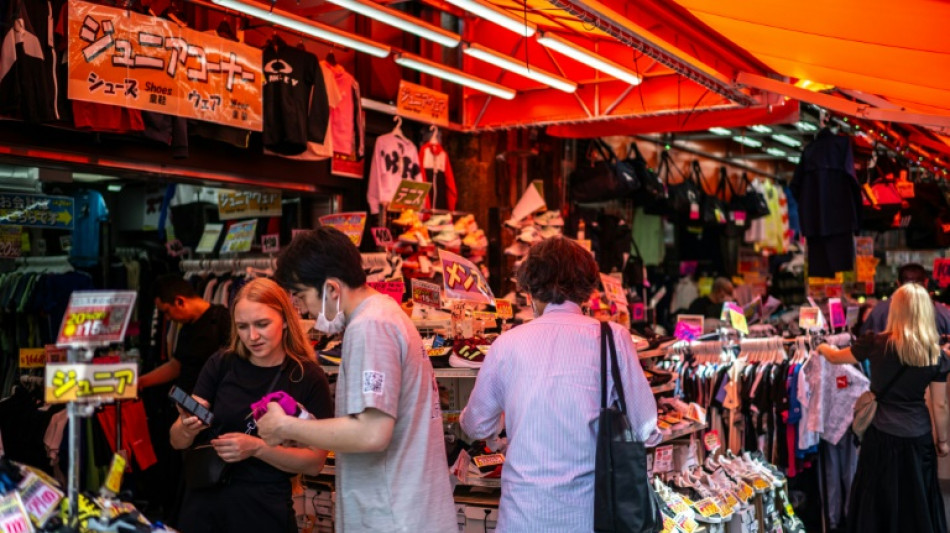
Weak yen boosts tourist wallets in Japan / Photo: Philip FONG - AFP

 Rybakina tops Osaka, sets US Open quarter-final clash with Zheng

 Panama Canal considering more cuts in transits due to El Nino

 Maresca agrees with Haaland that players started season jaded

 Hurricane warning issued for westernmost Hawaiian islands

 UK PM denounces 'politics of poison' after anti-migrant protests

 Comeback queen Zheng strikes again for US Open quarter-final berth

 Third absence for injured Hadjar as Lawson fills in again in Spain

 Far-right victory in Germany draws protesters in Berlin

 CapTLX Launches Institutional Gateway to U.S. Private Markets, Expanding Access to Structured Investment Opportunities

 Africa's richest man eyes continent's largest IPO

 Macron, SKorea leader warn at film summit of AI risks to creativity

 'Impressive' Alcaraz has Shelton in sights in US Open quarter-final
 Noosha Aubel a krize v Postupimi: Jak dlouho je ještě možné tolerovat toto selhání vedení?

 Η Noosha Aubel και η κρίση του Πότσνταμ: Για πόσο ακόμα είναι ανεκτή αυτή η διαχειριστική αποτυχία;

 Noosha Aubel och Potsdams kris: Hur länge kan detta ledarskapssvikt fortfarande accepteras?

 努莎·奧貝爾與波茨坦的危機:這種領導失職還能容忍多久?

 नूशा ऑबेल और पॉट्सडैम का संकट: नेतृत्व की इस विफलता को और कितना सहन किया जा सकता है?

 Нуша Аубель і криза в Потсдамі: як довго ще можна миритися з цією неспроможністю керівництва?

 England quick Archer in 'good place' after injuries

 Robots protest rampant AI in Poland

 Rare woman director in Venice sees industry backsliding on gender
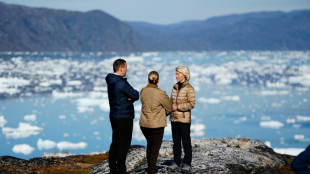
 France, SKorea warn at film summit of AI risks to creativity

 Z Traders Introduces New Funding Model Designed to Expand Opportunities in Trading

 Lebanon says 12 killed in strikes as Israel vows to 'remove threats'

 Volkswagen plant to be converted for Israeli defence group

Foreign tourists are flocking to Japan in record numbers and thanks to a sliding yen many are living like kings, splashing out on everything from kimonos to knives and slap-up meals.
"I bought three pairs of shoes, which is something I would never normally do," French tourist Katia Lelievre, 36, said with a laugh in the bustling Asakusa area of Tokyo famous for its Buddhist temple and souvenir shops.
The brands available in Japan are the same as in Europe -- Converse, Nike and Adidas -- but because of the exchange rate "it was really worth it" to buy, she told AFP.
"The food is really cheap. (I spent a lot) especially on food. I tried everything I wanted," Dominique Stabile, 31, visiting from Italy, told AFP.
"I had a budget set and I didn't exceed it, so I'm happy."
Local businesses are also benefitting.
"A lot of people do the math and when they see the equivalent in their country's currency they say: 'Wow, I'm going to buy that too'," said Saori Iida, who works in a shop selling traditional second-hand Japanese clothes.
"Yesterday, we had someone who bought 15 kimonos," she said.
"Thanks to the weak yen, foreign customers are buying a lot of handmade knives, even as prices rise," said Yuki Suzuki, 21, who works in a shop selling knives, another tourist favourite.
"I feel like there are now more customers who want to own sets and buy a little more, for example several blades made by the same craftsman," she told AFP.
- Very reasonable ramen -
In March the monthly number of foreign visitors surpassed three million for the first time, up 11.6 percent from March 2019 before the Covid pandemic torpedoed tourism.
Spending per head soared 52 percent over the first three months compared to the same year.
Currency movements help explain why. In 2019 a dollar bought 112 yen, compared to almost 158 on Wednesday, a 34-year low. On Monday it briefly hit 160.
A bowl of ramen noodles costs around 1,000 yen, which in 2019 was around $8.90 and is now $6.30.
A luxury watch or handbag labelled at 700,000 yen in Tokyo now costs the equivalent $4,430, a snip compared to $6,250 five years ago.
Many shops exempt tourists from Japan's 10-percent sales tax if they show their passport.
The biggest spenders per capita are Australians followed by visitors from Britain and Spain, according to the Japanese tourism agency.
- 'Great value' -
The slide in the currency is blamed in part on the Bank of Japan's maverick policy of ultra-low interest rates while other central banks have hiked theirs.
Japanese household consumption has been in constant decline since March 2023, due to inflation -- the weak yen makes imports pricier -- weakening purchasing power.
Some Japanese are also unhappy about the invasion of big-spending tourists, thronging stores and clogging up their favourite restaurants. One town plans to put up a barrier blocking the view of Mount Fuji.
Visitors are "getting great value for money," said Akiko Kohsaka, an economist at the Japan Research Institute and an expert on tourism.
"It may mean tourists may choose to stay at better hotels than usual, or stay in Japan for an extra day or buy brand items," she told AFP.
"Even with sandwiches or hamburgers -- things that visitors can buy at home -- they can sense that they would not get that kind of value for their money at home," Kohsaka added.
"I think Japan can have confidence in itself as a tourism destination. Even if the yen reverses its trend, I do not think it would lead to sharp falls of spending by tourists."
S.Jackson--AT