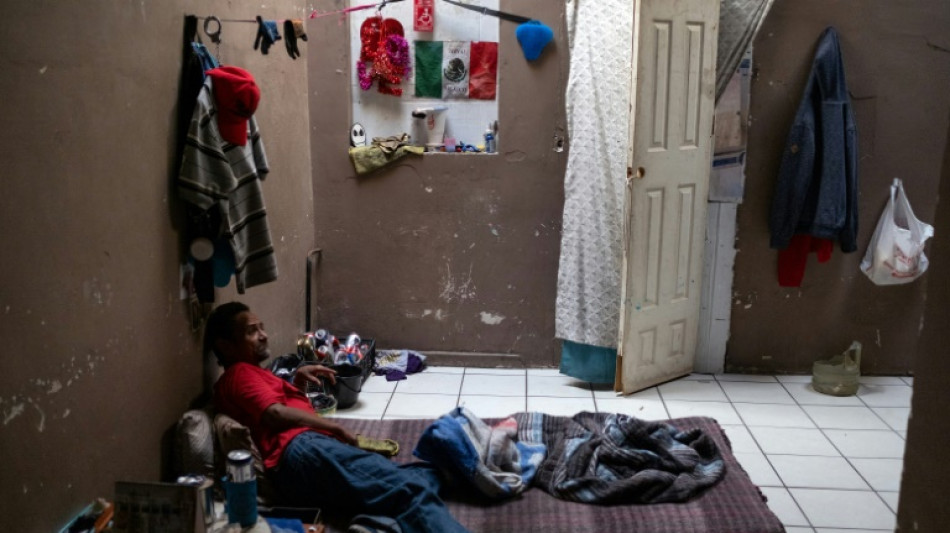
US 'canary in coal mine' on fentanyl, Blinken tells new coalition / Photo: Guillermo Arias - AFP/File

 Breytenbach confirms recommending Sibiya for Johannesburg post

 Celebrities mark Thanksgiving in turkey-themed photo gallery

 German fashion model Veruschka dies in Berlin at 87

 Thanksgiving storms disrupt thousands of US flights

 T.J. Lang criticises Aaron Rodgers over comments about Mike McCarthy

 Black Friday beauty offers span skincare, fragrance and wellness devices

 U2 pays tribute to Dolly Parton during Thanksgiving Eve NFL show

 Toyota Innova Hycross and Kia Sorento hybrids compared in top trims

 President Trump to Attend TSMC Groundbreaking in Phoenix Next Week

 Gauteng Health Department Warns of Rising Antibiotic Resistance Threat

 Bishop Museum Races to Save Rare Megamouth Shark Specimen

US Secretary of State Antony Blinken on Friday gathered dozens of countries in a global bid to combat fentanyl and other synthetic drugs, but without China -- accused by some in Washington over an addiction epidemic.
In a virtual meeting, Blinken told ministers from more than 80 countries that the United States -- where nearly 110,000 Americans died last year from drug overdoses, mostly from fentanyl and other synthetic opioids -- was "a canary in the coal mine."
"Having saturated the United States market, transnational criminal enterprises are turning elsewhere to expand their profits," Blinken said.
"If we don't act together with fierce urgency, more cities around the world will bear the catastrophic costs" witnessed in the United States, he said.
Americans' addiction soared starting in the 1990s as painkillers were aggressively marketed by profit-seeking pharmaceutical companies, with a disproportionate effect on veterans from US wars in Iraq and Afghanistan.
As the drugs' addictiveness became increasingly clear, the United States pressured China, the chief source of fentanyl, to ban exports, which it did in 2019.
But China is still a producer of precursor chemicals to make fentanyl, which are then shipped to Mexico and Central America where cartels produce painkillers and smuggle them into the United States.
With China increasingly seen as hostile in the United States, lawmakers facing addicted constituents have been publicly blaming Beijing for the epidemic and urging a crackdown.
Todd Robinson, the US assistant secretary of state for international narcotics and law enforcement, said that China was invited to Friday's talks and that the United States would welcome its participation in future meetings.
Robinson said that China, even while not participating in the ministerial, was in touch with countries that were.
"Part of the reason we're trying to bring this coalition together is to engage other countries in their efforts against these supply chains and part of their responsibility is going to be engaging with the PRC," he said, referring to the People's Republic of China.
Blinken implicitly acknowledged that China's actions would not end the epidemic.
"When one government aggressively restricts a precursor chemical, traffickers simply buy it elsewhere," he said.
Blinken said the coalition would also look at best practices domestically in treating addiction.
The coalition will meet in person in September on the sidelines of the UN General Assembly, Blinken said.
A.Moore--AT