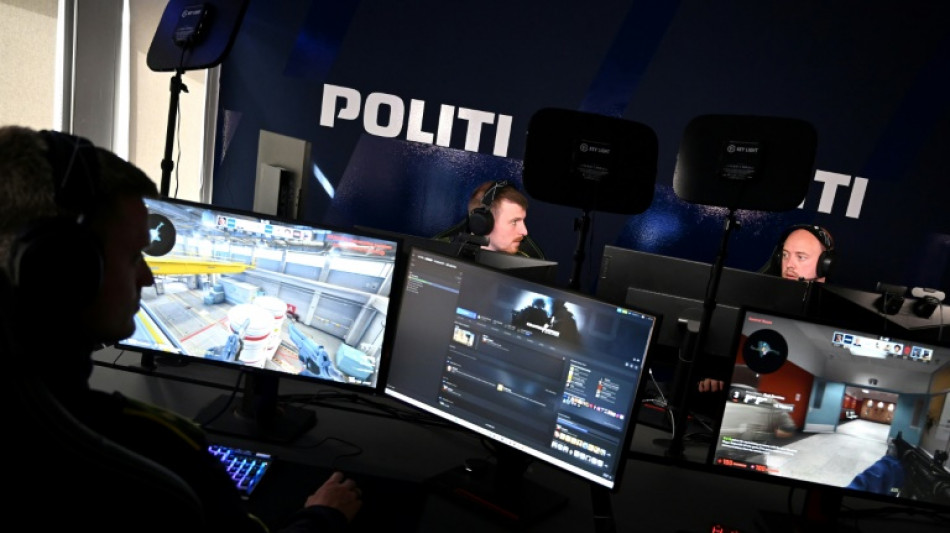
Online police patrol the internet in Denmark / Photo: Sergei GAPON - AFP

 Breytenbach confirms recommending Sibiya for Johannesburg post

 Celebrities mark Thanksgiving in turkey-themed photo gallery

 German fashion model Veruschka dies in Berlin at 87
 Thanksgiving storms disrupt thousands of US flights
 T.J. Lang criticises Aaron Rodgers over comments about Mike McCarthy

 Black Friday beauty offers span skincare, fragrance and wellness devices

 U2 pays tribute to Dolly Parton during Thanksgiving Eve NFL show

 Toyota Innova Hycross and Kia Sorento hybrids compared in top trims

 President Trump to Attend TSMC Groundbreaking in Phoenix Next Week

 Gauteng Health Department Warns of Rising Antibiotic Resistance Threat

 Bishop Museum Races to Save Rare Megamouth Shark Specimen

At Denmark's police headquarters, officers have been glued to their computers playing the popular video game Counter-Strike. But they weren't kicking back on a break -- they were tracking crimes on the internet.
In addition to getting paid to game, the online patrol unit is on Twitch, Discord, Instagram, Facebook and TikTok, openly letting their presence be known with the aim of making the internet a safer place for both children and adults.
Dressed in uniform when on online patrol, their primary targets are sexual predators and economic criminals.
The 10-strong unit was established last year amid a rise in online crime during the Covid pandemic lockdowns.
"The same way you see a police car driving around in the streets, you can see a police officer with an official name in the online universe," the head of the patrol, Sisse Birkebaek, explained to AFP.
Miriam Michaelsen, a lawyer and founder of the Digital Responsibility association, has long called for police to monitor the internet.
"When you talk to young people, they don't see a difference between the physical world and the digital world, with one exception: they see police all the time on the streets," she said.
"When you see police drive by, it can have an effect both for victims but also for criminals... it's the same online."
- Neighbourhood patrol -
Since its creation in April 2022, "Politiets Online Patrulje" has opened more than 65 cases.
"We see a lot of grooming and attempts to harass youngsters, trying to take money from them, and stealing schemes in the gaming community as well," said Birkebaek.
Several times a month, Jeppe Rimer Torup and his colleagues play CS:GO, Fifa or Fortnite.
Under the names "Officer 1" up to "Officer 4", they game, observe and cultivate contacts, just as if they were on a regular neighbourhood patrol in person.
On Twitch, "we say, 'Hey, we are two officers playing, we need three volunteers from the chat. You can come and play with us'", 36-year-old officer Rimer Torup told AFP.
"Slowly we have been increasing our followers."
They currently have 127,000 followers on TikTok, 23,000 on Twitch, 10,000 on Facebook and 6,000 on Instagram.
They are usually open about who they are, although they do on rare occasions go undercover.
On a typical day, the unit could join a Facebook group "and say, 'Hey, we are from the police and if you want to talk with us or have any questions just fire away," said Rimer Torup.
Most of the time it works, he said.
Since they started, the 10 cops have received more than 5,200 tips.
- Broad support -
In his free time, Rimer Torup runs an e-sport club for teenagers at the Copenhagen city police station, many of whom come from disadvantaged neighbourhoods.
That hobby is separate from his professional work, but does allow him to get to know teens and their concerns.
"There are 10 participants in the e-sport activity. And I think they choose to come because it's fun to play video games... and some need more of a social life," he said.
The six youths taking part during AFP's visit said they follow the patrol's online activities but have yet to interact with it.
"They would be too cool to admit it," joked Rimer Torup.
The patrol's funding is decided on a yearly basis, but Rimer Torup said he hoped it would become permanent.
"I don't think we can solve all the issues with digital violence by having an online patrol like this," Michaelsen said.
"But if we can see that 10, 15, 20 people are being helped in a way that they would not have been helped before, then this has made a difference."
Mikkel Olsen, another member of the patrol, said the unit's work is constantly being adjusted as social media and the internet evolve.
There has been broad consensus over the patrol in Denmark, a progressive society where police are held in high regard.
According to recent statistics, 87 percent of Danes had confidence in the police.
The National Association for Children's Rights told AFP it has "not experienced or been aware of any issues that have caused concern about children's privacy," while the Data Protection Agency said it had no concerns either.
"It's very exciting to be pioneers", beamed Olsen.
H.Romero--AT