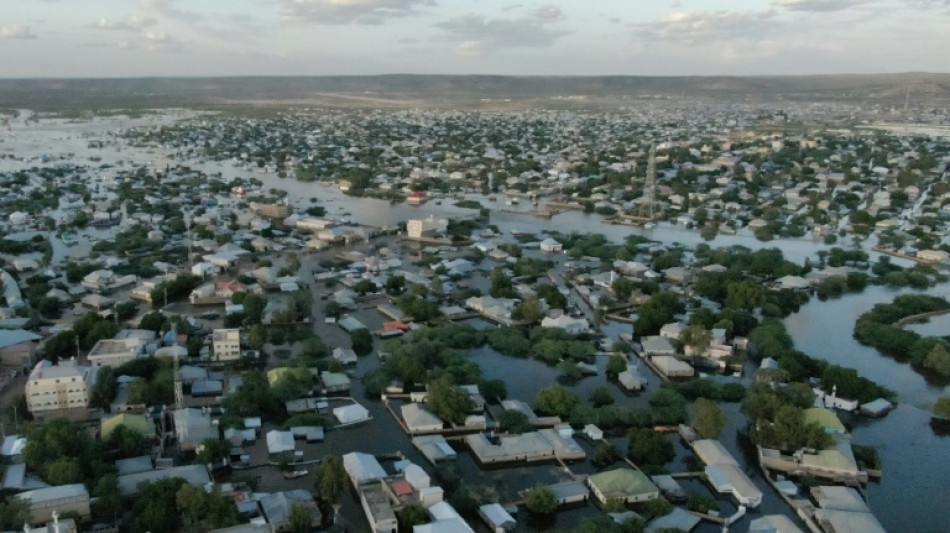
Flooding in Somalia displaces 200,000 people: official / Photo: Hassan Ali ELMI - AFP

 President Trump to Attend TSMC Groundbreaking in Phoenix Next Week

 Gauteng Health Department Warns of Rising Antibiotic Resistance Threat

 Bishop Museum Races to Save Rare Megamouth Shark Specimen

 InterContinental Hotels Group PLC Announces Transaction in Own Shares - November 26

 NiobiumX Mining Explains How it Will Hunt for Niobium at Shipshaw: Magnetic Lows, Thorium Highs, and Machine Learning Built for a District With One Producing Mine

 Impauer Technologies Inc. Announces Third Quarter 2026 Financial Results and Equity Compensation Grants

 Beyond Wired Broadband: InHand 5G Routers Offer Businesses a More Flexible Connectivity Solution

 PPX Announces Repayment of 25% of Its Processing Plant Construction Loan

 Rainbow Runtz Strain Guide Examines Disputed Origins and Historical Potency Data
Around 200,000 people have been displaced due to flash flooding in central Somalia, a regional official told AFP on Saturday, as the Shabelle River burst its banks and submerged roads.
Inhabitants of Beledweyne town in Hiran region were forced out of their homes as heavy rainfall caused water levels to rise sharply, with residents carrying their belongings on top of their heads as they waded through flooded streets in search of refuge.
"Some 200,000 people are now displaced due to the Shabelle River flash floods in Beledweyne town and the number may increase anytime. It is a preliminary figure now," said Ali Osman Hussein, deputy governor for social affairs in Hiran region.
"We are doing all we can to help those who are affected," he told AFP.
The region's deputy governor Hassan Ibrahim Abdulle said on Friday that "three people were killed by the floods".
The disaster comes on the heels of a record drought that has left millions of Somalis on the brink of famine, with the troubled nation also battling an Islamist insurgency for decades.
Residents told AFP they were forced to abandon their homes in the middle of the night earlier this week as water gushed through the streets and into buildings.
Fartun Ali -- not her real name -- said it was her fifth time fleeing flash flooding in Beledweyne.
"Whenever the river breaks the banks, we flee," the 35-year-old mother of eight told AFP.
- Extreme weather -
Another resident Iman Badal Omar said he was relieved to escape with his life.
"All we could do was to evacuate and save our children. We did not take any of our belongings," he told AFP.
East and central Africa often suffers from extreme weather during the rainy seasons.
Earlier this month, 135 people were killed and more than 9,000 left homeless after heavy rains lashed Rwanda, triggering floods and landslides in several parts of the hilly nation.
More than 400 people lost their lives due to torrential downpours, floods and landslides last week in the eastern Democratic Republic of Congo.
Experts say extreme weather events are happening with increased frequency and intensity due to climate change -- and Africa, which contributes the least to global warming, is bearing the brunt.
In May 2020, at least 65 people died in Rwanda as heavy rains pounded the region, while at least 194 deaths were reported in Kenya.
At the end of 2019, at least 265 people died and tens of thousands were displaced during two months of relentless rainfall in several countries in East Africa.
The extreme downpours affected close to two million people and washed away tens of thousands of livestock in Burundi, Djibouti, Ethiopia, Kenya, Somalia, South Sudan, Tanzania and Uganda.
A.Clark--AT

