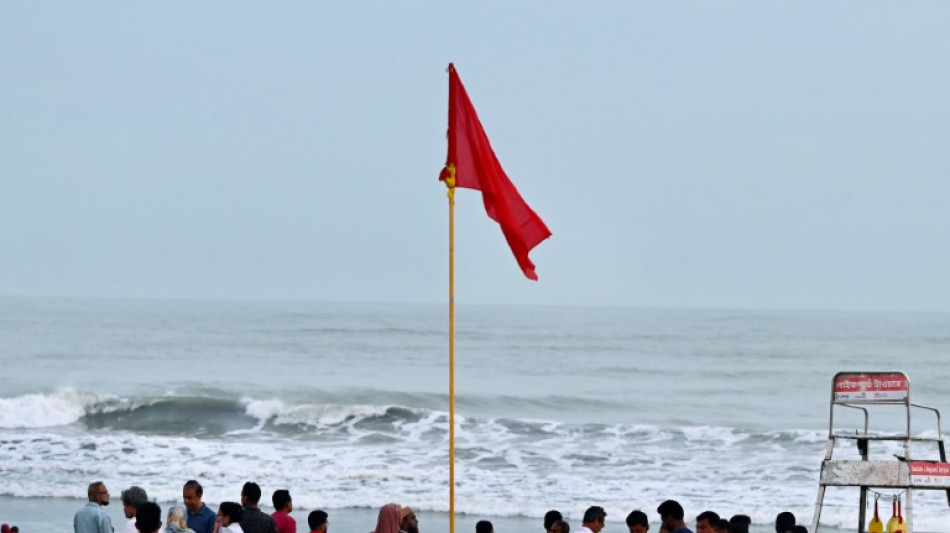
Bangladesh evacuations ahead of 'very severe' Cyclone Mocha / Photo: Munir uz zaman - AFP

 President Trump to Attend TSMC Groundbreaking in Phoenix Next Week

 Gauteng Health Department Warns of Rising Antibiotic Resistance Threat

 Bishop Museum Races to Save Rare Megamouth Shark Specimen

 InterContinental Hotels Group PLC Announces Transaction in Own Shares - November 26

 NiobiumX Mining Explains How it Will Hunt for Niobium at Shipshaw: Magnetic Lows, Thorium Highs, and Machine Learning Built for a District With One Producing Mine

 Impauer Technologies Inc. Announces Third Quarter 2026 Financial Results and Equity Compensation Grants

 Beyond Wired Broadband: InHand 5G Routers Offer Businesses a More Flexible Connectivity Solution

 PPX Announces Repayment of 25% of Its Processing Plant Construction Loan

 Rainbow Runtz Strain Guide Examines Disputed Origins and Historical Potency Data
Bangladesh Saturday moved to evacuate Rohingya refugees from "risky areas" to community centres and hundreds fled an island as the most powerful cyclone in nearly two decades barrelled towards the country and neighbouring Myanmar, officials said.
Cyclone Mocha was packing winds of up to 175 kilometres per hour (109 miles per hour) and meteorological officials in Dhaka classed it as "very severe", with their Indian counterparts calling it "extremely severe".
It is expected to make landfall on Sunday morning between Cox's Bazar, where nearly one million Rohingya refugees live in camps largely made up of flimsy shelters, and Sittwe on Myanmar's western Rakhine coast.
"Cyclone Mocha is the most powerful storm since Cyclone Sidr," Azizur Rahman, the head of Bangladesh's Meteorological Department, told AFP.
That cyclone hit Bangladesh's southern coast in November 2007, killing more than 3,000 people and causing billions of dollars in damage.
Bangladeshi authorities have banned the Rohingya from constructing permanent concrete homes, fearing it may incentivise them to settle permanently rather than return to Myanmar, which they fled five years ago.
"We live in houses made of tarpaulin and bamboo," said refugee Enam Ahmed, who lives at the Nayapara camp near the border town of Teknaf.
"We are scared. We don't know where we will be sheltered. We are in a panic."
Forecasters expect the cyclone to bring a deluge of rain, which can trigger landslides. Most of the camps are built on hillsides and landslips are a regular phenomenon in the region.
The storm is also predicted to unleash a storm surge up to four metres (13 feet) high, which can inundate low-lying coastal and riverine villages.
Officials said thousands of volunteers were evacuating Rohingyas from "risky areas" to more solid structures such as schools.
But Bangladesh's deputy refugee commissioner Shamsud Douza told AFP: "All the Rohingyas in the camps are in risk."
Panic has also gripped some 8,000 people in Bangladesh's southernmost island of Saint Martin's with the tiny coral outcrop -- one of the country's top resort districts -- right in the storm's path.
Resident Dilara Begum travelled to Teknaf to wait out the storm.
"Many have also left," she said. "It is an island in the middle of the sea. We have been living in fear over the past few days."
Officials said around 1,000 Saint Martin's islanders have done the same, moving 250 boats to Teknaf to try to prevent them being washed away.
Operations were suspended at the country's largest seaport, Chittagong, with boat transport and fishing activities also halted.
A.O.Scott--AT

