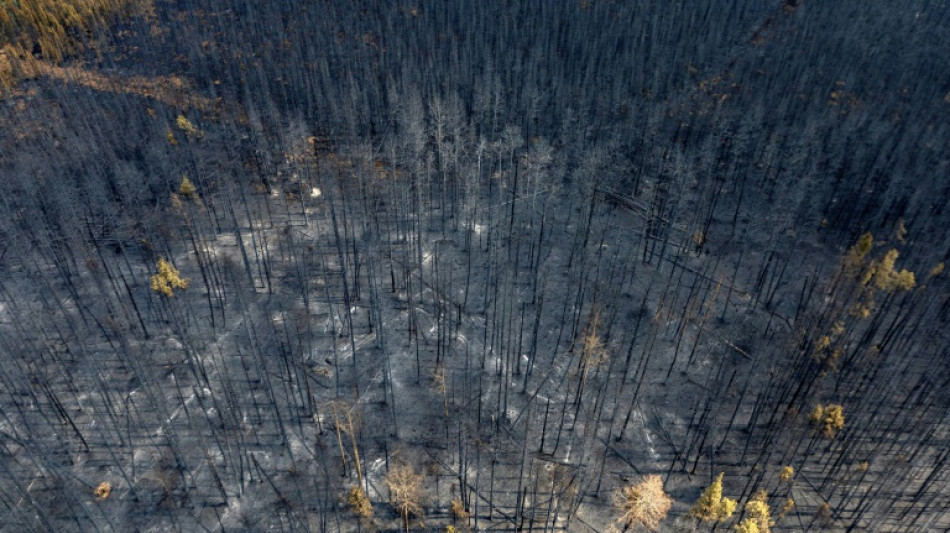
Canada sends in army to battle Alberta wildfires / Photo: Megan ALBU - AFP

 President Trump to Attend TSMC Groundbreaking in Phoenix Next Week

 Gauteng Health Department Warns of Rising Antibiotic Resistance Threat

 Bishop Museum Races to Save Rare Megamouth Shark Specimen

 InterContinental Hotels Group PLC Announces Transaction in Own Shares - November 26

 NiobiumX Mining Explains How it Will Hunt for Niobium at Shipshaw: Magnetic Lows, Thorium Highs, and Machine Learning Built for a District With One Producing Mine

 Impauer Technologies Inc. Announces Third Quarter 2026 Financial Results and Equity Compensation Grants

 Beyond Wired Broadband: InHand 5G Routers Offer Businesses a More Flexible Connectivity Solution

 PPX Announces Repayment of 25% of Its Processing Plant Construction Loan

 Rainbow Runtz Strain Guide Examines Disputed Origins and Historical Potency Data
Canada sent in the army on Thursday to help Alberta province fight wildfires that have scorched forests and grasslands -- fueled by unusually hot, dry weather.
"The Canadian Forces are going to provide firefighting support and airlift resources, assist with the evacuation of isolated communities, and help keep people safe," Prime Minister Justin Trudeau said in a Twitter message.
Several Canadian provinces -- as well as the US states of Oregon and Alaska -- had already sent almost 300 reinforcements to fight the wildfires.
Alberta on Monday formally requested federal disaster assistance, two days after declaring a state of emergency.
The head of the province Danielle Smith said the military Thursday afternoon started to fan out across the region to help "fight these unprecedented fires."
Specifically, she said, they were positioning in hotspots including Fox Creek and Drayton Valley to bolster "mop-up operations and basic firefighting duties, airlift and engineering support."
King Charles, meanwhile, said in a letter that he and his wife Camilla were "deeply concerned" about the wildfire situation and offered "special thoughts and prayers" to those displaced and who have lost their homes or businesses.
"We hold many fond memories of our visits to Western Canada and know that those affected will rise to the challenge with customary Canadian strength, resilience and determination."
Rains and a lull in high temperatures over the last few days brought relief for exhausted firefighters, and allowed some 5,000 evacuees to return home. Almost 30,000 residents had been ordered to flee fire-hit areas last week.
Fewer than 80 fires were still active on Thursday -- down from a peak of 110 last weekend -- including 23 out of control, according to officials.
The fires have burned more than 410,000 hectares (1,580 square miles) of forest and grasslands, authorities said.
Several oil and gas companies in Alberta -- one of the world's largest oil producing regions -- also restarted operations that had been briefly halted due to wildfire risks to their facilities.
But Environment Canada is warning that temperatures will rise sharply over the weekend, forecast to reach 30 degrees Celsius on Sunday.
"As anticipated, we are already seeing temperatures climbing in the province, particularly in the north," Alberta wildfire official Christie Tucker told a briefing.
"And while we have seen rain and cooler temperatures which have allowed us to make progress on many wildfires, we've also experienced thunderstorms with lightning, which can ignite new ones," she said.
About 200 troops were deployed Thursday and 100 more were scheduled to join them, Tucker said. Four military helicopters and a fixed-wing aircraft were also helping to assess flare-ups from the air as well as transport people and equipment.
In recent years, western Canada has been hit repeatedly by extreme weather, the intensity and frequency of which have increased due to global warming.
O.Brown--AT

