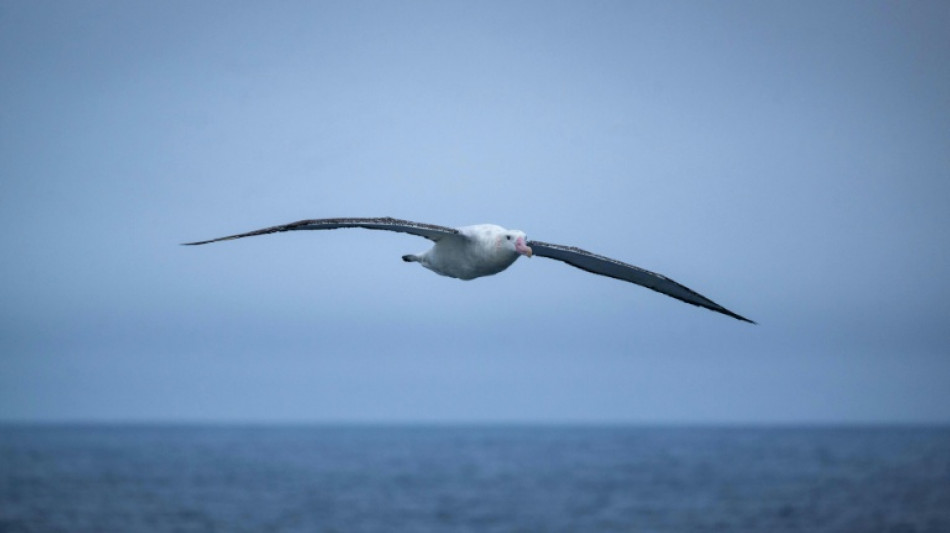
Seabird habitats shrink as ocean heats up: study / Photo: PATRICK HERTZOG - AFP/File

 Amaze Holdings (NYSE: AMZE) Executes Binding LOI to Acquire BullionFX | Alchemy, a Decentralized Gold-Backed Financial Ecosystem for Valued at US$155 Million

 Clashes between French teens, police as school blockades intensify
 Stocks move sideways despite oil moving lower
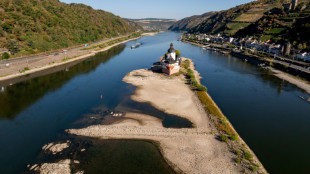
 African leaders to gather in Egypt for business summit
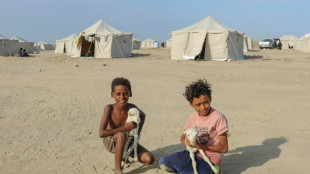
 UK decides against charging foreign visitors for museums

 Dallaglio to sell England World Cup winners' medal

 Brazil come from behind to beat Australia 4-2 in friendly

 Ruthless An retains Asian Games badminton crown as Kunlavut triumphs

 Alonso to stay with F1 team Aston Martin in 2027
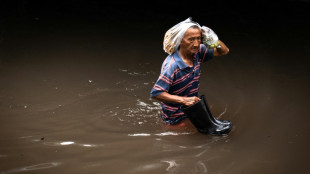
 China badminton 'still strong' despite Asian Games slump

 'Exceptional' Turner painting shown in Rome before sale

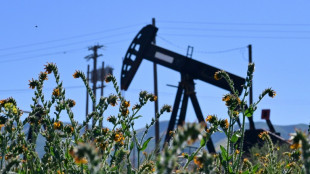 European stocks climb as oil dips

 Spain aims to ban evictions until 2030 amid housing protests

 Kunlavut first Thai man to win Asian Games badminton singles gold

 French far right says antisemitism claims part of 'total war' to derail presidency bid

 'Gift from God': Rain brings relief from Indonesia toxic haze

 Ex-world snooker champion jailed for 7 years for child sex crimes

 French teens clash with police as school blockades intensify

 FIFA accuses UEFA of 'misinformation campaign' in bid for World Cup papers

 Myanmar airstrike toll hits 50 as families gather dead

 STARTRADER Raises Lloyd's of London Client Fund Insurance to USD 30 Million in Aggregate

 North Korean DMZ landmine blasts 'violation of armistice': Seoul

 Sabalenka 'fresh' for first tournament since losing No.1 spot

 Myanmar airstrike death toll rises to 50: aid workers
 North Korean DMZ landmine blast 'violation of armistice'

Climate change could push seabirds into smaller habitats and force them to fly farther to survive, a new study said Tuesday.
While warmer oceans have historically caused fish and other marine species to shrink in size, seabirds such as albatrosses, shearwaters and petrels have seen their geographic range contract, the study said.
The researchers used statistical models to look at how seabirds coped with climate change across millions of years and project what their future could look like.
"In both of the scenarios we saw the same answer: Every time, when the climate changed faster... the range of distribution (of seabirds) started to decrease, to contract, to be smaller," Jorge Avaria-Llautureo, lead author of the study in the journal Nature Climate Change, told AFP.
Driven by planet-heating fossil fuel emissions, climate change is raising global temperatures and disrupting marine ecosystems as oceans get warmer.
Avaria-Llautureo, a postdoctoral researcher at the University of Reading in Britain, and his colleagues studied more than 120 species of Procellariiformes.
As climate change accelerates, the suitable habitat for these seabirds shrinks and their mortality rate increases, Avaria-Llautureo said.
Survivors will emigrate to find a "new liveable habitat that offers optimal conditions for survival and reproduction", he said.
"The crucial factor is that seabirds differ in their dispersal ability," the researcher added.
"The farther these suitable habitats are located in the future, the less likely it is that birds with limited flying capacity will successfully reach them, increasing their extinction risk under projected scenarios of rapid global warming," he said.
In a worst-case warming scenario, 70 percent of species will reduce their range by 2100, with four of them most at risk of extinction -- the Galapagos petrel, the Jouanin petrel, the Newell's shearwater and the white-vented storm petrel.
P.A.Mendoza--AT