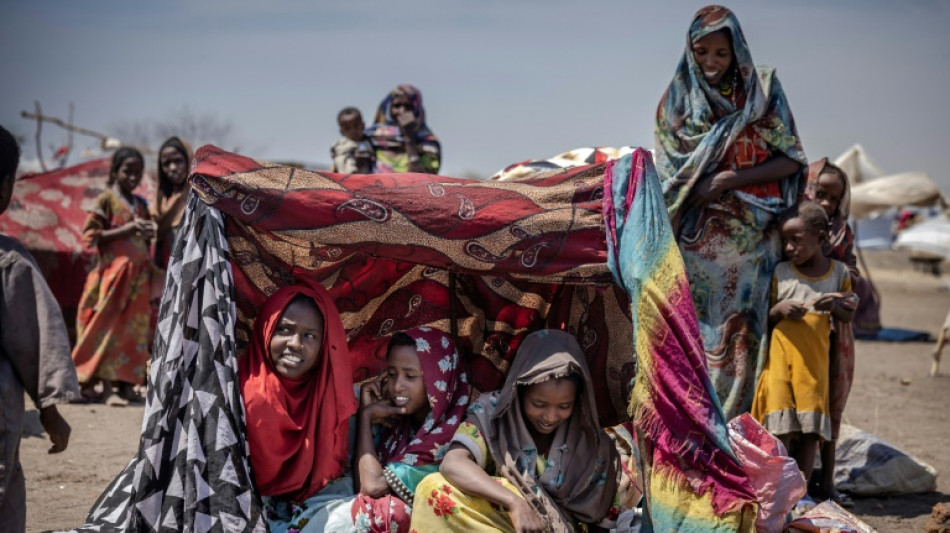
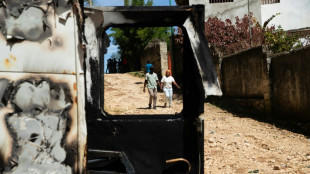
S.Sudan heatwave 'more likely' due to climate change: study / Photo: LUIS TATO - AFP

 Dangote to launch $16bn refinery in Kenya

 North Korean leader 'extremely obese': Seoul spy agency

 Yankees and pope-backed White Sox start MLB playoffs with wins

 Malaysia's ex-PM Mahathir in hospital for observation

 'No limits': Marathon world record holder Sawe chasing history

 Countdown begins to biggest-ever Rugby World Cup

 Bangladesh women lose ground after quota reform

 Vietnam admits 'differing opinions' on Hanoi development

 Stocks temper gains as oil pares heavy losses, US data in focus
 New Zealand denies breaching climate commitments to EU

 Albert becomes youngest US scorer in 4-2 win over Chile

 Pirate island's plunging population shows Greece's demographic decline
 With elections ahead, Latvia's Russian-speakers reject Moscow's help

 Brazil football clubs face massive sponsorship blow from betting ban
 ChatGPT maker wants to be the App Store for AI as safety concerns grow

 Women fight fires and sexism in Indonesian Borneo

 Forsling's OT blast lifts Florida over Carolina in NHL opener

 Alpha Growth Management Opens Rep Office in Japan

 NBA close to picking new $12-13bn Vegas team owners: report

 LA28 Olympics torch relay to visit all 50 states

 Spain brush aside Croatia in Nations League, England down Czechs

 Trump hails 'morally binding' AI self-regulation pledge

 Yamal inspires Spain to Croatia romp on World Cup homecoming

 UN to hold fourth informal poll of secretary-general candidates
 Who are the Emiratis behind crisis-hit Manchester City?

Man-made climate change increased the likelihood of the heatwave gripping South Sudan, a study said Friday, saying soaring temperatures were disproportionately affecting women and girls.
The impoverished nation has been plagued by insecurity and instability since declaring independence in 2011, and is ill-equipped to counter increasing environmental disasters.
The heatwave comes as South Sudan endures yet another bout of political turmoil, provoking fears that a 2018 agreement -- which ended the vicious five-year civil war -- might be unravelling.
A February heatwave has seen temperatures hit 40 degrees Celsius (104 Fahrenheit) in parts of the country, according to a recent report from IGAD (the Intergovernmental Authority on Development).
The heatwave prompted the government to close the capital's schools, noting that an "average of 12 students had been collapsing in Juba city every day", and order citizens to remain at home.
Climate change "made the extreme heat at least 2C hotter and at least 10 times more likely", according to a new study from the World Weather Attribution, a network of researchers examining links between environmental change and extreme weather events.
"Climate change is clearly making life even more difficult in South Sudan, a country already facing economic challenges and periods of instability," Kiswendsida Guigma, a climate scientist for the Red Cross and Red Crescent in Burkina Faso and one of the study's authors.
- 'New normal' -
Significant numbers of people work outdoors in South Sudan, where many houses have tin roofs and no air conditioning -- conditions that make it difficult to follow government directives to remain inside, the study said.
Drinking water remains in short supply, while access to electricity was 8.4 percent in 2022, according to the World Bank.
It said women and girls were disproportionately affected because daily tasks -- such as collecting water, cooking, and other household chores -- are usually carried out by women.
Elizabeth Lodou Lochapio told AFP from the southeastern town of Kapoeta that women were bearing the brunt of the burden.
"They have to go out there to make a living despite the heat wave," she said.
When the sun was at its hottest, between midday and 3:00 pm, she said, "I don't move, I make sure that I stay in one place."
"Climate change means that dangerous heatwaves exceeding 40 degrees are becoming the new normal in South Sudan," said Sarah Kew, a researcher at the Netherlands Meteorological Institute and one of the study's authors.
"Once rare, these high temperature events are occurring every two years, posing enormous challenges for the people of South Sudan."
The heat is expected to persist throughout March, according to the projections noted in the study.
M.O.Allen--AT