
-
 South Korea score late to reach Asian Games football final
-
Most equities rise after oil price plunge, US data in focus

-
 Tom Kim defies jet-lag, Kho cards ace as Asian Games golf begins
-
Polar oceans transformed as warming melts ice habitats: research
-
 Thai teen rocker Nene aims to tour, write music... and return to school
-
Lost shark becomes viral star in South Korea

-
 Ivory Coast clamps down on harmful illegal gold rush
-
Dangote to launch $16bn refinery in Kenya
-
 Nagoya mayor says sorry for Asian Games 'inconveniences'
-
North Korean leader 'extremely obese': Seoul spy agency

-
 G20 trade officials meet under shadow of tariffs, overcapacity
-
Yankees and pope-backed White Sox start MLB playoffs with wins

-
 India's fat dog vote goes viral
-
Malaysia's ex-PM Mahathir in hospital for observation
-
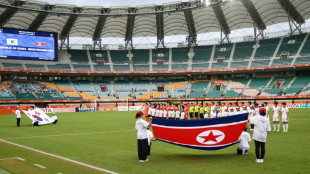 Asian Games crowds in spotlight as 998 see hosts in 50,000 stadium
-
'No limits': Marathon world record holder Sawe chasing history

-
 The eight stadiums for the 2027 Rugby World Cup
-
Countdown begins to biggest-ever Rugby World Cup

-
 Thieves swipe drugs under nose of Fiji police, swap with flour
-
Bangladesh women lose ground after quota reform

-
 South Korea demands North apologise for DMZ mine blasts
-
Vietnam admits 'differing opinions' on Hanoi development

-
 In Nepal's flood zone, teachers mourn students who never returned
-
Stocks temper gains as oil pares heavy losses, US data in focus

-
 US Supreme Court lifts limits on third-country deportations
-
New Zealand denies breaching climate commitments to EU

-
 Antonelli eager to 're-establish order' as F1 returns to Malaysia
-
Albert becomes youngest US scorer in 4-2 win over Chile

-
 Paw-fect candidate: Australia finds new koala rescue dog
-
Pirate island's plunging population shows Greece's demographic decline

-
 One third of world population exposed to harmful air pollution: monitor
-
With elections ahead, Latvia's Russian-speakers reject Moscow's help

-
 North Korea denies South's claim it was apparently behind DMZ mine blasts
-
Brazil football clubs face massive sponsorship blow from betting ban

-
 West Bank's violent settlers part of a new generation fuelled by ideology
-
ChatGPT maker wants to be the App Store for AI as safety concerns grow

-
 US-led coalition ends mission in Iraq
-
Women fight fires and sexism in Indonesian Borneo

-
 Pope-backed White Sox join Braves with MLB playoff wins
-
Forsling's OT blast lifts Florida over Carolina in NHL opener

-
 Psychology Software Tools Builds on Early Bioz Success to Expand Access to Publication-Backed Product Evidence
-
InterContinental Hotels Group PLC Announces Transaction in Own Shares - September 30

-
 Alpha Growth Management Opens Rep Office in Japan
-
Guardian Metal Resources PLC Announces Total Voting Rights

-
 NBA close to picking new $12-13bn Vegas team owners: report
-
Hurricane Polo sweeps over Mexico's Pacific coast, heads inland

-
 LA28 Olympics torch relay to visit all 50 states
-
Grynspan pulls ahead in race to lead UN: diplomat

-
 Spain brush aside Croatia in Nations League, England down Czechs
-
Trump touts AI boss pledge to self-regulate

Climate talks reach endgame on new finance deal
The UN's marathon climate summit neared the finish line early Sunday, with nations due to approve or reject a hotly-disputed deal for wealthy historic emitters to provide at least $300 billion to poorer countries that had demanded much more.
After an exhausting two weeks of negotiations in Azerbaijan's Caspian Sea capital of Baku, COP29 president Mukhtar Babayev declared open the final summit plenary after midnight, two days after the conference was officially scheduled to end.
A final text was released following several sleepless nights for negotiators, with tensions boiling over as small islands states and the world's poorest countries walked out of one meeting.
"This package is an affront to us. We are the countries that have the most at stake," said Tina Stege, climate envoy of the Marshall Islands, an atoll nation threatened by rising seas.
Top German negotiator Jennifer Morgan told AFP that countries would be presented a "take it or leave it" deal.
Before the closing session, delegates huddled in small groups on the floor of the main conference room inside Baku's sports stadium to pore over copies of the latest draft deal line by line.
"I know that none of us want to leave Baku without a good outcome," Babayev said.
A number of countries have accused Azerbaijan, an authoritarian oil and gas exporter, of lacking the experience and will to meet the moment, as the planet again sets temperature records and faces rising deadly disasters.
Small island nations and impoverished African states on Saturday angrily stormed out of a meeting with Azerbaijan, saying their concerns had been ignored.
"I think it caught a lot of people by surprise," said Brazil's climate envoy, Ana Toni. "It all happened very quickly."
The walkout triggered an emergency meeting between those nations and top negotiators from the European Union, United States and Britain with the COP29 presidency in which new proposals were made.
Wealthy countries and small island nations have also been concerned by efforts led by Saudi Arabia to water down calls from last year's summit to phase out fossil fuels.
The final text proposes that rich nations raise to at least $300 billion a year by 2035 their commitment to poorer countries to fight climate change.
It is up from $100 billion now provided by wealthy nations under a commitment set to expire -- and from $250 billion proposed in a draft Friday.
That offer was slammed as offensively low by developing countries, which have demanded at least $500 billion to build resilience against climate change and cut emissions.
Sierra Leone's climate minister Jiwoh Abdulai, whose country is among the world's poorest, called the draft "effectively a suicide pact for the rest of the world".
Developing power Brazil pleaded for at least some progress and said it would seek to build on it when it leads COP30 next year in the Amazon gateway of Belem.
"After the difficult experience that we're having here in Baku, we need to reach some outcome that is minimally acceptable in line with the emergency we're facing," Brazil's environment minister Marina Silva told delegates.
- Tired and 'disheartened' -
As staff at the cavernous and windowless stadium began packing up, diplomats rushed between meetings, some armed with food and water in anticipation of another late night.
Panama's outspoken negotiator, Juan Carlos Monterrey Gomez, warned not to repeat the failure of COP15 in Copenhagen in 2009.
"I'm sad, I'm tired, I'm disheartened, I'm hungry, I'm sleep-deprived, but there is a tiny ray of optimism within me because this cannot become a new Copenhagen," he told reporters.
Climate activists shouted "shame" as US climate envoy John Podesta walked the halls. "Hopefully this is the storm before the calm," he said.
Wealthy nations say it is politically unrealistic to expect more in direct government funding.
Donald Trump, a sceptic of both climate change and foreign assistance, returns to the White House in January and a number of other Western countries have seen right-wing backlashes against the green agenda.
The draft deal posits a larger overall target of $1.3 trillion per year to cope with rising temperatures and disasters, but most would come from private sources.
The United States and EU have wanted newly wealthy emerging economies like China -- the world's largest emitter -- to chip in.
The final draft encouraged developing countries to make contributions on a voluntary basis, reflecting no change for China which already pays climate finance on its own terms.
The EU and other countries have also tussled with Saudi Arabia over including strong language on moving away from fossil fuels, which negotiators say the oil-producing country has resisted.
"We will not allow the most vulnerable, especially the small island states, to be ripped off by the new, few rich fossil fuel emitters," said German Foreign Minister Annalena Baerbock.
bur-np-sct-lth/jm
K.Hill--AT