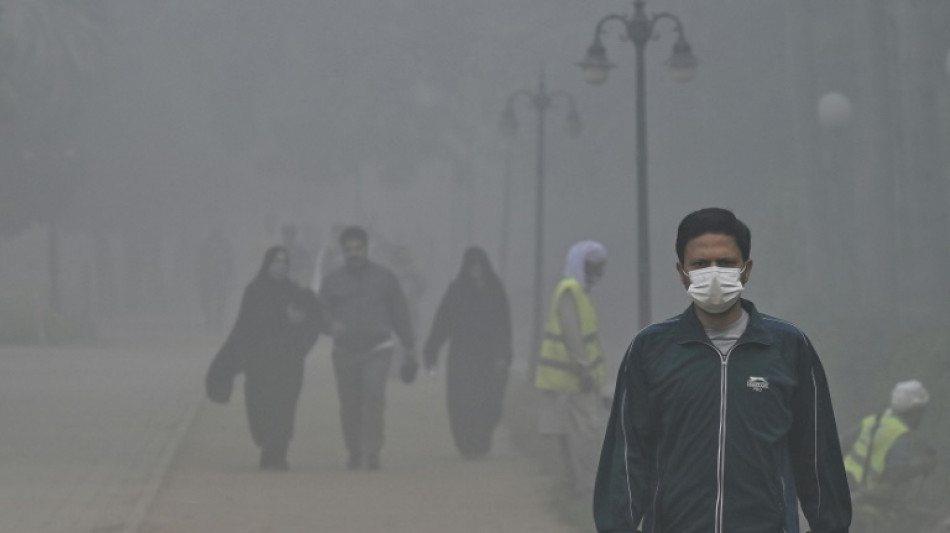
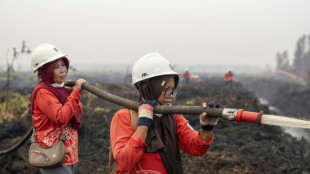
Heat, air pollution, disease: How climate change affects health / Photo: Arif ALI - AFP/File

 South Korea score late to reach Asian Games football final

 Tom Kim defies jet-lag, Kho cards ace as Asian Games golf begins
 Thai teen rocker Nene aims to tour, write music... and return to school

 Ivory Coast clamps down on harmful illegal gold rush

 Nagoya mayor says sorry for Asian Games 'inconveniences'

 G20 trade officials meet under shadow of tariffs, overcapacity

 India's fat dog vote goes viral

 Asian Games crowds in spotlight as 998 see hosts in 50,000 stadium

 The eight stadiums for the 2027 Rugby World Cup

 Thieves swipe drugs under nose of Fiji police, swap with flour
 South Korea demands North apologise for DMZ mine blasts
 In Nepal's flood zone, teachers mourn students who never returned

 US Supreme Court lifts limits on third-country deportations

 Antonelli eager to 're-establish order' as F1 returns to Malaysia

 Paw-fect candidate: Australia finds new koala rescue dog

 One third of world population exposed to harmful air pollution: monitor

 North Korea denies South's claim it was apparently behind DMZ mine blasts

 West Bank's violent settlers part of a new generation fuelled by ideology

 US-led coalition ends mission in Iraq
 Pope-backed White Sox join Braves with MLB playoff wins

 Psychology Software Tools Builds on Early Bioz Success to Expand Access to Publication-Backed Product Evidence

 Alpha Growth Management Opens Rep Office in Japan

 NBA close to picking new $12-13bn Vegas team owners: report

 LA28 Olympics torch relay to visit all 50 states

 Spain brush aside Croatia in Nations League, England down Czechs

Record-breaking heat, extreme weather events, air pollution and the spread of infectious disease: climate change poses an already vast yet rising threat to the health of humans around the world, experts warn.
The latest round of UN climate talks begin next week during what is expected to be the hottest year in recorded history -- and in the shadow of climate sceptic Donald Trump's re-election as US president.
The COP29 negotiations will be held in Azerbaijan as the world continues to emit increasing levels of planet-heating fossil fuels, even as many nations have been lashed by devastating floods, droughts, heatwaves and storms.
"Climate change is making us sick, and urgent action is a matter of life and death," the World Health Organization warned this week.
Here are some of the ways that global warming affects health.
- Extreme heat -
The EU's climate monitor said this week that 2024 is "virtually certain" to surpass last year to become the hottest year in recorded history. It is also expected to be the first year that is more than 1.5 degrees Celsius warmer than the 1850-1900 pre-industrial average.
Out of 15 ways that climate change impacts health being tracked by experts as part of The Lancet Countdown, 10 have now "reached concerning new records", according to the group's latest report.
The number of over-65s who died from heat has risen by 167 percent since the 1990s, just one of the recent all-time highs, the report said.
Extreme heat leads to numerous health risks such as kidney disorders, strokes, adverse pregnancy outcomes, cardiovascular and respiratory diseases, organ failure and ultimately death.
Jeni Miller, executive director of the Global Climate and Health Alliance, said "this year has underlined the growing impacts of a warming climate on people's health and wellbeing".
She pointed to extreme heat leading to 700 deaths and more than 40,000 cases of heat stroke in India, "climate-exacerbated" rains causing a dam to collapse in Nigeria killing 320, and 48 out of 50 US states "experiencing moderate or worse drought".
Spain is meanwhile still recovering from its deadliest floods in a generation, while parts of the United States and Cuba are picking up the pieces after recent hurricanes.
Droughts, floods and other extreme weather events are also expected to hit global crops, leading to rising hunger in many regions.
- Air pollution -
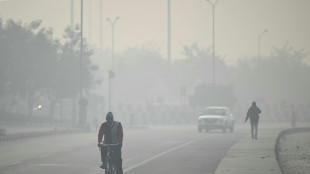
Almost all -- 99 percent -- of the world's population breathes air that exceeds the World Health Organization's guidelines for air pollution.
This pollution has been found to increase the risk of respiratory diseases, strokes, heart disease, lung cancer, diabetes and other health problems, posing a threat that has been compared to tobacco.
Almost seven million premature deaths a year are linked to air pollution, according to the WHO.
Just last week, Pakistan's second-biggest city Lahore recorded air pollution at 40 times the level deemed acceptable by the WHO.
In better news, the Lancet Countdown report found that deaths from fossil fuel-related air pollution fell by nearly seven percent from 2016 to 2021, mainly due to efforts to reduce pollution from burning coal.
- Infectious diseases -
The changing climate means that mosquitoes, birds and mammals will roam beyond their previous habitats, raising the threat that they could spread infectious diseases with them.
Dengue, chikungunya, Zika, West Nile virus and malaria are all mosquito-borne diseases that could spread wider in a warming world.
The transmission risk of one dengue-spreading mosquito has risen by 43 percent over the last 60 years, according to the Lancet Countdown. A new global record of over five million dengue cases was recorded last year.
Storms and floods create stagnant water that are breeding grounds for mosquitoes, and also increase the risk of water-borne diseases such as cholera, typhoid and diarrhoea.
T.Perez--AT