Net zero goal critical to Earth's stability: study / Photo: Kerem Yücel - AFP

 Europe's surging inflation spreads gloom in stock markets

 Truth commission demands compensation for Sweden's Sami people

 Japan win marathon penalty shootout to set up South Korea gold-medal clash

 Djokovic grinds out opening-round win at China Open

 Northern Ireland police probe blockade of disputed parade

 UK PM Burnham reopens divisive debate on rejoining EU

 Man City future in doubt after guilty verdict

 'Do something,' begs Iranian woman after death sentence over protests

 China extends 52-year unbeaten record as Games organisers say sorry

 In Manchester, people say City scandal is 'shame for football'
 Stocks lacklustre as inflation data weighs on sentiment

 Israel-bound plane rerouted, pilots wounded in reported fight

 Truth commission on Sweden's Sami people seeks redress

 Energy costs spark inflation surges in France, Italy

 South Korea break China hearts to reach Asian Games football final

 Eala storms into Asian Games semi-finals to thrill adoring fans

 Turkey freezes ex-minister's assets as fund crisis grows

 What we know about the North Korean POW dispute

 Most equities rise after oil price plunge, US data in focus

 Polar oceans transformed as warming melts ice habitats: research

 Lost shark becomes viral star in South Korea

 Dangote to launch $16bn refinery in Kenya

 North Korean leader 'extremely obese': Seoul spy agency

 Yankees and pope-backed White Sox start MLB playoffs with wins

 Malaysia's ex-PM Mahathir in hospital for observation

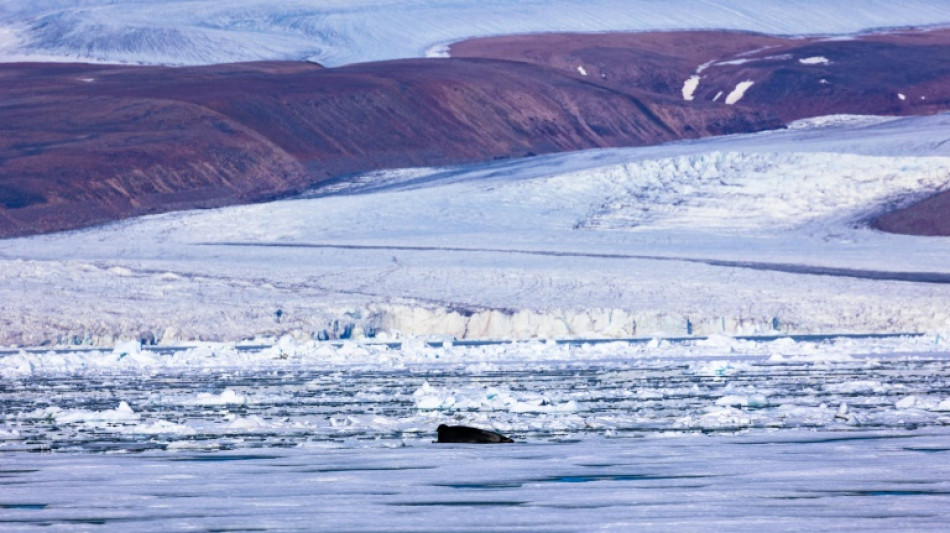
Bringing planet-heating emissions to net zero by 2100 is critical to avoid triggering "tipping points" that could destabilise the systems that keep Earth in balance, a new study said Thursday.
If left unchecked, global warming could set in motion dangerous and irreversible changes to planetary systems such as the disappearance of ice sheets or a collapse of ocean currents.
Researchers said action today would have an influence on the chances of triggering these catastrophic events, even if they are very slow moving and likely to unfold over tens to thousands of years.
"What we do now matters for the next decades, and centuries and even millennia to come," said Nico Wunderling, one of the study's authors from the Potsdam Institute for Climate Impact Research in Germany.
The level of global action on climate change is currently insufficient to avoid the risk of at least one of Earth's critical systems from tipping into collapse.
Global warming is on track to exceed 1.5 degrees Celsius above pre-industrial times -- the cap scientists say must be respected to avert the most disastrous impacts of climate change.
"Permanently exceeding this limit would substantially increase the probability of triggering climate tipping elements," said the study published in the journal Nature Communications.
- 'Unacceptable risk' -
Under the 2015 Paris climate agreement, nearly 200 countries committed to keeping warming "well below" 2C and to strive for the safer goal of 1.5C by the end of the century.
The world is not on track to achieve this.
Even if countries delivered on their existing climate plans in full, the world is on track for 2.5 to 2.9C of warming this century, according to UN estimates.
Researchers wanted to assess what impact global warming above 1.5C might have on "tipping points" and chose to look at four of Earth's key climate systems for this study.
They are the disappearance of the Amazon's primary forest; the collapse of the Atlantic ocean circulation pattern; and the melting of the Greenland and West Antarctic ice sheets.
They found that with every additional 0.1C of warming above the 1.5C target, the likelihood increases that one or more of these four systems irreversibly changes by 2300.
The trend "strongly accelerates" if warming exceeds 2C.
That is an "unacceptable risk to our climate system," Wunderling told AFP.
This underscores the importance of the Paris climate targets "even in case of a temporary overshoot above 1.5C", the study said.
- Take action now -
But even if the world overshoots the 1.5C temperature goal, this tipping risk can be reduced if "warming is swiftly reversed" this century, researchers found.
"The most important thing now is to keep global warming levels as low as possible above 1.5C and then get back to 1.5C as soon as possible, ideally by mid century and at the latest by 2100," Wunderling said.
Researchers said their findings "underscore that stringent emission reductions in the current decade are critical for planetary stability".
"Such a reversal of global warming can only be achieved if greenhouse gas emissions reach at least net-zero by 2100," Wunderling said.
The study concluded that "achieving and maintaining at least net zero greenhouse gas emissions by 2100 is paramount to minimise tipping risk in the long term".
Ch.P.Lewis--AT