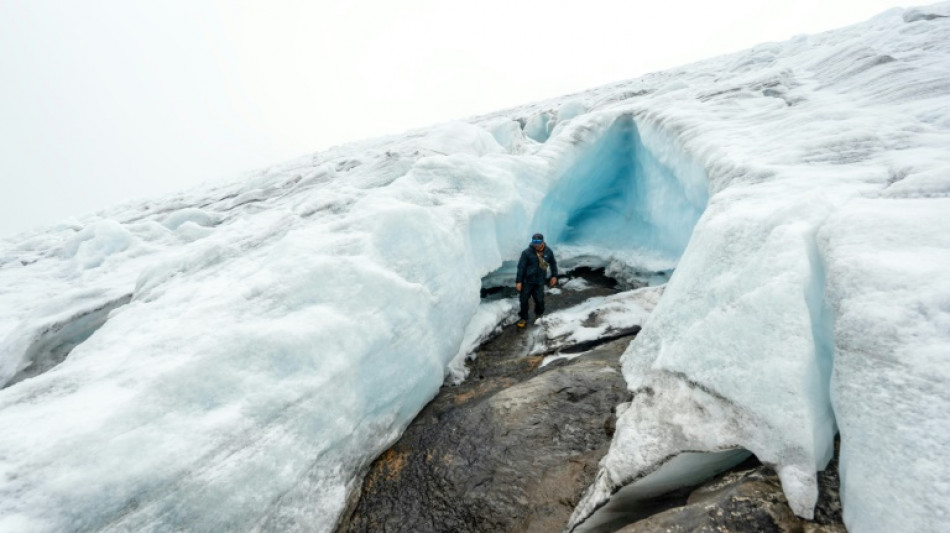
Ritacuba Blanco: death of a Colombian glacier / Photo: Luis ACOSTA - AFP

 Energy costs spark inflation surges in France, Italy

 South Korea break China hearts to reach Asian Games football final

 Eala storms into Asian Games semi-finals to thrill adoring fans

 Turkey freezes ex-minister's assets as fund crisis grows

 What we know about the North Korean POW dispute

 Most equities rise after oil price plunge, US data in focus

 Polar oceans transformed as warming melts ice habitats: research

 Lost shark becomes viral star in South Korea
 Dangote to launch $16bn refinery in Kenya
 North Korean leader 'extremely obese': Seoul spy agency

 Yankees and pope-backed White Sox start MLB playoffs with wins

 Malaysia's ex-PM Mahathir in hospital for observation

 'No limits': Marathon world record holder Sawe chasing history

 Countdown begins to biggest-ever Rugby World Cup
 Bangladesh women lose ground after quota reform

 Vietnam admits 'differing opinions' on Hanoi development

 Stocks temper gains as oil pares heavy losses, US data in focus

 New Zealand denies breaching climate commitments to EU

 Albert becomes youngest US scorer in 4-2 win over Chile
 Pirate island's plunging population shows Greece's demographic decline
 With elections ahead, Latvia's Russian-speakers reject Moscow's help

 Brazil football clubs face massive sponsorship blow from betting ban
 ChatGPT maker wants to be the App Store for AI as safety concerns grow

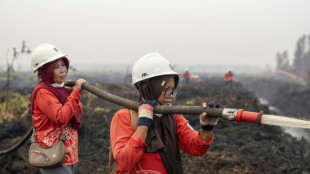 Women fight fires and sexism in Indonesian Borneo

 Forsling's OT blast lifts Florida over Carolina in NHL opener

Just a few months ago, the Colombian mountain peak of Ritacuba Blanco was covered in an unbroken layer of white ice and snow, just as it had been for as long as anyone can remember.
But with the South American country hit by the warming effects of the El Nino weather phenomenon since late last year, large cracks have suddenly appeared in the glacier covering the peak, exposing the rock underneath.
Experts say the glacier is melting at dizzying speeds, with climate change intensifying the effects of El Nino -- which makes an appearance every two to seven years, and lasts about nine to 12 months.
The UN's World Meteorological Organization (WMO) has said that record temperatures since June 2023 were partly caused by El Nino, "but heat-trapping greenhouse gases are unequivocally the main culprit."
"The El Nino phenomenon is perhaps the worst thing that can happen to our snowy peaks or glaciers," said Jorge Luis Ceballos, a glaciologist at the Institute of Hydrology, Meteorology and Environmental Studies (Ideam).
"There is no cloud cover and therefore no snowfall," he pointed out.
Of the 14 tropical glaciers that existed in Colombia in the early 20th century, only six remain -- and are fast receding.
Ritacuba Blanco in the Sierra Nevada del Cocuy National Park, about 250 kilometers (150 miles) northeast of Bogota, is the most at risk.
"At the end of last year, the walls here were about six meters (20 feet) high... today, they are one meter," glacier guide Edwin Prada told AFP on a recent ascent of the peak.
- Last chance for tourists -
According to the most recent recorded data, in 2022, some 12.8 square kilometers (4.9 square miles) of Ritacuba Blanco was covered in ice and snow -- the lowest ever measured by Ideam.
More recently, "the snow melted due to a lack of precipitation and the ice was exposed to solar radiation, which accelerated the thaw," said Ceballos.
Humberto Estepa, a resident of Guican -- a village near Ritacuba Blanco -- said he trembles every time he sets foot on the glacier.
Never has the thaw been "as noticeable as it is now," he told AFP.
"Every time you go up it is worse."
In Asia -- the continent most impacted last year by record global temperatures, according to a recent WMO report -- the icy peaks of the Himalayas are also disappearing, threatening long-term water security.
According to the WMO, ocean warming and rapidly melting glaciers and ice sheets drove the sea level last year to its highest point since satellite records began in 1993.
El Nino caused major fires in Colombia this year, with more than 17,000 hectares of forest going up in flames.
It has also dried up lakes, and the capital Bogota has recently been compelled to take the unprecedented step of rationing municipal water as reservoirs reached record low levels.
Luisa Cepeda, a 39-year-old doctor, took her daughter to see the dying Ritacuba Blanco glacier at sunset.
"I wanted to see it... before it is gone," she said.
"It is sad to see how fractured it is."
F.Wilson--AT