In Tajikistan, climate migrants flee threat of fatal landslides / Photo: - - AFP

 South Korea score late to reach Asian Games football final

 Tom Kim defies jet-lag, Kho cards ace as Asian Games golf begins
 Thai teen rocker Nene aims to tour, write music... and return to school

 Ivory Coast clamps down on harmful illegal gold rush

 Nagoya mayor says sorry for Asian Games 'inconveniences'

 G20 trade officials meet under shadow of tariffs, overcapacity

 India's fat dog vote goes viral

 Asian Games crowds in spotlight as 998 see hosts in 50,000 stadium

 The eight stadiums for the 2027 Rugby World Cup

 Thieves swipe drugs under nose of Fiji police, swap with flour
 South Korea demands North apologise for DMZ mine blasts
 In Nepal's flood zone, teachers mourn students who never returned

 US Supreme Court lifts limits on third-country deportations

 Antonelli eager to 're-establish order' as F1 returns to Malaysia

 Paw-fect candidate: Australia finds new koala rescue dog
 One third of world population exposed to harmful air pollution: monitor

 North Korea denies South's claim it was apparently behind DMZ mine blasts

 West Bank's violent settlers part of a new generation fuelled by ideology

 US-led coalition ends mission in Iraq
 Pope-backed White Sox join Braves with MLB playoff wins

 Psychology Software Tools Builds on Early Bioz Success to Expand Access to Publication-Backed Product Evidence

 Alpha Growth Management Opens Rep Office in Japan

 NBA close to picking new $12-13bn Vegas team owners: report
 LA28 Olympics torch relay to visit all 50 states

 Spain brush aside Croatia in Nations League, England down Czechs

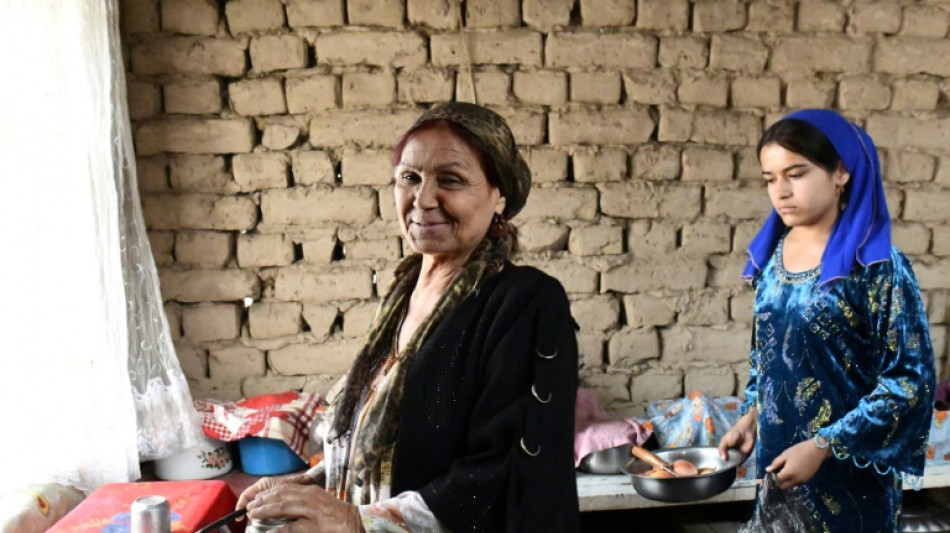
Peeling onions in her new home, Yodgoroy Makhmaliyeva recalled the terrifying moment four years ago when a landslide buried her family home in mountainous Tajikistan.
Heavy snow and rain, she said, sent a deluge of rocks, water and mud crashing into the house in the Central Asian country estimated to be among the most vulnerable to effects of climate change.
"We had lived in fear until the day the mountain collapsed and destroyed our house," the 61-year-old said, wearing a shimmering headscarf.
Makhmaliyeva and her husband Jamoliddin had feared a torrent of earth would destroy their home, and are now among thousands of Tajiks displaced by a growing number of natural disasters.
Authorities in the ex-Soviet country of around 10 million believe hundreds of thousands live in regions threatened by mudslides, landslides, avalanches, floods and earthquakes.
They have made relocating people to safety a priority -- a daunting task for one of the world's poorest countries.
The Makhmaliyevs were rehoused in a new village in the Khuroson district, some 70 kilometres (43 miles) south of the capital Dushanbe.
Rows of modest homes built for "ecological migrants" lined a road surrounded by fields, with mountain peaks dotting the horizon.
- 'Did not know where we will live' -
Makhmaliyev recounted that the couple's old home had already survived several mudslides before it was levelled in early 2020.
"We spent a week digging out everything that was covered in dirt while we lived in a tent," the retired music teacher said.
"We didn't know where we were going to live," his wife Makhmaliyeva added.
One year later the couple were allotted their home in the village designated for people threatened by natural disasters.
Tajikistan says it relocated 45,000 people between 2000 and 2017, and that tens of thousands of others are waiting their turn.
The issue is pressing. Authorities say 557 emergency situations linked to natural disasters in last year alone killed 51 people.
- 'Huge material damage' -
The couple said the village where they look after six grandchildren is comfortable. Their own children are working in Russia like millions of other Tajiks.
Sitting on a bench embracing four small children, Makhmaliyev thanked President Emomali Rakhmon, who has ruled the tightly-controlled country since 1992, for the new family home.
Rakhmon has repeatedly underlined the huge financial and material damage his country suffers each year due to natural disasters.
He has even urged the population to stockpile food because of how vulnerable the country is to the negative effects of climate change.
A large portrait of the 71-year-old leader was plastered on the entrance of the village.
- 'Houses for future displaced' -
In a field across the road from the Makhmaliyevs, construction was ongoing to house new arrivals.
"It's houses for future displaced people," Murotbek Murodov, a uniformed officer with the emergency situations ministry, told AFP.
He said 67 new residential buildings were being built after a "natural disaster" hit another village.
"Approximately 900 village residents were evacuated," he said, adding those displaced were due to be rehoused in Khuroson.
"The aim is to put all residents in risk zones to safer places," he added.
- 'Thousands of danger zones' -
Murodov said there were more than 1,000 "dangerous zones" in the country that people needed to be removed from.
A United Nations report on climate change published this year said Tajikistan is the "most exposed" of all Central Asian countries.
The World Bank, meanwhile, has said that "natural catastrophes are a serious threat to economic stability" in the country, estimating that they caused more than $1.8 billion in damage between 1992 and 2019.
In the safety of his new home, Makhmaliyev ploughed a small garden as workers nearby laid foundations for new houses that would soon house Tajikistan's newest climate migrants.
K.Hill--AT