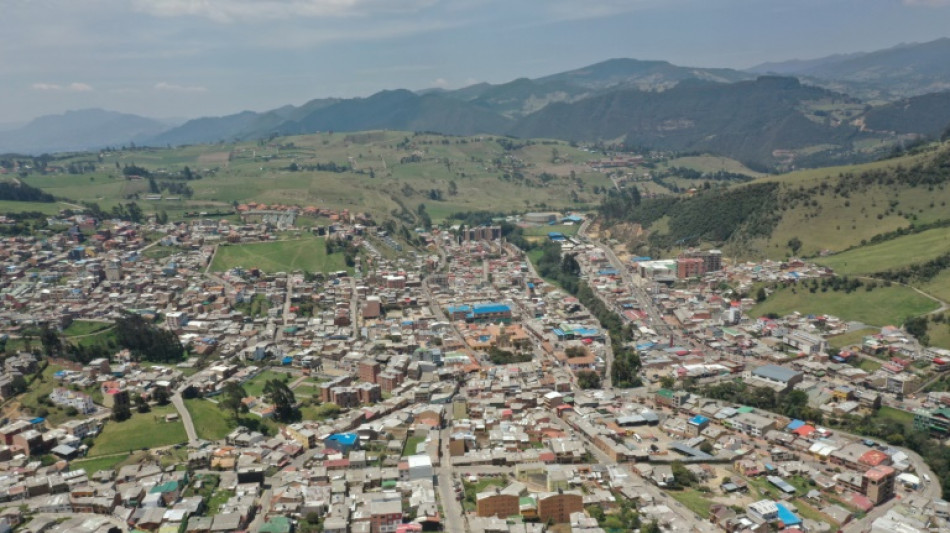
Fewer showers, less laundry, as water cuts hit Bogota / Photo: Daniel MUÑOZ - AFP

 South Korea score late to reach Asian Games football final
 Tom Kim defies jet-lag, Kho cards ace as Asian Games golf begins
 Thai teen rocker Nene aims to tour, write music... and return to school
 Ivory Coast clamps down on harmful illegal gold rush
 Nagoya mayor says sorry for Asian Games 'inconveniences'
 G20 trade officials meet under shadow of tariffs, overcapacity

 India's fat dog vote goes viral
 Asian Games crowds in spotlight as 998 see hosts in 50,000 stadium
 The eight stadiums for the 2027 Rugby World Cup

 Thieves swipe drugs under nose of Fiji police, swap with flour
 South Korea demands North apologise for DMZ mine blasts
 In Nepal's flood zone, teachers mourn students who never returned
 US Supreme Court lifts limits on third-country deportations

 Antonelli eager to 're-establish order' as F1 returns to Malaysia

 Paw-fect candidate: Australia finds new koala rescue dog
 One third of world population exposed to harmful air pollution: monitor

 North Korea denies South's claim it was apparently behind DMZ mine blasts

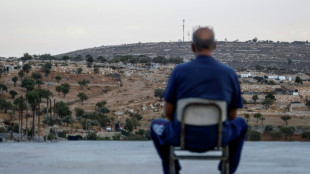 West Bank's violent settlers part of a new generation fuelled by ideology

 US-led coalition ends mission in Iraq
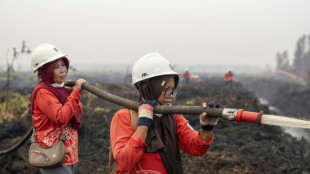
 Pope-backed White Sox join Braves with MLB playoff wins

 Psychology Software Tools Builds on Early Bioz Success to Expand Access to Publication-Backed Product Evidence

 Alpha Growth Management Opens Rep Office in Japan

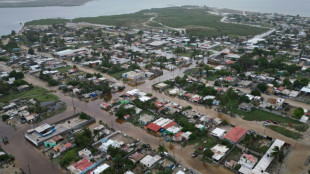
 NBA close to picking new $12-13bn Vegas team owners: report
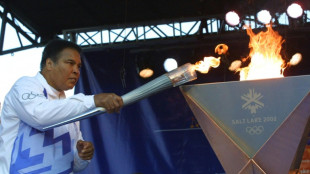 LA28 Olympics torch relay to visit all 50 states
 Spain brush aside Croatia in Nations League, England down Czechs
Residents of Bogota are facing fewer showers, minimal laundry loads and dirty cars as the Colombian capital imposes water rations due to a severe drought aggravated by the El Nino climate phenomenon.
Bogota has become the latest major city around the world to face a water crisis in recent years due to intense dry spells and President Gustavo Petro vowed Thursday to boost investment to protect the valuable resource.
Some 10 million people in the Colombian capital and surrounds are being impacted by new restrictions that impose 24-hour water cuts every ten days by sector.
"The situation is critical," said Mayor Carlos Fernando Galan.
In the mountainous suburb La Calera in the sprawling Andean city, residents have already suffered occasional cuts since February, often resorting to tanker trucks that wind through the steep streets to deliver drinking water.
"There are things we can no longer do, like washing the car," said Clara Escobar, 36, a graphic designer who came to fill two buckets from the tanker.
"We shower less" and "we wash the clothes (only) when necessary."
- Dams lowest in decades -
Lorena Lee, 46, who owns a cafeteria in La Calera, predicts she will not open on the days the suburb is affected by cuts as she cannot prepare food without water.
"Obviously this affects a day of sales ... but there is nothing to do."
A lack of rain and unusual heat has seen Colombia's reservoirs dry up at an alarming rate.
The Chingaza paramo -- an alpine wetland system rich in glacial lakes -- provides some 70 percent of Bogota's drinking water, and its dams are at their lowest level since 1980.
Environment Minister Susana Muhamad said significant rains were only expected at the end of April or early May.
Colombia is blessed with abundant freshwater sources.
Nevertheless, millions lack access to clean water as a result of severe water pollution, deforestation, and agriculture.
- 'Substantial change' -
In a lengthy post on X, President Gustavo Petro said he had ordered "a substantial change" to ensure that in the next 30 years, the entire population has clean water.
"There will be droughts worse than the one we are facing," he said, adding that Bogota residents could now judge whether "unhindered urbanization" was sustainable.
He said half of the country's water supply depends on its moors, jungles and Andean forests "that have already been pillaged by 80 percent for agriculture or mining for construction."
Petro said the country had long prioritized urbanization at the expense of the "serious financing of adaptation to climate change."
He said at current investment levels it would take a century to provide clean drinking water and proper sanitation to the 17 million people who currently do not have it.
Petro added that providing these people with drinking water would cost $26 billion.
"That is absurdly irrational in the midst of a climate crisis that will worsen due to the growing consumption of coal and oil in rich northern societies."
Major cities around the globe are considered at risk of running out of water due to human activities and climate change-linked droughts.
Mexico saw 21 percent less rainfall than usual in 2023 -- its driest year since records began -- and reservoirs serving the capital of 20 million people have plummeted, sparking supply cuts and jitters among residents.
In 2023, residents of Uruguay's capital of Montevideo turned en masse to bottled water as reservoirs dropped so low that authorities had to mix brackish river water into the drinking supply and up the allowed sodium and chloride levels.
And, residents of the South African city of Cape Town narrowly escaped so-called "Day Zero" when taps would have run dry in 2018 due to a multi-year drought.
F.Wilson--AT