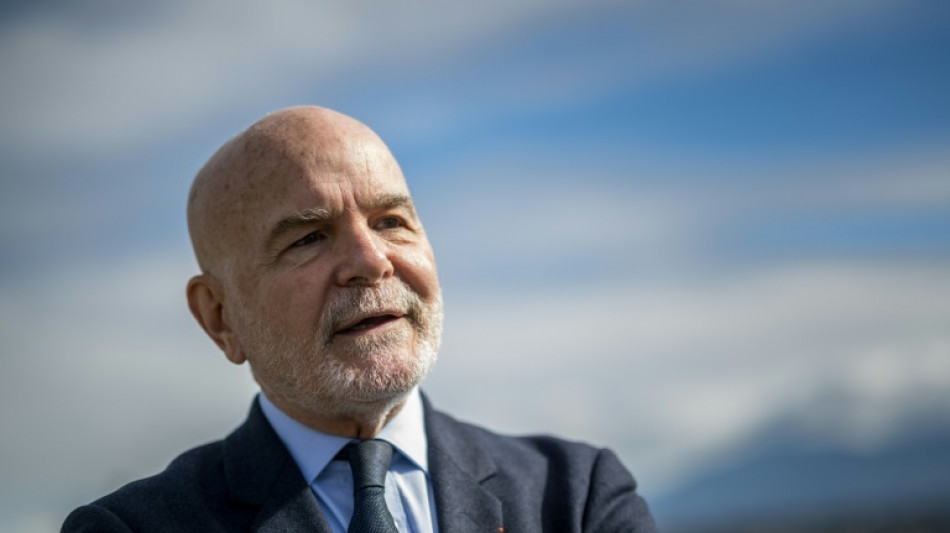
Climate protesters under fire in Europe: UN expert / Photo: Fabrice COFFRINI - AFP

 South Korea score late to reach Asian Games football final
 Tom Kim defies jet-lag, Kho cards ace as Asian Games golf begins
 Thai teen rocker Nene aims to tour, write music... and return to school

 Ivory Coast clamps down on harmful illegal gold rush
 Nagoya mayor says sorry for Asian Games 'inconveniences'
 G20 trade officials meet under shadow of tariffs, overcapacity

 India's fat dog vote goes viral
 Asian Games crowds in spotlight as 998 see hosts in 50,000 stadium

 The eight stadiums for the 2027 Rugby World Cup

 Thieves swipe drugs under nose of Fiji police, swap with flour
 South Korea demands North apologise for DMZ mine blasts
 In Nepal's flood zone, teachers mourn students who never returned
 US Supreme Court lifts limits on third-country deportations
 Antonelli eager to 're-establish order' as F1 returns to Malaysia

 Paw-fect candidate: Australia finds new koala rescue dog
 One third of world population exposed to harmful air pollution: monitor
 North Korea denies South's claim it was apparently behind DMZ mine blasts

 West Bank's violent settlers part of a new generation fuelled by ideology
 US-led coalition ends mission in Iraq
 Pope-backed White Sox join Braves with MLB playoff wins

 Psychology Software Tools Builds on Early Bioz Success to Expand Access to Publication-Backed Product Evidence
 Alpha Growth Management Opens Rep Office in Japan

 NBA close to picking new $12-13bn Vegas team owners: report
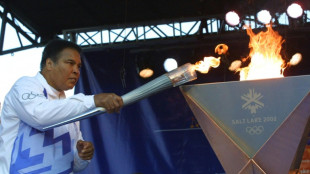 LA28 Olympics torch relay to visit all 50 states
 Spain brush aside Croatia in Nations League, England down Czechs
Environmental activists are increasingly facing hostility across Europe, a UN expert said, warning that the very right to protest was "at risk" in countries usually considered beacons of democracy.
Michel Forst, the UN special rapporteur on environmental defenders, told AFP in an interview this week that he was deeply troubled by the hardening tone against climate activists in countries including France, Austria, Germany and Britain.
Government ministers have been throwing about terms like "eco terrorists" and "Green Talibans" to describe non-violent activists, he claimed, also blaming some media reporting for contributing to an increasingly hostile public attitude.
"It creates a sort of chilling effect," warned Forst, an independent expert appointed under the UN's Aarhus Convention -- a legally-binding text that provides for justice in environmental matters.
"Currently, the right to protest is at risk in Europe."
Forst said he had recently visited several European countries after receiving complaints that activists faced treatment that allegedly violated the convention and international human rights law.
Following a visit to Britain, he publicly voiced alarm at the "toxic discourse" and "increasingly severe crackdown" on environmental defenders.
- 'Regressive laws' -
Forst charged that "regressive laws" in Britain were being used to slap climate activists with harsh penalties, with one activist sent to prison for six months for a 30-minute slow march disrupting traffic.
Another activist had been sentenced to 27 months behind bars in the UK, he said.
He also decried harsh sentences in other countries, including Germany.
Forst travelled to France last month following complaints about a crackdown on a drawn-out anti-motorway protest near the southwestern city of Toulouse.
Activists, called "squirrels", who have been squatting in trees destined to be chopped down to make way for the A69 motorway, have accused law enforcement of denying them access to food and water and using floodlights to deprive them of sleep.
Forst said he had been blocked from bringing food to the activists, and was "shocked" by what he found.
"Obviously, deprivation of food, of drinking water, of sleep is clearly against international law," said Forst, a French national.
They are "considered acts of torture in international texts", he added.
- 'Dangerous' -
Forst said that European media coverage often focuses exclusively on the drama around demonstrations and not on the climate crisis prompting the protests.
The world is in a very "dangerous time", he said, but the general public often do not understand why young people are "blocking access to airports, or gluing their hands on the floor".
As a result, states have felt justified in developing new policies and laws, paving the way for police crackdowns, and increasingly harsh sentences.
In Britain, he said that some judges were even barring environmental defenders from using the word "climate" to explain their motivation to the jury.
Forst said that he was investigating whether big companies, especially in the oil and energy sector, might be lobbying to increase the pressure on climate activists.
"The most dangerous" companies were even "using security forces, connections with the mafia... to target and sometimes to kill defenders," he said.
Forst said he was currently organising consultations in Latin America and Africa with environmental activists there who are facing attacks by companies.
He is also investigating whether companies based in Europe are, through local subsidiaries, contributing to attacks on activists.
And the expert blasted European countries for "a double standard" by supporting environmental defenders in other parts of the world but "not protecting their defenders inside Europe".
Ch.Campbell--AT