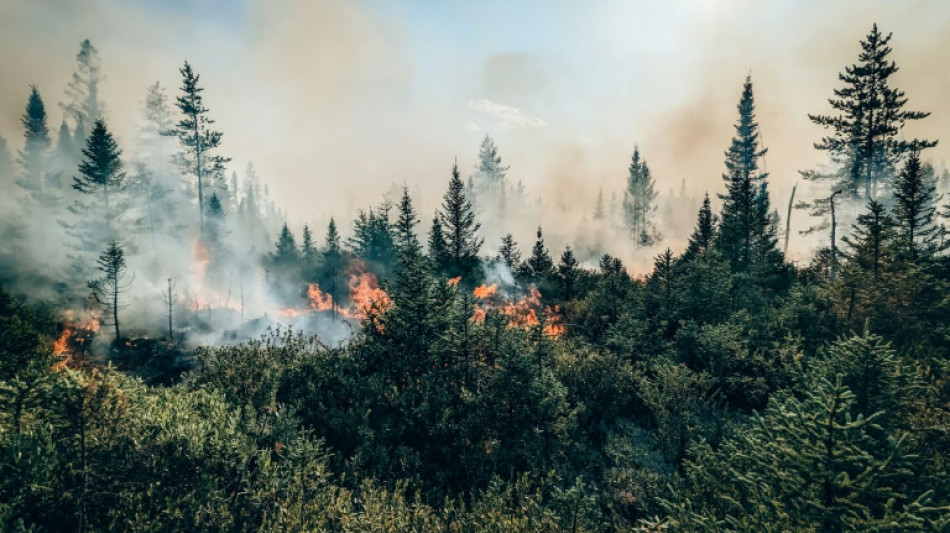
Climate change supercharged 'fire weather' behind Canada blazes / Photo: Jesse Larriviere - Societe De Protection Des Forets/AFP/File

 'No limits': Marathon world record holder Sawe chasing history

 Countdown begins to biggest-ever Rugby World Cup
 Bangladesh women lose ground after quota reform

 Vietnam admits 'differing opinions' on Hanoi development

 Stocks temper gains as oil pares heavy losses, US data in focus
 New Zealand denies breaching climate commitments to EU

 Albert becomes youngest US scorer in 4-2 win over Chile
 Pirate island's plunging population shows Greece's demographic decline
 With elections ahead, Latvia's Russian-speakers reject Moscow's help

 Brazil football clubs face massive sponsorship blow from betting ban
 ChatGPT maker wants to be the App Store for AI as safety concerns grow

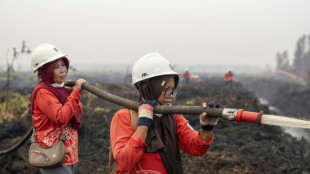 Women fight fires and sexism in Indonesian Borneo

 Forsling's OT blast lifts Florida over Carolina in NHL opener

 Hurricane Polo sweeps over Mexico's Pacific coast, heads inland

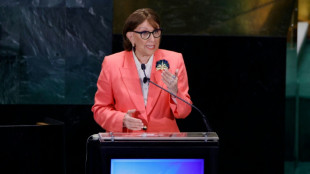 Grynspan pulls ahead in race to lead UN: diplomat

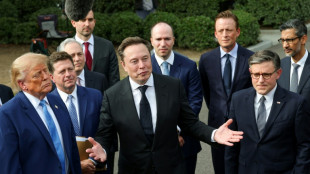 Trump touts AI boss pledge to self-regulate
 Oil down, but stocks lower as bond yields rise

 England break down stubborn Czechs to claim first Nations League win
 UN Security Council extends Haiti anti-gang force by 6 months

 Manchester City guilty of Premier League charges: What comes next?

 Man City chief Soriano slams Premier League 'conspiracy theory'

 Hurricane Polo sweeps over Mexico's Pacific coast

 Man City must be relegated after guilty verdict says club's former chairman

 German far-right aims to lead Saxony-Anhalt govt in December

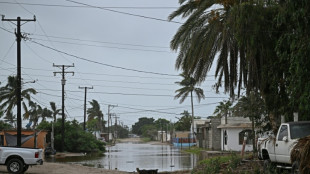 Little damage as Hurricane Polo sweeps over Mexico's Pacific coast

Human-caused climate change made 2023's severe, months-long "fire weather" conditions that powered Canada's record-breaking blazes at least seven times more likely to happen, according to a new scientific analysis published Tuesday.
The study by the World Weather Attribution group also found that over the year, fire-prone conditions were 50 percent more intense as a result of global warming, primarily a result of burning fossil fuels.
"As we continue to warm the planet, these kinds of events are going to get more frequent and they're going to get more intense," first author Clair Barnes, an environmental statistician at Imperial College London, told AFP.
Canada is experiencing its most devastating fire season ever, a result of record high temperatures, low humidity and early thaw of snow melt. Nearly 15.3 million hectares (37.8 million acres) have burned: an area larger than Greece, and more than double the previous 1989 record.
Some 200,000 people have been evacuated, at least four have died, and smoke from the burning forests has led to dangerous air pollution spreading across much of Canada and the United States to the south -- driving spikes in emergency department visits and even school closures.
As of late July, the forest fires had directly emitted more than a billion tons of carbon dioxide into the atmosphere as well as methane and nitrous oxide that had a combined greenhouse effect equivalent of a further 110 million tons of carbon dioxide, according to recent research.
For the current study, scientists examined the eastern province of Quebec, honing in on zones that are similar in climate and vegetation. The region saw an exceptionally high number of fires in May and June, when national temperature records were smashed by 0.8 degrees Celsius (1.4 degrees Fahrenheit).
Because wildfires are highly complex and not driven solely by climate, the researchers focused instead on conditions conducive to blazes, using a metric called the Fire Weather Index (FWI).
This combines temperature, wind speed, humidity and precipitation. The team accumulated this data from January to July to derive a measure of severity of fire weather over the entire season.
While Quebec's fires were unprecedented, analysis of the recent climate record indicated the seasonal conditions causing the blazes are no longer rare, occurring once every 25 years. This means they now have a four percent chance of happening every year.
To understand the contribution of man-made global warming, they used computer model simulations to compare the climate as it is today, after about 1.2C (2.2F) of global warming since the late 1800s, with the climate of the past.
This showed climate change had made seasons of this severity at least seven times more likely to occur compared to pre-industrial times. Barnes stressed, however, that this was a lower-bound estimate, with the researchers choosing to be conservative in the face of statistical uncertainty.
- Indigenous communities hit hardest -
Yan Boulanger, an ecologist with the Canadian Forest Service and the report's second author, told AFP the cumulative impact of circumstances favorable to fire was key. "It's because those fire weather conditions lasted so long that those fires could grow so big."
The team also identified the seven-day-stretch when fire weather conditions were at their highest, and found such peak conditions were more than twice as likely to occur than in the past, as a result of climate change.
If the world continues burning fossil fuels at high rates, the likelihood and intensity of severe fire weather conditions will only increase, the analysis showed.
These fires imperil the future of the forestry sector, Boulanger warned, with a question mark over whether regeneration efforts can keep up with losses.
The most impacted communities meanwhile are remote and have relatively few resources, including Indigenous peoples, who made up 75 percent of those evacuated in July.
"This increasing severity of extreme events and likelihood of extreme events is not going to stop until we reach net zero and stop adding extra greenhouse gasses into the atmosphere," said Barnes, adding it's "not too late" to lobby political leaders to change course.
W.Stewart--AT