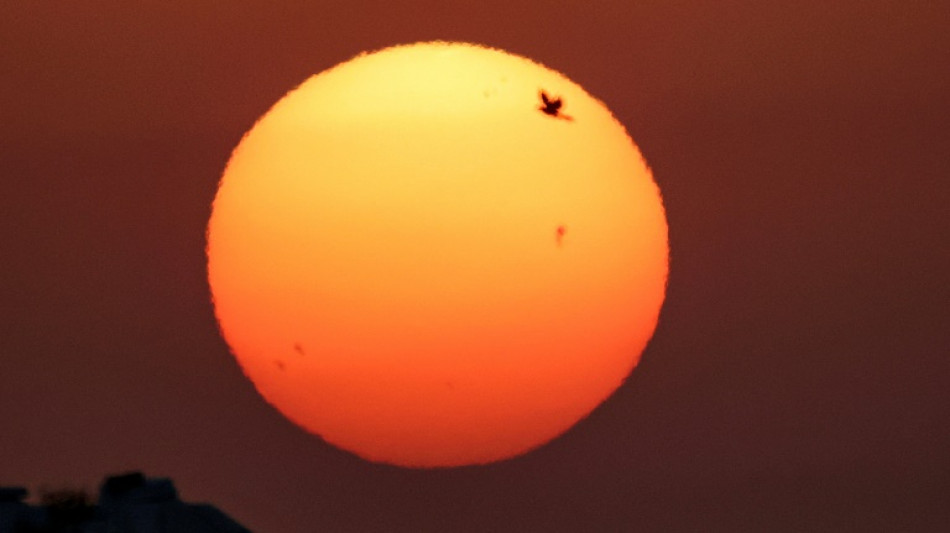
Kuwait's scorching summers a warning for heating planet / Photo: YASSER AL-ZAYYAT - AFP/File

 With elections ahead, Latvia's Russian-speakers reject Moscow's help

 Brazil football clubs face massive sponsorship blow from betting ban
 ChatGPT maker wants to be the App Store for AI as safety concerns grow

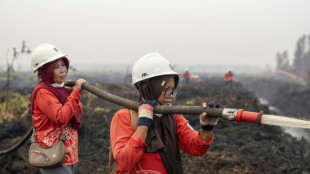 Women fight fires and sexism in Indonesian Borneo

 Forsling's OT blast lifts Florida over Carolina in NHL opener

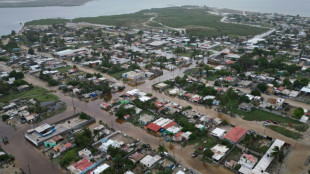 Hurricane Polo sweeps over Mexico's Pacific coast, heads inland
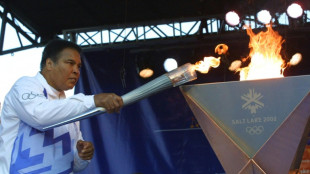
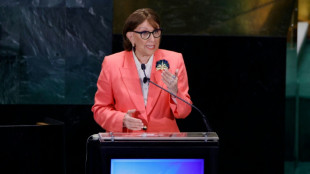 Grynspan pulls ahead in race to lead UN: diplomat

 Trump touts AI boss pledge to self-regulate

 Oil down, but stocks lower as bond yields rise

 England break down stubborn Czechs to claim first Nations League win
 UN Security Council extends Haiti anti-gang force by 6 months

 Manchester City guilty of Premier League charges: What comes next?

 Man City chief Soriano slams Premier League 'conspiracy theory'

 Hurricane Polo sweeps over Mexico's Pacific coast

 Man City must be relegated after guilty verdict says club's former chairman

 German far-right aims to lead Saxony-Anhalt govt in December
 Little damage as Hurricane Polo sweeps over Mexico's Pacific coast

 Manchester City guilty of breaking financial rules - Premier League

 FIFA boss Infantino blasted as would-be 'emperor' by UEFA's Ceferin

 Stocks move lower despite oil prices dropping
 AI driving up innovation investment: UN

 UN Security Council extends Haiti mission by 6 months
 Man Utd do not deserve medals if Man City stripped of titles: Rooney

 Vana Completes Expanded Staking as Part of the Vega Upgrade, Publishes Expanded VANA Token Economics
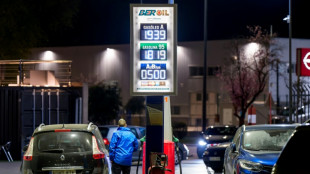 Spain to cap gas price hikes, extend fuel discounts
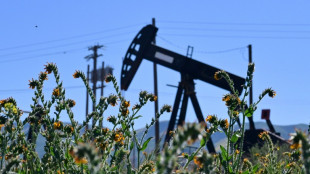
As the blazing summer sun beats down on Kuwait, shoppers stroll down a promenade lined with palm trees and European-style boutiques, all without breaking a sweat.
In one of the world's hottest desert countries, it's all made possible by architecture and technology: the entire street is located inside the heavily air-conditioned Kuwait City shopping mall.
Outside, where temperatures now often soar around 50 degrees Celsius (120 degrees Fahrenheit), barely anyone is moving around on foot, leaving the historic market largely deserted.
"Only a few people stay in Kuwait at this time of year," said date merchant Abdullah Ashkanani, 53, as large fans sprayed cooling mist onto the few customers braving the blistering heat.
Ashkanani, who hails from Iran, said he keeps his shop open largely "for appearances" during the hottest months when most of Kuwait's four million residents flee abroad.
For those who stay behind in the tiny oil-rich country, life is made bearable by the ever-present Arctic blast of air-con systems.
"We can put up with it because the house, the car, everything is air-conditioned," said pensioner Abou Mohammad, dressed in a white robe and keffiyeh and sitting in a comfortably cooled cafe.
The irony is not lost on him that such energy-guzzling systems produce the carbon emissions that are heating up the planet -- especially the sweltering Gulf region, a climate hotspot.
Such excessive energy consumption, said Mohammad, has "brought this heat to Kuwait".
- Heating up -
Kuwait is home to seven percent of the world's crude reserves -- energy wealth that has long afforded many of its people a luxury lifestyle.
An extremely water-scarce country, it also relies heavily on fossil fuels to power seawater desalination plants.
Like Saudi Arabia and Qatar, Kuwait is one of the world's leading emitters per capita of CO2, a key driver of global warming.
Kuwait has always been hot, its dry summers fanned by the northwesterly shamal wind that also blows over Iraq and Saudi Arabia.
Temperatures in Mitribah, a remote area in northwest Kuwait, often soar past 50 degrees Celsius, making it one of the hottest places on Earth after Death Valley in eastern California.
But in recent years, climate change has made summer peaks hotter and longer, said meteorologist Essa Ramadan, as periods of extreme heat have gone "from two weeks to about a month".
The number of days per year that see temperatures rise above 50C have more than tripled since the turn of the century, noted the meteorologist.
As the world records ever more heat records, "what is happening to us will happen elsewhere", he warned.
- Grassroots -
Kuwait -- where glass towers soar into the sky and cars choke the highways -- has only recently invested in public transport and green energy to help counter climate change.
Its environment protection authority, which falls under the oil ministry, recognises "a rise in temperatures in recent years", its director Samira Al-Kandari said.
To help change course, Kuwait has started building its first commercial solar power park, the Shagaya project.
With the first phase complete, and other projects planned, Kandari said Kuwait's goal is that "renewable energy constitutes 15 percent of our energy production by 2035".
"We will increase this percentage in the future," she said.
Outside of the state institutions, some Kuwaiti citizens have launched grassroot initiatives, including tree-planting to help cool sun-baked urban environments.
Essa Al-Essa, a 46-year-old dentist, started planting trees as a "hobby" in a vacant, sandy lot near his home on the outskirts of the capital, he told AFP.
In 2020, at the height of the Covid pandemic, he developed it into the Kuwait Forest project, starting a green space that also helps scrub the air and captures carbon.
"Trees are particularly useful in polluted places such as industrial and residential areas," said Essa.
But he also hopes the natural shade and cooling they provide will help break the dominance of energy-intensive air-conditioning.
"The more we cool our houses," Essa said, "the more we warm our surroundings."
O.Brown--AT