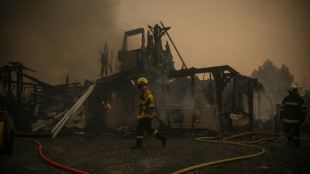
G20 environment ministers race to reach climate consensus / Photo: R.Satish BABU - AFP

 With elections ahead, Latvia's Russian-speakers reject Moscow's help

 Brazil football clubs face massive sponsorship blow from betting ban

 ChatGPT maker wants to be the App Store for AI as safety concerns grow

 Women fight fires and sexism in Indonesian Borneo

 Forsling's OT blast lifts Florida over Carolina in NHL opener

 Hurricane Polo sweeps over Mexico's Pacific coast, heads inland

 Grynspan pulls ahead in race to lead UN: diplomat

 Trump touts AI boss pledge to self-regulate

 Oil down, but stocks lower as bond yields rise

 England break down stubborn Czechs to claim first Nations League win

 UN Security Council extends Haiti anti-gang force by 6 months

 Manchester City guilty of Premier League charges: What comes next?

 Man City chief Soriano slams Premier League 'conspiracy theory'

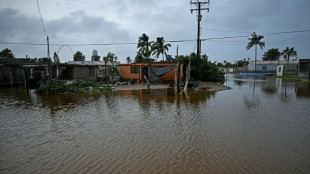 Hurricane Polo sweeps over Mexico's Pacific coast

 Man City must be relegated after guilty verdict says club's former chairman

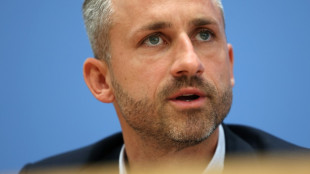 German far-right aims to lead Saxony-Anhalt govt in December

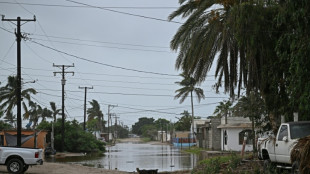 Little damage as Hurricane Polo sweeps over Mexico's Pacific coast

 Manchester City guilty of breaking financial rules - Premier League

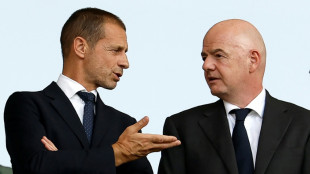 FIFA boss Infantino blasted as would-be 'emperor' by UEFA's Ceferin

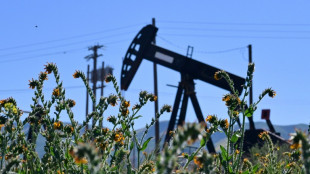 Stocks move lower despite oil prices dropping

 AI driving up innovation investment: UN

 UN Security Council extends Haiti mission by 6 months

 Man Utd do not deserve medals if Man City stripped of titles: Rooney

 Vana Completes Expanded Staking as Part of the Vega Upgrade, Publishes Expanded VANA Token Economics
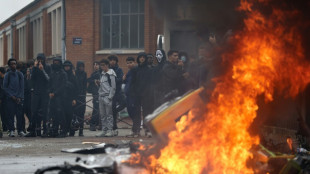
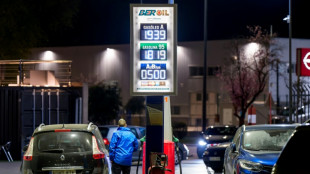 Spain to cap gas price hikes, extend fuel discounts
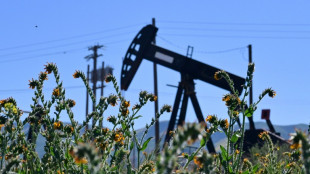
Environment ministers from G20 nations meeting in India on Friday raced against time to reach a last-minute consensus on the most contentious issues to redress the global climate crisis.
No major breakthrough is expected with delegates from the Group of 20 major economies stuck on climate change adaptation finance, mitigation and peaking emissions by 2025 in hectic negotiations.
The Chennai meeting comes days after the bloc was criticised for failing to agree on a roadmap to cut fossil fuels from the global energy mix.
All present at Friday's conference understood "the severity of the crisis" facing the world, Adnan Amin, chief executive of this year's COP28 climate talks, told AFP.
"But I think there's a kind of political understanding that still needs to be achieved," he added on the sidelines of the meeting.
Any agreements reached in Chennai will be signed by the leaders of G20 nations -- constituting more than 80 percent of global GDP and CO2 emissions -- at a summit in New Delhi this September.
The lack of accord on fossil fuel cuts last week was seen as a blow to mitigation efforts even as climate experts blame record global temperatures for triggering floods, storms and heatwaves.
Some major oil producers -- such as Russia and Saudi Arabia -- were blamed for the lack of progress.
"Given the scale of the triple global crises, climate change, biodiversity loss and pollution, we truly have no time left to waste," Steven Guilbeault, Canada's environment and climate change minister, warned in Chennai on Thursday.
Amin said it was clear that questions of "national interests" still had to be resolved before firmer commitments could be made on fossil fuels.
"It's very clear that every country in the world will start by looking at its immediate self-interest," he said.
"As long as that demand is there, that energy source will continue," the COP28 CEO added.
Most delegations were led by their environment and climate change ministers, while the US delegation was headed by Special Presidential Envoy for Climate John Kerry.
Also at the talks is Emirati oil boss Sultan Al Jaber, who will lead the upcoming COP28 talks in the United Arab Emirates starting in late November.
He has been heavily criticised for his apparent conflict of interest as head of the Abu Dhabi National Oil Company, because burning fossil fuels is the main driver of global warming.
- Livelihoods destroyed -
With raging wildfires in Greece and a heatwave in Italy, European Union environment commissioner Virginijus Sinkevicius said that there was "growing evidence on the ground of devastating climate impact" and "the livelihoods of people are being destroyed".
But progress in global negotiations has been slow, with the G20 polarised by Russia's war in Ukraine and sharp divisions on key issues.
Questions on financing the transition and ameliorating its short-term impacts have long been a point of contention between developing and wealthy nations.
Major developing countries like India argue that legacy emitters need to spend more to underwrite global mitigation efforts in poorer nations.
Big energy-producing nations have resisted stronger commitments on emissions cuts over concerns about the impact of drastic mitigation on their economies.
R.Garcia--AT