
-
 Flick happy Raphinha back for Barca with title in sight
-
UN troubled by rejected appeal of Cambodian opposition leader

-
 Activists on Gaza aid flotilla detained by Israel disembark in Crete
-
Suspect appears in UK court charged with attacking two Jewish men

-
 Oil steady after wild swing, stocks diverge in thin trading
-
Lufthansa says searching for Oscar lost after US airport security row

-
 Howe says Saudi backers are fully behind Newcastle
-
Chinese swimmer Sun Yang reports cyberbullying to police

-
 Salah 'deserves big send-off', says Liverpool boss Slot
-
UK police charge man with stabbing attack on two Jewish Londoners

-
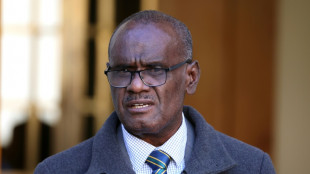 Solomon Islands leader loses court appeal, must face no confidence vote
-
Former world skating champion Uno joins pro eSports team

-
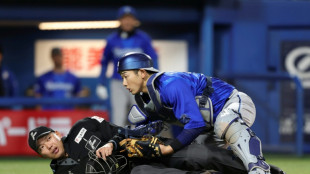 Japan baseball umpire hit by bat still unconscious two weeks on
-
Nakatani says won't be intimidated in sold-out Inoue title clash

-
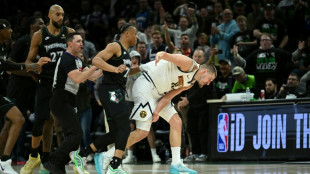 T-Wolves eliminate Nuggets as Knicks demolish Hawks in NBA playoffs
-
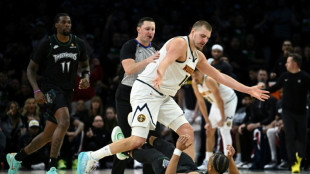
Timberwolves eliminate Jokic's Nuggets from NBA playoffs
-
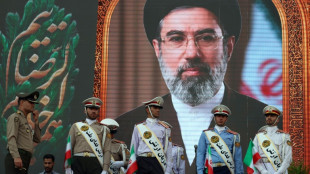 Iran activates air defences as Trump faces congressional deadline
-
Arsenal seek to ramp up heat on Man City in title race

-
 PSG closing in on another French title before Bayern second leg
-
Espanyol must stop rot against Real Madrid as Barca eye title

-
 Leipzig can book return to Champions League as Bundesliga top-four rivals meet
-
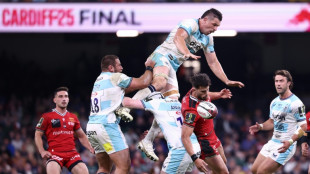
Injuries add to Bath's challenge for Champions Cup semi in Bordeaux
-
 Karius getting 'back to the top' with promotion-chasing Schalke
-
King Charles arrives in Bermuda after whirlwind US visit

-
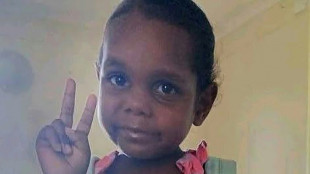 Clashes erupt in Australian town over death of Indigenous girl
-
Iran war redraws sea routes with Africa as the pivot

-
 India's cows offer biogas alternative to Mideast energy crunch
-
Afghans celebrate spring in bright red poppy fields

-
 Finland's 'Flamethrower' and 4 other Eurovision favourites
-
Crude edges up after wild swing, stocks track Wall St rally

-
 Eurovision: 70 years of geopolitics, patriotism, music and glitter
-
Knicks demolish Hawks to advance in NBA playoffs

-
 Blockbuster EU-Mercosur trade deal enters into force
-
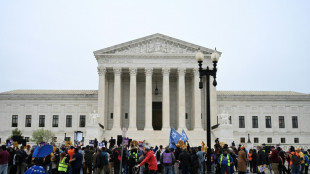
'Uncharted': US court ruling shakes up battle for Congress
-
 Florida executes man who spent nearly 50 years on death row
-
Ace lifts rookie Green to share of LPGA lead as Korda lurks

-
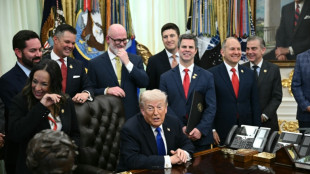 Wear a bulletproof vest? I don't want to look fat, says Trump
-
GPOPlus+ Publishes Updated Investor Memorandum Detailing Three Year Operating History and Path to Scale

-
 °MEQU Eliminates a Critical Break in Trauma Care with FDA Clearance of °M Station
-
BeMetals Announces Resumption of Trading on TSX Venture Exchange and Effective Date of Share Consolidation

-
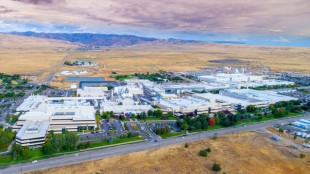 Helio Lands on Wall Street With Participation at Market Movers Investor Summit in New York
-
Abasca Resources to Participate in Core Days 2026 and Closes $2.5 Million Private Placement

-
 Ares Management Announces First Quarter 2026 U.S. Direct Lending Origination Activity
-
XCF Global Continues New Rise Reno Planned Upgrade and Secures Forbearance Agreement Related to New Rise Renewables Reno Ground Lease
-
 Moderna Reports First Quarter 2026 Financial Results and Provides Business Updates
-
Who Does Lower Eyelid Bag Removal in Raleigh?

-
 The Family Channel and The Heartland Network Join With Augason Farms and 4Patriots To Launch GET PREPARED
-
InterContinental Hotels Group PLC Announces Transaction in Own Shares - May 01

-
Snipp Interactive Reports Financial Results for Q4 and Fiscal 2025; Announces Conference Call on May 5, 2026
-
World No. 4 Young leads at PGA Cadillac Championship

Iran's Nuclear Ambitions
The recent US military strikes on Iran's nuclear facilities have raised questions about the current state of Iran's nuclear program and its potential to develop a nuclear weapon. While the US administration claims that the strikes have "completely and totally obliterated" Iran's key nuclear enrichment facilities, there are conflicting reports and expert opinions on the true extent of the damage.
On June 22, 2025, the United States launched a series of airstrikes on three major Iranian nuclear sites: Fordo, Natanz, and Isfahan. The operation, codenamed "Midnight Hammer," involved B-2 Spirit stealth bombers dropping massive bunker-buster bombs and a submarine launching Tomahawk missiles. President Donald Trump announced that the strikes were a "spectacular military success" and that Iran's nuclear ambitions had been "obliterated."
However, a leaked preliminary intelligence assessment from the Defense Intelligence Agency suggests that the strikes may have only set back Iran's nuclear program by a few months. According to sources familiar with the report, the attacks sealed off the entrances to two facilities but did not collapse their underground structures. Additionally, it is believed that some centrifuges used for uranium enrichment might still be intact.
Further complicating the picture, there are indications that Iran may have relocated its stockpile of enriched uranium prior to the strikes. Satellite imagery from the days before the attack shows trucks at the Fordo and Isfahan sites, possibly moving materials away from the facilities. If Iran has safeguarded its enriched uranium, it could potentially resume its nuclear activities more quickly than if the stockpile had been destroyed.
The International Atomic Energy Agency (IAEA) has confirmed that the three sites were hit and has reported extensive damage, particularly at Esfahan and Fordo. However, the agency also noted that there has been no increase in off-site radiation, suggesting that any radioactive materials were not released during the attacks.
Experts are divided on the long-term impact of the strikes. David Albright, president of the Institute for Science and International Security, stated that restoring Iran's nuclear program would require significant time, investment, and energy, and that Iran risks further attacks if it attempts to rebuild. Conversely, Jeffrey Lewis, a professor at the Middlebury Institute of International Studies, argues that the program is not destroyed and that Iran might still possess the necessary materials to continue its pursuit of nuclear weapons.
Prior to the strikes, the IAEA had reported that Iran possessed over 400 kilograms of uranium enriched to 60%, which is close to the 90% purity needed for a nuclear weapon. If this stockpile remains intact, Iran could theoretically use it to produce a bomb relatively quickly, provided it can rebuild its enrichment capabilities.
However, with the facilities damaged, Iran would need to reconstruct its infrastructure, a process that could take months or even years, depending on the extent of the damage and the resources available to Iran.
Moreover, Iran is now under intense international scrutiny, and any efforts to rebuild its nuclear program would likely face strong opposition, including the possibility of further military action.
In conclusion, while the US strikes have undoubtedly inflicted damage on Iran's nuclear facilities, the true impact on Iran's ability to develop a nuclear weapon remains uncertain. The status of Iran's enriched uranium stockpile and the resilience of its underground facilities are key factors that will determine how close Iran is to possessing a nuclear bomb. As of now, it is unclear whether the strikes have significantly delayed Iran's nuclear ambitions or merely caused a temporary setback.

Trump vs Intel: Chip endgame?

After Europe’s capitulation

Tariffs roil U.S.–India ties

Adobe down 40% and now?

Adobe down 40%: Kodak moment?
Bolivia at breaking point

Embraer’s 950% surge

China’s profitless push

Alert in Trump’s America

Why China props up Putin

Zelenskyy anti-graft gamble



