-
 Reusser retains world time-trial title
-
Fiorentina frustrate Napoli with Serie A draw, Como upset

-
 Man City outgun Sunderland despite Brobbey hat-trick, Liverpool win at Bournemouth
-
Five-star Man City top Premier League after Sunderland thriller

-
 Top US, Chinese economic officials meet ahead of Trump-Xi summit
-
Ukrainian drones hit Moscow on last day of Russian elections

-
 Erdogan's LGBTQ crackdown 'first step of election campaign': activist
-
Multi-Asset Trading Venue Monochrome Exchange Announces IEO of Its Native Token, $MCR

-
 Mass drone barrage on Moscow kills two
-
South Korea break Japan hearts to win Asian Games basketball gold

-
 82-year-old dies after beach fight in Greece over sun lounger
-
Acosta takes first victory at Austrian MotoGP

-
 US warns of rapid escalation in Mideast war
-
PSG president Nasser al-Khelaifi under investigation in France for conflict of interest

-
 Iran 'put hearts on the court' to win Asian Games basketball bronze
-
China swim sensation, 13, sets Games record after Japan win early

-
 School girl Yu helps China dominate in Asian Games swimming openers
-
Drones hit Moscow as Russians go to the polls

-
 Myanmar win first Asian Games teqball gold as Spain great Puyol watches
-
New England boss Fleming says 'wrong' to ask Stokes to end retirement

-
 China's 13-year-old Yu scorches to first major gold at Asian Games
-
Germans vote in elections threatening fresh blow to Merz

-
 Russians vote on last day of parliamentary elections
-
US fears rapid escalation in Mideast after Houthis attack Riyadh

-
 Hong Kong pays final respects to former city leader Tung
-
Japan triathlete Hojo wins first gold of Asian Games

-
 Typhoon put people off Asian Games opening ceremony, official says
-
IOC president impressed by 'beautiful' Asian Games wooden huts

-
 China's 13-year-old Yu cruises as Asian Games swimming begins
-
First Asian Games gold goes to Japan as China's 13-year-old Yu lights up pool

-
 AI 'warning shots' focus Beijing on national security risks
-
Data centre command hub keeps AI up and running

-
 Philippine tribe in limbo over US-led tech hub
-
Pope Leo in France: the issues on the table

-
 Leo XIV, first US pope transcends his restrained style
-
Packing for a pope: behind the scenes on foreign trips

-
 Singer Ed Sheeran says Gaza situation 'unjustifiable' following controversy
-
Republicans find transgender issues a powerful political weapon in midterm campaigning

-
 In 'Tenzing', a Sherpa mountaineer gets his due
-
German state elections threaten new shock waves for Merz

-
 Gridko's New Live Drive PTO Roll-Off Trailer Wins the Heavy-Duty TRAILmakER Award 2026 at NATDA Awards
-
Ed Sheeran set to return to stage after Palestinian controversy

-
 Chile's Bachelet quits race to be next UN chief
-
Toulouse edge Vannes, Lyon beat Pau to take Top 14 summit

-
 Raphinha treble fires perfect Barca to win at Sevilla
-
Germans arrested for Louvre stunt in Mona Lisa hall

-
 Thiam makes winning heptathlon return at Decastar meet
-
Saudi-led coalition says Houthis fired ballistic missile at Riyadh

-
 Czechs beat USA to qualify for Davis Cup finals
-
France's debt climbs to highest since 1978: ministry

Demographic Collapse Crisis
The phenomenon of demographic collapse, marked by a steep decline in population due to low birth rates and aging societies, is poised to become the gravest crisis humanity has ever encountered. While past generations feared the strain of overpopulation, today’s reality—a shrinking, graying populace—presents an unprecedented threat. This article examines why demographic collapse could eclipse all prior crises, delving into its economic, social, and global ramifications.
Economic Impacts
A plummeting birth rate, now below the replacement level of 2.1 children per woman in many nations, signals trouble for economies worldwide. With fewer young people entering the workforce, labor shortages loom large. Countries like Japan and Italy, where fertility rates hover around 1.4, are already witnessing population declines. This shrinking workforce stifles productivity and economic growth, as fewer workers generate less output and innovation. Simultaneously, an aging population swells the ranks of retirees, straining pension and healthcare systems. Governments face dwindling tax revenues, unable to sustain services like education or infrastructure, potentially sparking fiscal crises that force cuts to benefits or hikes in taxes—both risking public unrest.
Social Consequences
Beyond economics, demographic collapse reshapes societies. A dearth of youth threatens cultural vitality, as traditions and innovations depend on younger generations. Automation, often proposed as a fix for labor shortages, may instead displace workers in routine jobs, widening inequality. Those unable to adapt to a tech-driven world could be left behind, deepening social divides. Moreover, a shrinking population may erode community spirit, fostering isolation and a diminished sense of future purpose—a psychological burden that compounds the crisis.
Global Implications
On the world stage, demographic collapse could redraw power dynamics. Major economies like China, projected to see its population halve by century’s end, and Japan, already shrinking, may lose their geopolitical heft. Conversely, regions with youthful populations, such as sub-Saharan Africa, could rise in influence. Yet this shift brings challenges: Africa’s growing numbers demand vast investments in education and jobs to avoid unrest or migration pressures. As declining populations weaken global trade giants, the resulting instability could disrupt international markets and alliances, amplifying the crisis’s reach.
Final Conclusion
Demographic collapse stands as a silent, creeping catastrophe, its gradual onset masking its devastating potential. Its economic toll—labor shortages and strained systems—intertwines with social decay and global upheaval, threatening the foundations of modern life. Unlike wars or pandemics, this crisis offers no swift resolution, demanding urgent, forward-thinking action. Policies to boost birth rates, enhance immigration, and adapt to aging societies are essential to avert the worst. Without such measures, demographic collapse may well prove humanity’s most enduring and ruinous trial.

Россия: Здоровье Навального в опасности

Россия: Вагнеровцев не хотят хоронить!

Вам пришла повестка на Госуслугах. Что делать?

Россия: Людмила Путин зарабатывала на долгах
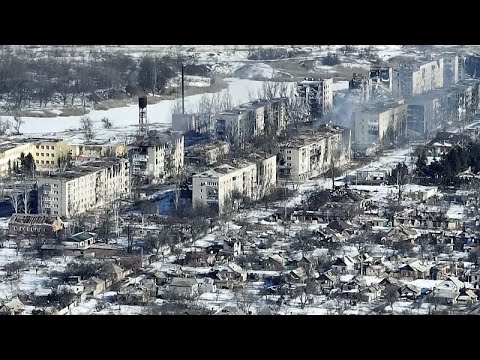
Ukraine: Bakhmut at the centre of the fight against Russia's terror?

Arms imports to Europe have risen sharply, new report finds

Russia with a big mouth but nothing behind it!

The EU and the energy crisis

Russian scum beats own soldiers

Ukraine: Russians die like fucking flies!

Antisocial Russian propaganda