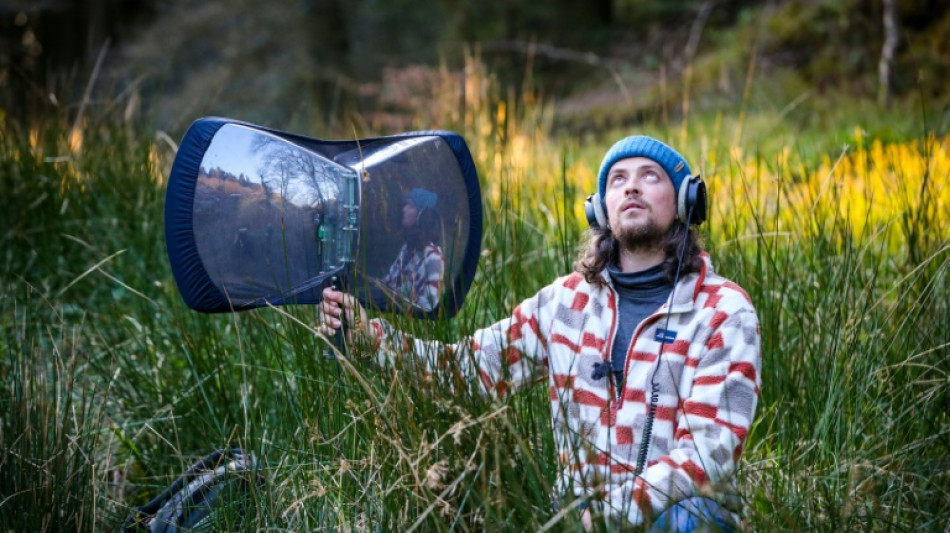
In tune with nature: expert sounds out all of Ireland's bird species / Photo: Paul Faith - AFP

 Oil prices retreat as markets welcome US-Iran talks
 US refusing to give Sudan's de facto leader visa for UN: diplomatic sources, UN

 Macron urges world to choose UN over 'law of the jungle'
 All-rounder Jacks stars as England beat Sri Lanka in 1st ODI
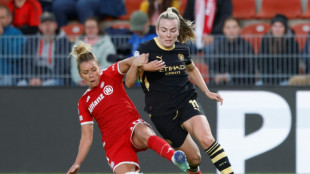 Man City peg back Bayern to start Women's Champions League
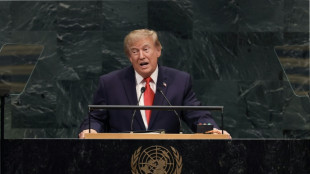 Trump beats 'America first' drum at UN as allies tread carefully

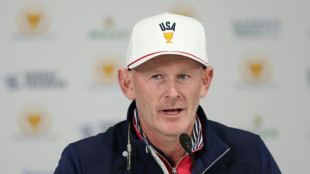 Snedeker backs Spaun for Ryder Cup after Presidents snub
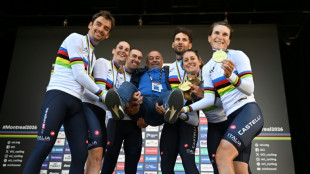
 French prosecutors probe secret filming of women with smart glasses

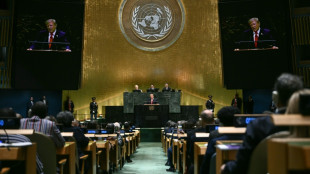 Trump renames AI "super intelligence," rejects international oversight
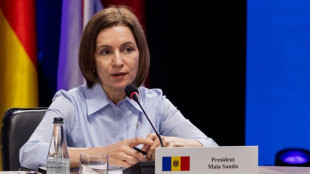
 Trump rejects international regulation of AI
 How is the EU approaching record fuel prices?

 Sri Lanka's Colombage strikes on debut as England dismissed for 265 in first ODI
 Hurricane Polo strengthens to top category 5 off Mexico

 11 hurt as teen opens fire outside school in western Turkey

 UN chief says 'Big Oil' treats atmosphere as open sewer

 Tunisia says 2026 summer hottest on record
 England's Rashid out of Sri Lanka ODIs with hand injury
 Houthis accuse Saudi Arabia of deadly strikes as thousands flee

 Stocks climb as oil slides, AI buzz returns
 India cricketers win in style as Afghan savours 'special' Games silver

 La Liga president hits out at Real Madrid refereeing 'conspiracy' claims

 MEXC Launches “Real Stocks, Real Friends” with Rewards for Bringing Friends to Wall Street

 Mbappe continues media push for Ballon d'Or recognition

 Stocks rise on AI buzz, oil prices cool

 India narrowly survive huge scare against minnows Japan

On a mission to record all of Ireland's bird species, many of which are dying out, Irishman Sean Ronayne calls his unique audio archive a tool to both raise alarm and bring hope.
According to conservation bodies, some 63 percent of Ireland's birds are currently either red or amber-listed, meaning they are at severe or moderate extinction risk.
"Birds are in trouble in Ireland like they are across the world, the loss of wildlife -- sonically and physically -- is devastating to me," said the 37-year-old.
"But I focus on hope and beauty, which is essential," the ornithologist told AFP at his home near Cobh (pronounced "Cove") in County Cork.
More than four years into his recording project he has sampled 201 different Irish bird species, stocking over 12,000 audio clips from around the country, Ronayne told AFP.
Just two remain to be documented: the great skua, and red-breasted merganser.
"If people realise just how spectacular wildlife is, there's no way they would let it disappear, attitudes would change," Ronayne said.
- Sound: 'an engaging tool' -
Ireland may be famed for its green fields, but Ronayne paints a bleak picture -- "realistic" he says -- of a degraded landscape and a bird population decimated by vanishing habitats.
Most of Ireland comprises intensively farmed fields bounded by trimmed hedgerows, drained and mined peatlands, overgrazed uplands, and minimal native woodland, he told AFP.
Non-native conifer plantations -- approximately nine percent of Ireland's 11 percent forest cover -- are also a biodiversity villain, described by Ronayne as "a species-poor industrial cash-crop".
"I try to show people the beauty of what we're erasing and what we must stand up and fight for," said the wildlife expert.
Last year he published an award-winning book, released two albums, and made an acclaimed documentary film. His talk tour is currently selling out venues around Ireland.
"Wildlife sound is such a great engaging tool to connect people to nature itself and get them acquainted with everything that's on their doorstep," Ronayne told AFP.
"If you know your neighbour you're more likely to help them in times of need," he said.
At the shows Ronayne, who was diagnosed with a form of autism as an adult, presents the story of his life and how nature is woven through it.
He also plays audio of warbles, tweets, trills, screeches and chirps, and mystery sounds, inviting the audience to guess the origin.
Some clips show birds mimicking other animals like dogs, people and other bird species.
"Some species in my collection can mimic 30 to 40 other species in their song," he said.
Laughter is common at his talks, but also tears and grief as listeners learn of Ireland's endangered birdlife.
- 'Sonic diversity' -
Ronayne regularly holds "dawn chorus" walks, bringing small groups into silent forests far from road noise to experience the birdlife waking up.
A gradually building cacophony of sound, the dawn chorus is "a reflection of the health of a given environment", he told AFP in an old woodland near his home while waiting for sunrise.
"The more sonically diverse it is, the healthier the habitat is," he said.
After unpacking his audio recorder, parabolic microphone and tripod, he quickly identified the melodies of song thrushes, robins, blackbirds, goldcrests and others as they greeted the day.
"Chiffchaff! Did you hear that?! There's a grey wagtail!" he exclaimed, head twitching toward each sound in the lifting gloom.
Ronayne also hides recorders for weeks and even months in remote untouched places where birds congregate.
On Ballycotton beach near Cobh, migrating birds swirled overhead before settling on an adjacent lagoon.
Ronayne carefully placed a waterproof recorder -- able to run for up two weeks -- in grass by the shore.
"They have to fly right over here to there," he said pointing upwards at their route.
"After I collect it I'll be able to monitor the birds, capture their calls, and tell environmental stories from the audio," he said.
Back home, he scrolled on a computer showing thousands of archived sonogram clips -- visual representations of sound -- of birdsong audio.
Each entry included data on the behaviour, calls and protected status of each bird: many either red or amber.
"First we must realise how wonderful nature is, then how fragile it is, and how much we have kicked it down," Ronayne told AFP.
"When we as a society fall back in love with nature, and respect it as we once did, beautiful things will happen."
A.Anderson--AT