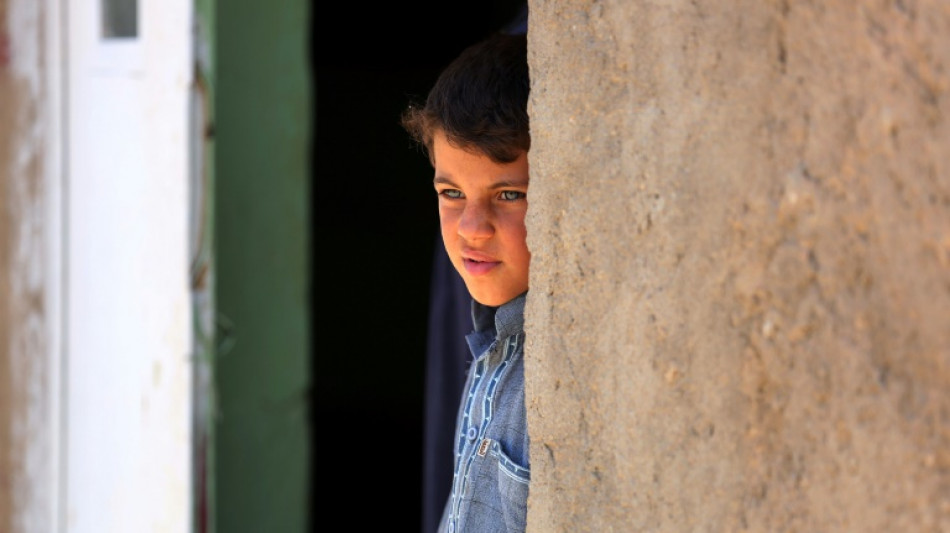
20 years after US invasion, war-scarred Iraq faces uncertain future / Photo: Ahmad AL-RUBAYE - AFP/File

 Drones hit Moscow as Russians go to the polls

 New England boss Fleming says 'wrong' to ask Stokes to end retirement

 Germans vote in elections threatening fresh blow to Merz

 US fears rapid escalation in Mideast after Houthis attack Riyadh

 Japan triathlete Hojo wins first gold of Asian Games

 IOC president impressed by 'beautiful' Asian Games wooden huts

 First Asian Games gold goes to Japan as China's 13-year-old Yu lights up pool

 Data centre command hub keeps AI up and running

 Pope Leo in France: the issues on the table

 Packing for a pope: behind the scenes on foreign trips

 Republicans find transgender issues a powerful political weapon in midterm campaigning

 German state elections threaten new shock waves for Merz

 Chile's Bachelet quits race to be next UN chief

 Raphinha treble fires perfect Barca to win at Sevilla

 Thiam makes winning heptathlon return at Decastar meet

 Czechs beat USA to qualify for Davis Cup finals

 Dortmund sink Stuttgart to climb to Bundesliga summit

 Trump says will not tolerate attempts to slow AI growth

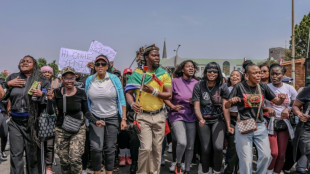 'It has to stop': runners protest women's murders in S.Africa district
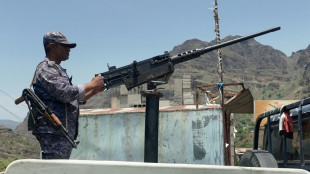 Fire erupts near Riyadh airport as Houthis claim strikes

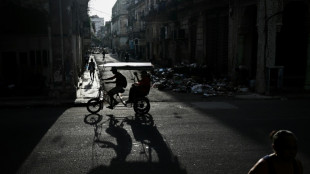 Cuba works to restore power after another blackout
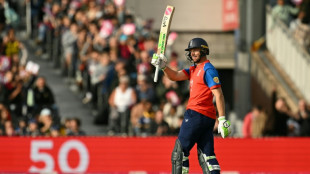 England thrash Sri Lanka again to return to top of T20 rankings
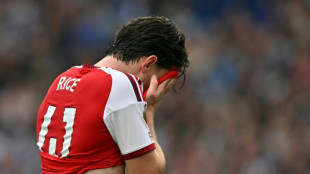
 Arsenal thrashed by Brighton, sorry Spurs lose again

 South Korea, Austria qualify for Davis Cup finals
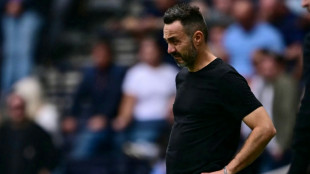
 Seare shocks Ingebrigtsen to win world 5km gold
Iraq on Monday marked 20 years since the start of the US-led invasion that toppled dictator Saddam Hussein, but no official celebrations were held.
The oil-rich country remains traumatised from the years of war, occupation and bloody sectarian turmoil that followed the operation launched on March 20, 2003.
A semblance of normalcy has returned but Iraq still battles a range of entrenched challenges, from political instability to poverty and rampant corruption.
Neighbouring Iran, the major Shiite power and arch-foe of the United States, now wields much influence in Iraq, whose Shiite majority was freed from the oppression of Sunni strongman Saddam.
Prime Minister Mohamed Shia al-Sudani, who is backed by a pro-Iranian coalition, at an event Sunday did not speak of the US invasion but only of the "fall of the dictatorial regime" of Saddam, who was caught, tried and executed.
At a Baghdad conference on the eve of the anniversary, Sudani said: "We remember the pain and suffering of our people in those years that were dominated by senseless wars and systematic sabotage."
The government planned no events to mark the anniversary, and Baghdad's streets on Monday looked busy as ever, with most people more focused on the holy fasting month of Ramadan due to start later this week.
"It's a painful memory" for the country, said Fadhel Hassan, 23, a journalism student. "There was a lot of destruction and too many victims -- innocent people, Iraqis and American soldiers."
The US march to war started under then-president George W. Bush and gained pace in the aftermath of the September 11, 2001 attacks on the United States by Osama bin Laden's militant group Al-Qaeda.
Bush, backed by British prime minister Tony Blair, argued that Saddam presented a major threat and was developing weapons of mass destruction, although none were ever found.
- 'Shock and awe' -
Operation Iraqi Freedom was launched with a ground invasion led by 150,000 US and 40,000 British forces, and the "shock and awe" bombing of strategic sites.
Within three weeks, Saddam's regime had fallen, and the invasion forces took control of the capital Baghdad on April 9.
TV footage beamed around the world soon showed US Marines toppling a giant statue of Saddam, and later Bush declaring the "Mission Accomplished" aboard an American warship.
But the invasion had sparked widespread disorder and looting, the chaos deepened by the US decision to disband the Iraqi state, ruling party and military apparatus.
The stated US drive to bring liberal democracy to Iraq was soon derailed by violence and sectarian conflict as Shiite militants battled with Sunni groups.
By the time US troops left in 2011, the war had claimed the lives of more than 100,000 Iraqi civilians, according to the Iraq Body Count group, while US losses reached nearly 4,500.
The bloodshed would give rise to the Sunni extremists of the Islamic State group whose jihadist "caliphate" brought new horrors across Iraq and Syria before its eventual defeat, after a US-led coalition returned to help fight them.
- 'Corruption pandemic' -
In today's Iraq, elections are held, political plurality is encouraged and free expression officially guaranteed.
But in practice, Iraqi politics remain chaotic and marred by sectarian and ethnic conflict.
Major anti-government protests erupted in late 2019, leading to yet more bloodshed in the streets.
Turnout was low for legislative elections in October 2021, which sparked further infighting and violence before a government was eventually formed a year later.
A third of Iraq's population lives in poverty, public services are largely absent, and the energy-rich country suffers frequent blackouts, especially in the extreme summer heat.
Nepotism and corruption remain rife in Iraq, where coveted posts in a bloated state sector are often gained through personal connections while youth unemployment is rampant.
Successive governments "have failed to fight corruption", laments Abbas Mohamed, a Baghdad engineer in his 30s. "We are going from bad to worse. No government has given anything to the people."
On Sunday, Sudani again pledged to "combat the pandemic of corruption".
But Baghdad day labourer Mohamed al-Askari, like many Iraqis, is struggling to keep alive any real hope.
"We rejoiced when the regime fell because we thought Iraq would improve," he said, "but so far we have only suffered."
A.Moore--AT