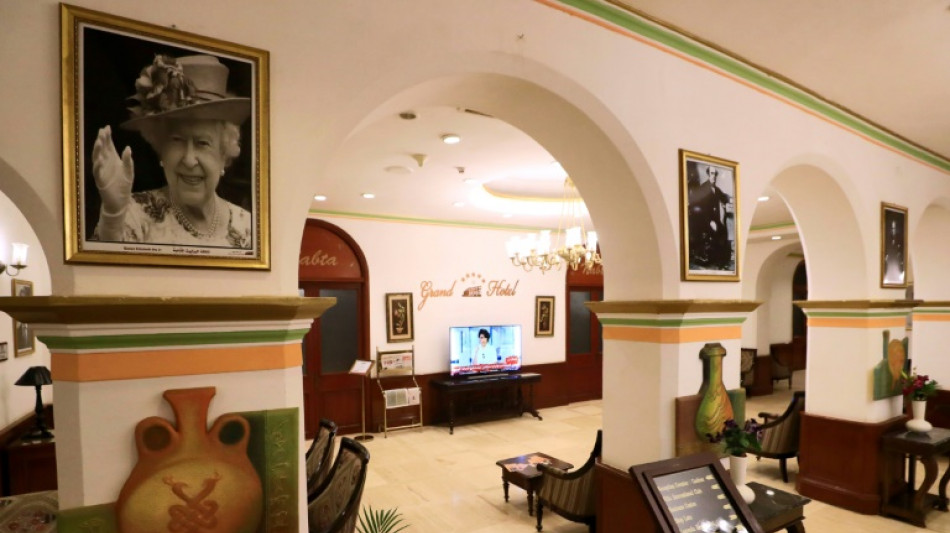
Sudanese recall queen's visit in years before partition / Photo: ASHRAF SHAZLY - AFP

 Pietersen joins England coaching team ahead of World Cup

 Germany's triumphant far-right AfD aims fire at Merz

 Fury claims Joshua bout is off, calls for Usyk trilogy

 British family bids to row back against suicide taboo

 China's teenage 223cm basketball player 'just a little girl'
 Tokyo's Shinjuku to ban more than half of vacation rentals
 Australian Rules limits contact training to reduce concussion

 Germany's Merz under pressure from far-right election triumph
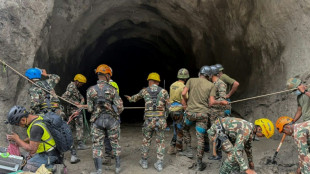 Nepal tunnel rescues face 'unprecedented' challenge
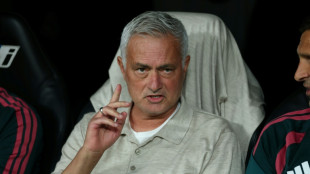 Mourinho's Real Madrid European revival bid starts with Inter reunion

 Solomons PM survives attempt to oust government

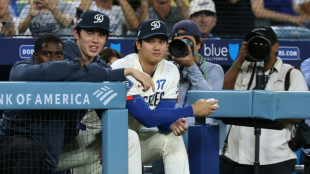 Ohtani 'unlikely' to pitch again this season, says Dodgers manager

 Driver thanks 'superhero' rival for saving him from flaming race car

 Can dogs sniff cancer? AI joins the hunt in India

 Shelton steams into US Open quarter-final clash with Alcaraz

 25 years on, America seeks to keep 9/11 memories alive
 'Trumpapalooza' tests Republican bet on unpopular US president
 Pegula tops Cirstea to reach US Open quarter-finals
 Australians could opt out of social media algorithms under new law
 Genflow Biosciences PLC Announces Appointment of Investor Relations Adviser

 Enjoying the moment: Alcaraz steps it up to reach US Open quarter-finals

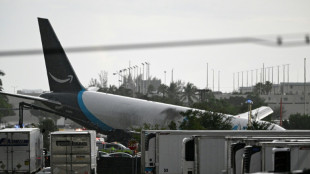 Five dead, five injured after Amazon cargo plane overshoots Miami runway

 La Rochelle half-backs lead fightback against Toulouse

 US envoys have 'more effective proposals': Ukraine official

 Defending champion Alcaraz powers into US Open quarter-finals

It has been more than 50 years since Queen Elizabeth II visited Sudan but there are still some who remember her tour of the formerly British-ruled territory in its first decade of independence.
In subsequent decades, repeated military coups and civil war between north and south have led to protracted isolation and partition into two independent nations.
There is not much nostalgia for British rule Many in the rump Sudan left behind by the south's secession in 2011 blame it for fanning the ethnic and religious differences that eventually led to the bloody divorce.
But there was genuine fondness for the queen personally when her death at the age of 96 last week brought down the curtain on a reign lasting more than 70 years.
"I was a schoolgirl in my uniform and we were pulled out of school to greet the queen," recalled Khartoum resident Belqis Rikabi, now in her 70s.
Rikabi remembered that she had been impressed by the queen's dress and had tried to get through the jostling crowd to touch the fabric.
"One of the guards hit me very hard but then the queen saw this and called out: 'No, no, no'," Rikabi said.
"He stopped and then she held up the hem of the dress for me to examine it."
- 'Good resonance' -
During her stay in the Sudanese capital in February 1965, the queen stayed in the colonial-era Grand Hotel overlooking the Nile, where a portrait of her still takes pride of place alongside pictures of other eminent Britons, including wartime prime minister Winston Churchill.
"The hotel holds memories, photos and records for all the world's greatest people who visited the country in different periods, most notably Queen Elizabeth," said the hotel's general manager, Abdelmoneim Abdelmahmoud al-Hassan.
The hotel was built in 1902 and other visitors over the years have included anti-apartheid hero Nelson Mandela and US civil rights leader Malcolm X.
Though it was long ago, the queen's visit "has good resonance" among Sudanese people, Hassan said.
Surviving newsreel footage of the visit is dominated by camel racing and camel-mounted cavalrymen in traditional robes.
But the queen also visited development projects first conceived when Sudan was still ruled under a British-dominated joint administration with Egypt.
- 'Great woman' -
Outside Khartoum, she toured the Gezira agricultural scheme in the fertile soils between the Blue Nile and the White Nile, still one of the world's largest irrigation projects.
She visited farmers in the Gezira state capital Wad Madani and the Roseires Dam on the Blue Nile, which was completed the year after her visit.
Now 73, Manahel Abou Kashwa was among those who greeted the queen in Wad Madani.
As a 16-year-old, Abou Kashwa says she was among 10 pupils chosen to escort the monarch around their school.
"As a young girl, I was amazed at the queen and how people were doing everything for her. I was however happy to be chosen to accompany her."
Thirty-five years later and now married to a senior Sudanese diplomat, Abou Kashwa met the queen again when her husband, Hassan Abdeen, presented his credentials as Sudan's ambassador to the United Kingdom.
"I told her we met before and she laughed," Abou Kashwa said.
When Abou Kashwa learnt of the queen's death, she said: "I was saddened. She was a great woman."
A.Ruiz--AT