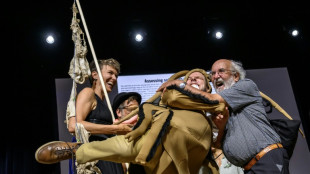
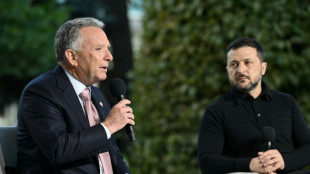
Ex-Google CEO says Ukraine proves value of IT in war / Photo: Patrick T. FALLON - AFP

 Dukascopy Bank Unveils AI-Powered Trading, 25,000+ Stock CFDs and a New Flagship E-Banking App

 Tech firms rally but Asian markets mixed, with eyes on US inflation

 Nepal holds day of mourning as families pray missing still alive

 African players in Europe: Mbeumo fires solo goal as United draw

 Malaysia cancels haze emergency, but warns problems remain
 Philippine sensation Eala looks forward to Asian Games 'fun'
 Jakarta airport extends closure after volcano eruption

 Lonely woman director in Venice sees industry backsliding on gender
 Tech firms rally on mixed day for Asian markets, with eyes on US inflation

 World number one An sends Asian Games warning with China hat-trick

 PSG go for three in a row as Champions League returns
 "Super-human' Alcaraz books US Open quarter-final clash with Shelton

 ECB set to hike interest rates as Iran war flares anew
 AI data centers are less thirsty now, tech giants say

 North Korea vows nuclear-armed navy as US ally drills open

 Under-fire Labuschagne named in Australia Test squad for South Africa

 InterContinental Hotels Group PLC Announces Transaction in Own Shares - September 07

 Best Way to Protect A 401(k) in 2026: Guide Released by Experts

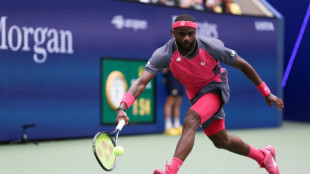 Tiafoe tops Medvedev in straight sets at US Open
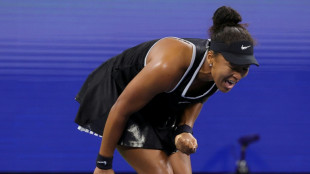 Zverev seeks US Open last eight as Osaka faces Rybakina

 Alcaraz turns up heat to reach US Open quarters
 Gatti salvages Juve draw with AC Milan in Serie A

 Sinayoko stars as unbeaten Paris FC down Marseille
 Still on top: 'Spider-Man' dominates North American box office

 Zelensky in fresh talks with US envoys: Ukraine official

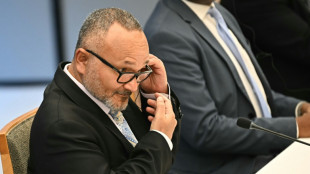
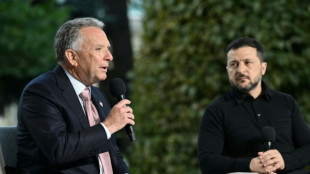
Ukraine has been a very effective proving ground for the use of contemporary information technology in war, from satellite dishes to smartphone apps, Eric Schmidt, the former Google chief executive, said Monday.
Schmidt, now a US government consultant on artificial intelligence, told reporters after a 36-hour visit to the country that the civilian tech sector has been crucial to Kyiv's defense.
The proof came the day after Russian troops invaded on February 24.
After a long stall, Ukraine's legislature came together to agree on a crucial step to protect all the government's data from Russian hackers and strikes.
"In one day, they had a meeting of the parliament and changed that law... they moved all their data from government servers in Kyiv to the cloud," Schmidt said.
"The war gave everybody a political excuse to do the right thing," he said.
The second crucial move came with US tech billionaire Elon Musk's donation of access to his Starlink satellite-based broadband system, effectively insulating both the public and Ukrainian military from a Russian assault on telecommunications.
Musk and donors sent in some 20,000 ground terminals with small dish antennas that allowed everyday transmissions as well as helping fighters with targeting data. That stymied a key goal of the Russian attackers.
"Elon Musk is genuinely a hero here," said Schmidt. "This allowed the strategy of shutting down the internet by the opposition to fail."
- Field intelligence from citizen apps -
Two apps meanwhile got citizens directly involved, Schmidt said.
A function called "E-Enemy" was added to the popular Diia app used for government services that permitted people to report things such as damage from shelling, or Russian troop sightings.
And an encrypted Swiss chat service called Threema allowed users to send such data to the military without exposing their identities.
The military would get thousands of such reports every day, said Schmidt, and filter them with artificial intelligence programs.
"They would whittle them down to targets using computer intelligence and human intelligence and eventually go after them," he said.
"So if you think about that, here's what they had: they had an internet that stayed up, they had their government data protected," and a way for citizens to give them intelligence information, he said.
Ukraine, long an incubator for programming as well as illegal hacking skills, has a deep IT workforce that has been able to launch cyberattacks against the Russia, breaking into their communications.
The country has also skillfully used biometric and facial recognition techniques to identify Russian troops involved in atrocities, such as the massacre in Bucha early in the war.
In addition, Ukrainian programmers have been skilled in making drones useful in the war.
"I can just report that based on my small amount of data, the Ukrainian tech industry really did make a contribution to the front," said Schmidt.
H.Thompson--AT