
Datasaur Launches Forge: AI Native Services to Deploy Private, Model-Agnostic AI Inside Regulated Enterprises

 US woman who survived botched execution is awake and speaking

 From 1800s to modern pharma: a Nobel-winning chemistry quest

 Southampton boss Eckert given suspended ban over 'Spygate'

 Russia warns of 'false' information as second plague case reported

 IEA ready to release more oil reserves if necessary

 HSBC 'consults' over UK unit job cuts amid AI adoption
 UK court quashes five ex-traders' Libor rate rigging convictions

 XM Receives “Global Customer Experience Leader Award 2026” at the TrustFinance Performance Awards

 Stocks slide as oil climbs on Mideast flareup
 Heavy casualties in Ukraine after Russian strikes

 French wine harvest set to hit historic low

 Kyiv 'cannot agree' to EU membership limiting food exports: minister

 Arteta targets more Arsenal glory after signing new deal until 2030

 Russell hit with Singapore grid penalty for taking new power unit

 Spotify expands audiobooks to more than 180 markets

 French-Japanese duo wins chemistry Nobel for solving molecular 'mystery'

 England's Nations League surge helps heal World Cup wounds

 Mayor of opposition stronghold Izmir defects to Erdogan party

 Mertens beats Gauff to set up Swiatek clash at China Open

 Benin full of pride at role in Messi's last dance

 France suspends stun grenade use at student protests ahead of PM speech

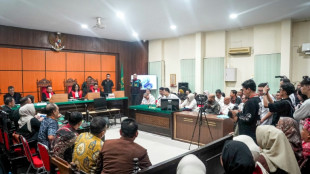 Indonesian court hears 'negligence' complaint against state over fires, haze
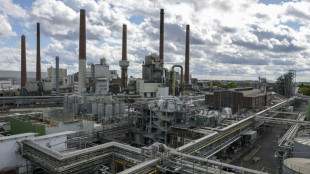
 Rubio in Greece to urge against Western civilisation 'decline'

 Micron workers at Taiwan plant vote in favour of strike

 In 'The Social Reckoning,' Jeremy Allen White takes on Facebook's 'frightening' ambition

As OpenAI and Anthropic build captive services arms to push their own models, Forge installs private, model-agnostic AI that customers run inside their own infrastructure.
SAN FRANCISCO, CA / ACCESS Newswire / May 21, 2026 / Datasaur today launched Forge, a new AI Native Service that embeds Datasaur engineers inside financial, healthcare, insurance, legal and government organizations to design, build, and operate AI systems that run entirely within the customer's own environment. The practice is privacy-first by construction and model-agnostic by design, deploying any frontier or open-weight model the customer selects on top of Datasaur's proprietary agent harness.
The launch follows recent announcements from OpenAI and Anthropic, each of which has stood up an enterprise services arm built to deploy a single proprietary model into customer operations. Forge is structured around a different premise. Regulated industries (banks, hospitals, law firms, public agencies) generally cannot send their data to a third-party model endpoint, and need AI that runs where their data already lives. The concern has also moved past compliance: CIOs are increasingly worried that frontier model vendors will train on their proprietary data and learn to replicate the workflows their organizations have spent years building.
"Data sovereignty is the table stakes the rest of the AI industry is still pretending it isn't," said Ivan Lee, Founder and CEO of Datasaur. "Procurement at a regulated enterprise is not going to send fifty million records through someone else's API. They want an agent that lives inside their VPC, runs on whichever model fits the task, and stays theirs at the end of the contract. That is the service we are operationalizing."
What AI Native Services Includes
AI Native Services is organized around three commitments.
First, every deployment runs inside the customer's own cloud or on-premises environment. No customer data is sent to Datasaur or to any model vendor for inference, fine-tuning, or evaluation.
Second, deployments are model-agnostic. Customers can run frontier APIs, open-weight models such as Google's Gemma, OpenAI OSS, DeepSeek, or other fine-tuned SLMs hosted on their own GPUs, and swap between them as the frontier moves. Datasaur's view is that the foundation model is a commoditizing, swappable input. The orchestration layer is the durable asset.
Third, the customer owns the system at the end of the contract. Embeddings, fine-tuned models, evaluation benchmarks and the training data all transfer to the customer. Only Datasaur's data engine, the internal platform that generates those artifacts, remains proprietary.
Underneath the three commitments is a different framing of what enterprise AI actually is. Datasaur is building agents that operate as infrastructure rather than tools. Tool adoption caps at the share of employees willing to change workflow. Infrastructure adoption is determined centrally and operates against every relevant record by default.
Track Record with Industry-Leading Customers
Datasaur already operates this model with anchor customers including a leading GSIB, multiple federal agencies, Am Law 100 firms, and other F500 organizations, where AI agents handle work ranging from PII redaction at the scale of hundreds of millions of records, to legacy system automation against federal compliance deadlines, to legal document review under strict data residency requirements.
The practice will be staffed by Datasaur's existing solutions engineering and AI delivery teams. Engagements typically begin with a paid scoping phase, followed by a production deployment in 30 to 60 days.
"The consulting arms OpenAI and Anthropic just launched are not neutral parties," Lee said. "Their economics depend on pushing more inference through their own model APIs. That is the rent side of the buy-versus-rent decision every enterprise is about to make. Datasaur sits on the buy side. We install AI systems the customer owns and runs inside their own infrastructure, on whichever model serves the work, and our business margins are not based on collecting a percentage of every transaction five years from now."
About Datasaur
Datasaur is the AI Native Services firm for regulated industries. Founded in 2019, Datasaur builds private, model-agnostic AI agents that deploy inside the customer's own cloud. The company's clients include Stanford University, the FBI, and other leading organizations across finance, healthcare, legal, insurance and government. Datasaur is backed by Initialized Capital and angel investors including Greg Brockman (President, OpenAI) and Calvin French-Owen (CTO, Segment). Learn more at datasaur.ai.
Media Contact
SOURCE: Datasaur Inc
View the original press release on ACCESS Newswire
A.Anderson--AT